DEI or Donor Intent? The Fullerton Long Scholarship Row Is Bigger Than Who Won
Why the fight over intent, equity, and opportunity matters more than the names on a list
Scholarships don’t just open doors — they build new rooms in institutions where some communities have historically been left standing in the hall. They are one of the few levers in education that reliably transforms potential into progress for underrepresented groups. So when the Fullerton Long Scholarship — a fund with roots in the Caribbean diaspora — changes shape in public understanding without clear explanation, it triggers a deeper debate about fairness, purpose, and the meaning of support itself.
What the scholarship is — and how it started
The Fullerton Long Scholarship was launched in 2020 by two University of the West Indies (UWI) alumni, Andrew Long and Norbert Fullerton, both Caribbean actuaries now based in the United Kingdom. Their aim was to support talented actuarial students in the Caribbean — a region where barriers to high-level professional pathways are steep and opportunities are precious. The scholarship provides financial support, mentorship, and access to professional networks through the Institute and Faculty of Actuaries (IFoA) Foundation.
On social media, the IFoA Foundation promoted the 2024 cohort using the phrase “Fullerton-Long Afro-Caribbean Scholars”, explicitly tying the award to Afro-Caribbean heritage. That language — specific, targeted, culturally grounded — matters because it speaks to a corrective purpose rather than a generic merit scholarship.
But the latest UWI press release announcing the 2025 recipients uses broader language, referring simply to “students of Caribbean heritage”. That shift may seem subtle, but in the world of scholarships — where eligibility and impact are everything — it’s the difference between targeted uplift and broad access.
Why targeted scholarships matter
Upward mobility in historically marginalized communities doesn’t happen automatically. It often requires structural support: networks, funding, visibility, and the removal of barriers that others take for granted. Scholarships targeted at specific communities — whether Indigenous students in Canada, Afro-Latinx students in the United States, or Afro-Caribbeans in the English-speaking Caribbean — acknowledge that not all students start from the same point.
These programmes create not just opportunity but representation. They send a message: “We see you. We value your contribution. We are investing in your success.” Removing or diluting that focus without transparent dialogue risks eroding that message.
The controversy isn’t about ability
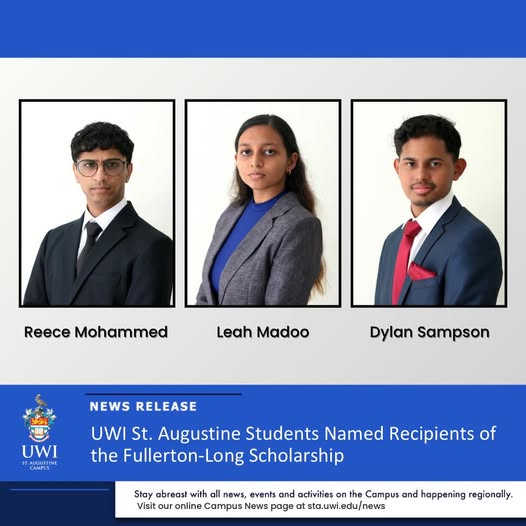
Let’s be clear: the 2025 recipients — Reece Mohammed, Leah Madoo, and Dylan Sampson — are undoubtedly high achievers. Their academic accomplishments reflect hard work and talent. This isn’t an attack on individual success.
The debate is about criteria, intent, and communication. If a scholarship was conceived with an explicit cultural or demographic focus — and if that focus was reflected in the founders’ public messaging — changing its frame matters. Not because achievement should be limited, but because:
- Opportunities are limited. There aren’t endless scholarships with the resources to uplift loads of students. Each award given to one student is, by definition, one less award available for another.
- Donor intent is part of purpose. Foundations and benefactors often specify targeted goals because they’ve seen patterns of exclusion that general scholarships don’t redress. Not acknowledging those goals risks undermining that corrective purpose.
- Transparency builds trust. If eligibility changed, institutions owe the public and applicants clarity. Silence invites speculation about fairness.
DEI or donor intent? The real tension
There’s a larger conversation here about diversity, equity, and inclusion (DEI) in Caribbean education. DEI rightly celebrates expanding a group of voices and talents. But DEI should not mean erasing intentional support systems that correct historical inequities. Intent and impact aren’t opposites — they’re companions.
In philanthropy, intent is part of equity. Targeted support doesn’t exclude others arbitrarily; it acknowledges that some groups have been systemically underrepresented or underserved. That’s why scholarships labelled for Afro-Caribbean heritage carry a different meaning than those open to all Caribbean heritage.
The risk of losing the original purpose
If we broaden every targeted scholarship in name only, we risk erasing the very gaps those scholarships were meant to close. And that doesn’t help equity — it helps ambiguity.
Scholarship awards should be celebrations of brilliance. They should not become arguments about semantics. Better clarity around the Fullerton Long Scholarship’s intent — and how that intent aligns with eligibility — would give the public, applicants, and beneficiaries the confidence that both excellence and equity are being upheld.
Final thought
The Fullerton Long Scholarship can continue to be a beacon of opportunity. But to do that, institutions must honour both achievement and the purpose for which support was intended. When scholarship isn’t just about money, but about correcting structural imbalances, we owe it to the communities we seek to uplift to articulate those intentions clearly, loudly, and consistently.