WE APPLAUDED THE KINETIC STRIKES… THEN BURIED TRINIS: The Lawsuit That Exposes a National Contradiction
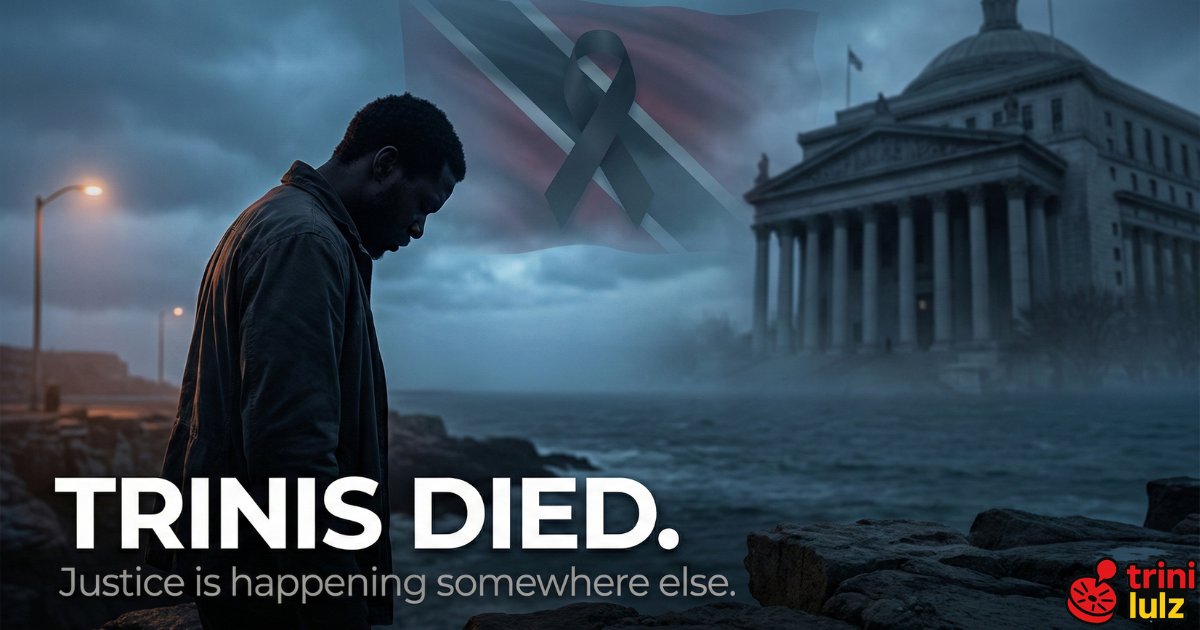
There are moments when a country’s contradictions stop being theoretical and start showing up in coffins.
For Trinidad and Tobago, that moment came quietly, after the applause faded.
When the United States announced kinetic strikes on suspected drug-running boats in Caribbean waters, the regional mood was clear. Tough action. Strong allies. Zero sympathy for traffickers. In a crime-weary society, missiles sounded like order.
Then came the funerals.
Two Trinidadian families are now standing in a United States courtroom, not to debate geopolitics, but to ask a devastatingly simple question:
Were their loved ones unlawfully killed by the very kinetic strikes our government supported?
That question exposes a national contradiction we have not fully confronted.
When the Caribbean Became a Kill Zone
The U.S. operation was framed as decisive anti-narcotics enforcement. Fast boats. Intelligence-driven targeting. Precision force.
“Kinetic strikes” is the language used. It sounds clinical, almost clean. But in practice, it means missiles fired at vessels in open water, often at night, with no arrest, no trial, and no second chance.
In October 2025, one of those strikes hit a boat in Caribbean waters. Two Trinidadian men were killed. Their families insist they were not drug traffickers. The United States says the strike was lawful.
That disagreement is no longer rhetorical. It is now being tested in an American federal court.
This is not a protest. It is not a Facebook argument. It is sworn affidavits, evidence, and judges.
And it is happening while our own government maintains that the strikes were justified.
Applause First, Questions Later
At the time of the strikes, the regional political tone leaned toward endorsement. The narrative was simple: drugs are evil, traffickers deserve no mercy, and extraordinary threats require extraordinary force.
What was barely discussed was risk.
Caribbean waters are not empty corridors. Fishermen move there. Migrants move there. Small traders move there. And yes, criminals move there too.
Once a state accepts missile strikes as policy in shared regional waters, it also accepts the possibility that its own citizens may be on the wrong end of that decision.
That possibility stopped being hypothetical when Trinidadians died.
And yet, the official posture did not change.
The Lawsuit Nobody Wanted
The families of the men killed have now taken their case to the U.S. court system, arguing that the strike amounted to an unlawful killing.
This matters for two reasons.
First, because it forces the facts into a forum where rhetoric doesn’t work. Courts don’t care about press conferences. They care about rules, evidence, and accountability.
Second, because if the families succeed even partially, it calls into question the legal framework underpinning the entire strike policy.
That is why this case matters far beyond Las Cuevas, or even Trinidad and Tobago. It challenges whether kinetic strikes can be used as routine law enforcement tools in international waters without violating international law.
“A missile is the only court that doesn’t require evidence.”
The Attorney General’s Black Box
Locally, the government’s position has been clear.
The Attorney General has stated that he received international legal advice confirming that the strikes were lawful. He has also made it clear that he will not name the adviser or disclose the substance of that advice.
Legally, he may be entitled to that discretion.
Politically, it leaves the public in an uncomfortable position.
We are asked to trust that unnamed advice, from an unnamed source, is sufficient to justify lethal force that killed Trinidadian citizens, while those same deaths are now being examined by a foreign court.
That is not transparency. It is a demand for faith.
Sovereignty, Selectively Applied
Small states talk a lot about sovereignty, usually when it is being threatened by outsiders.
This case flips the script.
Here, sovereignty was effectively outsourced. A foreign power fired missiles in regional waters. Our government endorsed the policy. Our citizens died. And now our justice, if it comes at all, must come from a U.S. courtroom.
The contradiction is stark.
We applauded strength when it looked distant.
We buried Trinis when it came home.
“When the Caribbean becomes a battlefield, neutrality stops being an option. You’re either collateral — or next.”
The Question That Won’t Go Away
None of this requires defending drug trafficking. None of it requires pretending crime isn’t real.
It requires something far more uncomfortable: admitting that cheering lethal force is easy when you don’t imagine yourself under it.
The lawsuit now moving through the U.S. courts will not just decide whether two families receive justice. It will test whether the logic we accepted so casually can survive legal scrutiny.
And when that judgment comes, Trinidad and Tobago will have to live with it.
Because missiles don’t ask for passports.
They don’t check nationalities.
And they don’t care who clapped when they launched.