
Venezuela Oil Revival: Can Trinidad and Tobago Turn Its Neighbour’s Comeback into Jobs and Gas?
Venezuela’s energy reopening could bring contracts, gas and investment opportunities to Trinidad and Tobago. What must happen before local workers, businesses and industry benefit?
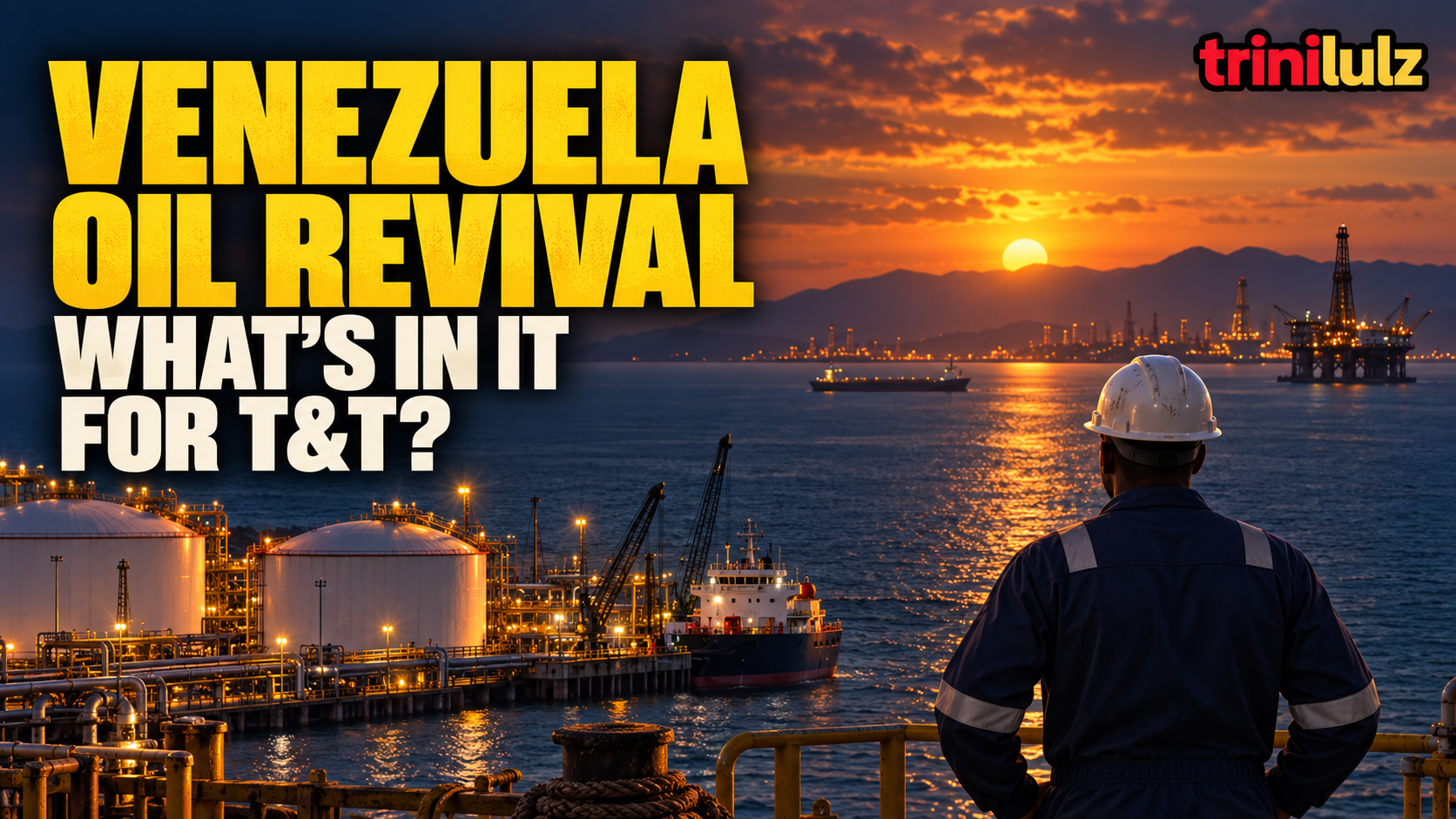
Venezuela Oil Revival is becoming a question of investment decisions, industrial repairs and who wins the work. On 2 September, Chevron announced plans to invest more than US$7 billion through its Venezuelan joint ventures over five years, targeting output of about 600,000 barrels a day, according to Reuters.
For Trinidad and Tobago, the question is practical: how much of the business generated by our neighbour’s recovery could reach our workers, service companies and industrial plants?
There are opportunities worth pursuing. There is also competition for money, equipment and expertise. A deal announced in Caracas does not become a payslip in Point Fortin simply because we live nearby.
Oil next door. What reaches our shore? That is the test this country should apply to the announcements—and to its own ambitions to remain a regional energy centre.
What the Venezuela Oil Revival actually involves
Several developments sit behind the revival story, and they should be kept distinct. Company investment programmes, changes to operating conditions and the wider US-backed initiative each have their own terms and uncertainties.
In its 31 August fact sheet, the White House described an arrangement involving North American Blue Energy Partners, or NABEP, covering 17 Venezuelan oilfields. It outlined a US government equity stake, preferential oil-purchase rights and an investment ambition of up to US$100 billion.
Those are the administration’s descriptions and projections. They should not be read as money already spent, production already achieved or a guaranteed benefit for the Caribbean. Nor should NABEP’s proposed spending simply be added to other announcements without checking their scope and possible overlap.
The arrangements also face scrutiny. Associated Press reporting documents questions about the US deal’s legal basis and long-term viability. Political assurances matter to investors, but contracts must remain workable through changes of government and policy.
Recovery also requires functioning infrastructure. A field needs equipment, power, maintenance and a route to market. Reserves underground are a resource; reliable production is an operating business.
T&T could earn from the work of rebuilding
The most accessible opportunity for some Trinidadian businesses may be supplying services: engineering, inspection, maintenance, marine support, training and logistics. These are areas to assess commercially, rather than assume will automatically be reserved for us.
There is already an institutional effort to make connections. The Energy Chamber of Trinidad and Tobago is an institutional partner for the Venezuela International Oil & Gas Summit in Caracas on 28–30 September. Its statement promotes collaboration using T&T’s expertise, infrastructure and knowledge.
That is a useful opening. It is not evidence of contracts awarded. Local firms will still have to qualify, compete, establish credible partnerships and demonstrate that they can deliver safely and on time.
For a small contractor, the questions are immediate: who signs the purchase order, who pays, which bank can process the transaction, and how much cash must the business carry before receiving payment?
A regional boom could expand the customer base for Trinidadian companies. It could also pull skilled workers and scarce equipment towards better-paying projects elsewhere. The national aim should be to grow the business our firms can handle while keeping domestic projects adequately staffed.
Oil expansion and gas supply are different stories
This distinction matters for Atlantic LNG and Point Lisas. Crude oil and natural gas have different production systems, commercial arrangements and uses. An increase in Venezuelan oil output does not, by itself, deliver the gas required by Trinidad’s LNG and petrochemical facilities.
The Energy Chamber’s analysis of the reopening identifies cross-border gas as a potential complement to domestic production. Additional supplies could allow existing industrial infrastructure to be used more fully.
That is the opportunity behind Dragon. But its timetable deserves careful treatment. In July, Reuters reported that Shell was tendering for four wells, with drilling targeted for the second quarter of 2027. The report said the contract would depend on a positive final investment decision.
A tender is a meaningful preparatory step. It is not first gas. Based on the material reviewed for this article through 7 September, readers should not treat older predictions of Dragon deliveries in 2026 as an established outcome.
There is a similar distinction around Loran–Manatee. The reservoir spans the maritime border, but development on the Trinidadian side and development on the Venezuelan side are not interchangeable approvals. April reporting distinguished Shell’s Manatee plans from a final investment decision still to be made on Loran.
For T&T, success means dependable gas delivered under sustainable commercial terms. Until then, the benefit remains prospective.
The permissions still have conditions
The sanctions position has changed, but it has not become a free-for-all. OFAC General License 50C, dated 27 August, authorises specified Venezuelan oil and gas transactions involving listed companies and their subsidiaries, including Shell and BP.
It retains conditions covering payments, dispute resolution, reporting and excluded counterparties. It is not blanket permission for every Trinidadian company to transact with every Venezuelan entity.
This matters commercially because a willing customer and an available vessel are only part of a workable deal. Companies also need transactions their banks can process, clear contractual obligations and confidence that payment arrangements meet the applicable requirements.
T&T’s diplomacy can help create room for business. Companies still have to turn that room into transactions they can finance and execute.
Could Venezuelan crude help a refinery restart?
It could be a feedstock option if the necessary commercial, technical and regulatory conditions are met. It cannot settle the entire Guaracara business case.
In January, Reuters reported discussions with Indian Oil about restarting the refinery, which closed in 2018. That reporting described negotiations and government ambitions, rather than a completed restart.
In March, CNC3 examined a separate Tecnimont–Patriotic study arrangement. Energy Minister Roodal Moonilal said the Government was not involved in that deal and that no entity had then been selected. The distinction between a bidder’s study and a government award remains essential.
Any restart proposal must answer several questions together: what condition is the equipment in, which crude grades can the proposed configuration process efficiently, what repairs are needed, who supplies the financing, and who buys the products?
Nearby oil may improve the range of supply options. The country still needs transparent evidence on operating costs, environmental requirements, working capital and any guarantees taxpayers would be asked to provide. Geography cannot substitute for those calculations.
Investment competition is real—but T&T still has projects
Our assessment is that a more investable Venezuela would give international companies additional options when allocating capital. That creates competitive pressure. It does not establish that a particular Trinidadian project has lost funding to Venezuela.
Consider Calypso. Woodside announced an agreement to sell its 70 per cent interest to bp, which holds the remaining 30 per cent. Completion was expected by the end of 2026, subject to approvals. Woodside described portfolio simplification; bp’s proposed expansion shows a different assessment of the same asset.
The transaction is not a final investment decision to develop Calypso. It does, however, complicate any blanket claim that international energy companies have stopped seeing opportunities here.
Domestic developments also deserve their own attention. Shell’s Manatee investment decision set a 2027 production target, while bp sanctioned Ginger in 2025. These are distinct from waiting for Venezuelan supply.
Meanwhile, the Energy Ministry’s TTUD-1 update documents ExxonMobil’s seismic programme. Exploration is a chance to establish what can be developed; a survey is not an oil discovery.
T&T’s response should therefore include commercially workable terms, predictable decisions, efficient approvals and capable local suppliers. Existing infrastructure is an advantage when a project can use it reliably and economically.
The regional race includes Guyana and Suriname
Venezuela is entering a neighbourhood where major developments are already competing for investment and services. ExxonMobil reported a Guyana production milestone in November 2025. In Suriname, TotalEnergies’ 2026 supplier outreach links GranMorgu’s planned 2028 first oil to business readiness.
For T&T, regional growth can create customers as well as competitors. The practical ambition is to be a country whose firms win work and whose infrastructure solves commercial problems. Calling ourselves an energy hub does not secure either result.
How to tell whether T&T is benefiting
| Opportunity | What must happen first | Evidence to look for |
|---|---|---|
| Contracts for local firms | Qualification, workable payment arrangements and competitive bids | Contracts awarded, work completed and suppliers paid |
| Additional gas for industry | Commercial agreements, investment decisions and infrastructure delivery | Gas reaching T&T and supporting actual plant output |
| Refinery activity | A funded, technically sound restart with secure supply and buyers | Disclosed commitments, completed rehabilitation and viable operations |
| Greater regional investment | Projects that compete on cost, risk and execution | Committed capital and development milestones, beyond meetings |
These are measures to watch, not forecasts that the benefits will occur. They also make the debate more useful for households. Energy activity can support employment, supplier income, exports and public revenue, but the scale depends on local participation, costs, ownership and tax arrangements.
Nor does a Venezuelan expansion guarantee cheaper petrol at a Trinidadian pump or immediate relief from foreign-exchange shortages. Those outcomes involve additional prices, policies and financial flows.
The Venezuela Oil Revival could give T&T valuable opportunities. Our responsibility is to pursue them with enough discipline to distinguish a promising conversation from a business that pays its workers, supplies its customers and earns its keep.
Which result should T&T demand first: more reliable gas for existing industry, contracts for local firms, or a fully funded refinery plan?
This story is part of our wider Caribbean Geopolitics & Global Affairs coverage. Explore the full hub for regional security updates, diplomacy, migration, energy politics, and deeper analysis of how global power plays shape Caribbean realities.
Reporting note: Sources reviewed through 7 September 2026 include company announcements, government documents and attributed news reporting. Future benefits are scenario analysis, not forecasts or confirmed contracts. No interviews were conducted.