A New Caribbean Power Axis? Can Guyana and T&T Really Build a New Economic Era?
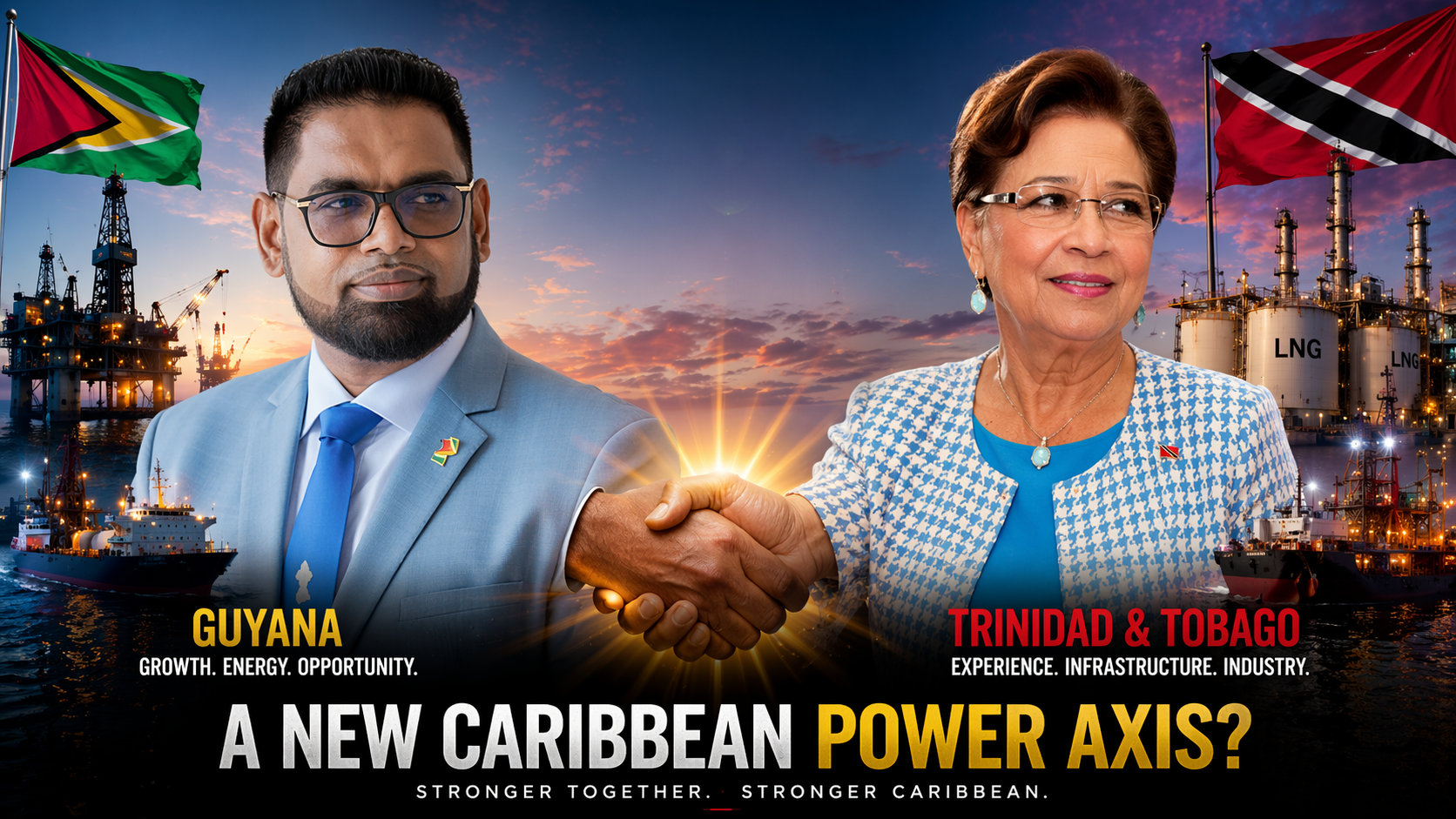
For years, Caribbean integration has sounded like one of those nice conference phrases politicians dust off between handshakes, buffet lunches and photo ops. But this latest push between Guyana and T&T feels bigger, sharper and more urgent. When President Dr Mohamed Irfaan Ali and Prime Minister Kamla Persad-Bissessar met in Port of Spain on April 10, 2026, they were not just talking diplomacy for diplomacy’s sake. They were talking food security, energy integration, technology exchange, human capital development, security, and a joint working group to remove barriers to trade. In plain English, they were talking about building a serious economic axis in the southern Caribbean.
And frankly, the logic is obvious. Guyana has scale, momentum and one of the fastest-growing economies in the world, driven by oil production and massive public investment. Trinidad and Tobago has decades of industrial experience, energy services, downstream infrastructure, and a private sector that still knows how to move product, build plants and think regionally. IMF and World Bank reporting shows just how dramatic the contrast is: Guyana is still in full economic takeoff mode, while Trinidad and Tobago is recovering more gradually, with the IMF warning that diversification and new growth engines are now essential.
Big dreams upstairs, paperwork downstairs
That is why this story is so fascinating. The leaders are speaking the language of the future, but the region is still tripping over the furniture of the past.
The biggest moment from the visit was not some polished diplomatic line. It was President Ali basically asking how two countries can dream about managing major energy opportunities while still struggling to move something as simple as “two containers of lime” into Trinidad and Tobago. That image is powerful because it captures the entire Caribbean problem in one sentence. We love to talk big about strategy, but too often a man trying to move actual goods through the system will age five years before the paperwork finish. The brief itself flags this “gas plant versus lime” contradiction as the central weakness in the whole initiative.
This is why the agreement to establish a working group matters. It is not glamorous, and it will not trend on Facebook by itself, but it is probably the most important part of the whole visit. If that group genuinely removes old trade bottlenecks, standardises processes and gets the private sector into the same room with government decision-makers, then this could become one of the most important regional economic moves in years. If not, it will be another fine-sounding CARICOM exercise that dies somewhere between Customs, licensing, plant health checks and somebody saying, “We waiting on the next meeting.”
Quotable snippet:
The Caribbean does not need more grand speeches about integration. It needs fewer absurd obstacles between the farm, the port and the factory.
Why the timing suddenly makes sense
This new courtship is not happening in a vacuum. It is happening at a time when the wider region is feeling exposed. CARICOM officials have been blunt in 2026 that deeper regional integration is no longer optional in a fractured global trade environment shaped by economic nationalism, supply chain stress and geopolitical uncertainty. In other words, small states cannot afford to keep behaving like tiny rival shops on the same street while the rest of the world is reorganising at scale.
That broader context makes the Guyana-Trinidad partnership much more than a bilateral feel-good story. It is a test case. Can the region combine Guyana’s new resource wealth with Trinidad’s industrial base to create something bigger than either country alone? Can Guyanese production and capital meet Trinidadian expertise, services and manufacturing capacity in a way that creates jobs, exports and actual resilience? That is the theory. And to be fair, it is not a foolish theory. It is one of the smartest ideas the region has floated in a long time.
But theories are easy. Delivery is where Caribbean leaders usually start sweating.
The real test for guyana and T&T
The danger here is that both governments fall in love with the symbolism and ignore the mechanics.
It is easy to say “new era.” It is harder to identify the exact barriers strangling trade, assign timelines, and force agencies to stop behaving like they are protecting some ancient empire. The summit outcomes were clear enough about the broad areas of cooperation, and Kamla Persad-Bissessar also signalled that private sector stakeholders are expected to play a central role. That is encouraging. But the average citizen is not going to eat a memorandum, fuel a car with a press release, or get a better job because two leaders had a very warm meeting in Red House. People will judge this alliance by results. Cheaper inputs. Faster trade. New contracts. New jobs. Better logistics. More confidence. Less regional bacchanal.
And Trinidad especially has reason to treat this seriously. The IMF’s 2026 mission said the country’s non-energy sector has been carrying much of the recent growth while stagnant production in the mature energy sector remains a headwind. That means Trinidad cannot sit around waiting for nostalgia to revive the glory days. It needs partnerships, new supply arrangements, smarter trade, and a more diversified growth model. Guyana is not some passing headline now. It is one of the region’s defining economic facts.
Quotable snippet:
Guyana brings the boom. Trinidad brings the machinery. The question is whether bureaucracy will mash up the marriage before the honeymoon done.
Sovereignty, strategy and the politics beneath the smiles
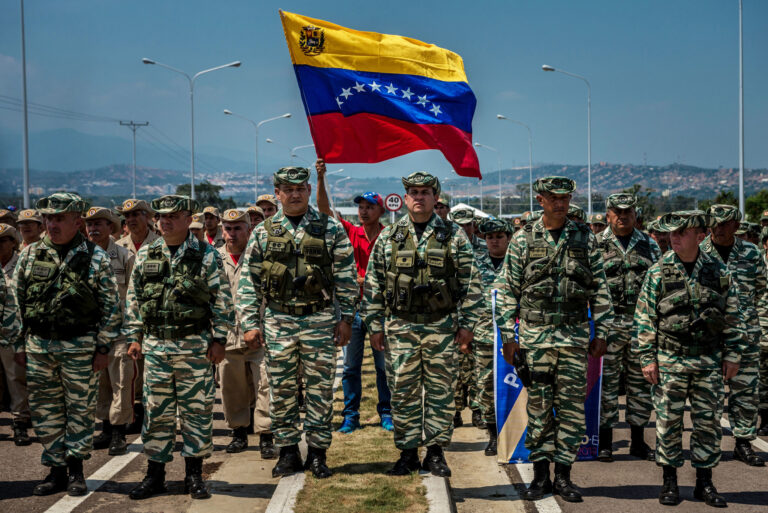
There is also a geopolitical layer beneath all of this. The official statements noted that Ali thanked Persad-Bissessar for Trinidad and Tobago’s support for Guyana’s territorial integrity and sovereignty in the Essequibo dispute with Venezuela. That is not a small side note. It means this partnership is not only about trade and energy. It is also about regional alignment in a tense strategic moment, where economic cooperation and sovereignty issues are becoming more tightly linked.
That matters because energy partnerships are never just about economics. They are about influence, security, negotiating power and who gets to shape the regional future. A tighter Guyana-T&T relationship could become a serious southern Caribbean bloc with weight inside CARICOM, especially if it begins producing visible wins faster than the wider regional machinery normally allows. That is why this moment has people paying attention. It feels like more than ceremony. It feels like a possible shift in power.
So, can they really build a new economic era?
Yes, they can. But only if they stop pretending the small things are small.
That is the whole lesson of this story. The future of Caribbean integration may not be decided only by billion-dollar gas discussions, giant investment pledges or glossy speeches about a “new regional energy era.” It may be decided by whether officials can fix the ridiculous low-level bottlenecks that make regional trade feel harder than importing common sense.
If the working group becomes a real instrument of reform, if private players are allowed to solve real problems, and if both governments treat speed as seriously as symbolism, then Guyana and T&T could become the closest thing the Caribbean has to an economic power axis. But if basic trade friction continues to embarrass the bigger vision, then this will be remembered as another historic moment that got eaten alive by routine Caribbean foolishness.
The opportunity is real. The logic is real. The need is real.
Now comes the hard part: proving the region can finally act like it has sense.
This story is part of our wider Caribbean Geopolitics & Global Affairs coverage. Explore the full hub for regional security updates, diplomacy, migration, energy politics, and deeper analysis of how global power plays shape Caribbean realities.