WHO REALLY MUTED PARLIAMENT? THE MIC ROW THAT TURNED A STANDARD PROCEDURE INTO A POLITICAL FIRESTORM
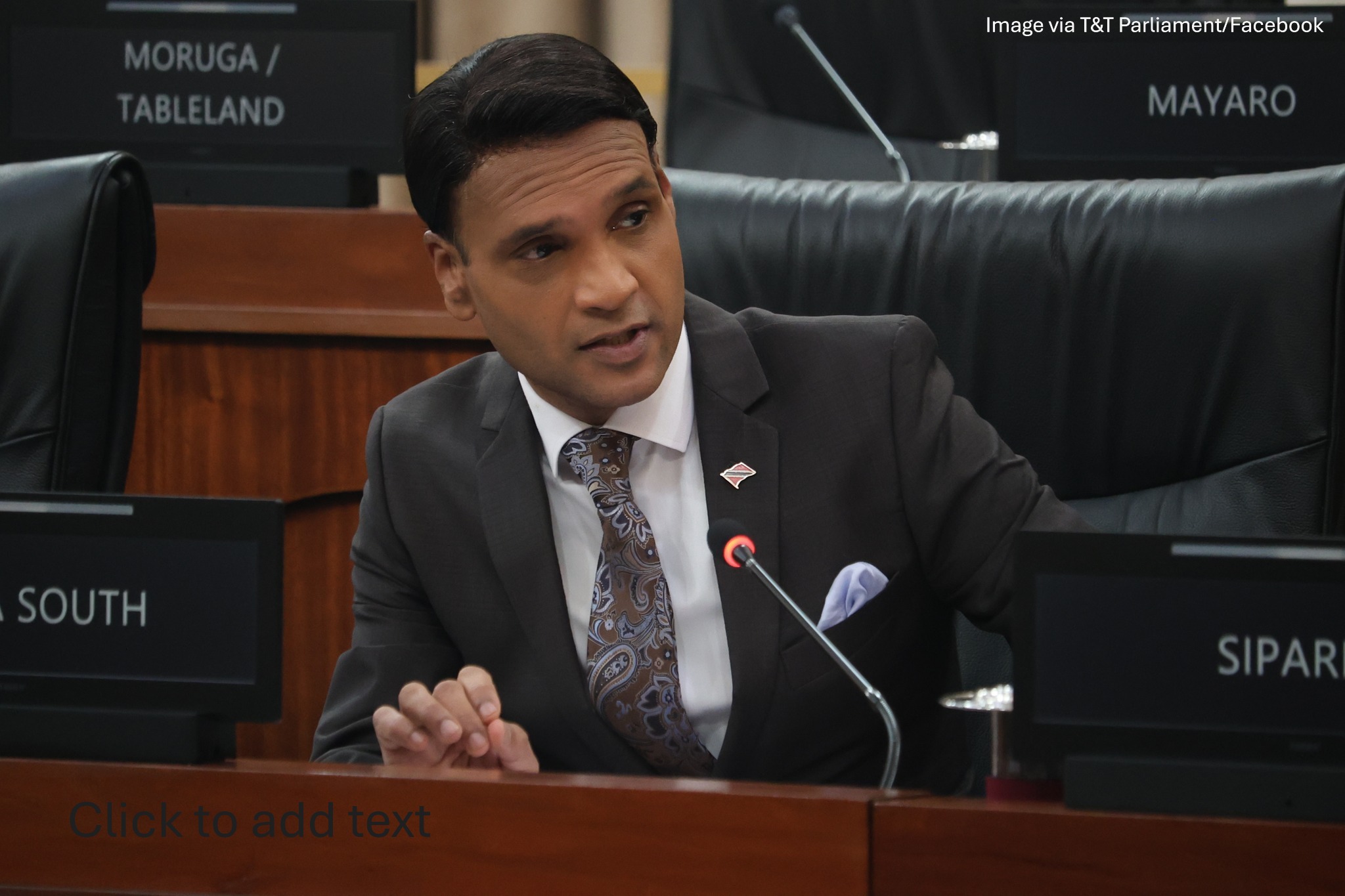
The phrase Muted Parliament is now doing what Trinidad and Tobago politics does best: turning a technical issue into a national firestorm, a procedural matter into a party war, and a parliamentary staff member into the unwilling face of a political brawl.
What began as a row over microphones inside the Standing Finance Committee has now become much bigger than sound levels, cross-talk and who could or could not be heard on the Parliament Channel.
At the centre of the controversy is Leader of Government Business Barry Padarath, who accused parliamentary broadcasting staff of bias after Government MPs complained that their microphones were being muted while Opposition MPs appeared to be heard more clearly.
But the story did not stop there.
Opposition MPs have alleged that Padarath left his seat and took a photograph of a parliamentary audio technician during the heated exchange. The PNM has since called for a criminal investigation, claiming the act amounted to intimidation of a public officer. Padarath and Government figures have rejected that characterisation, insisting the real issue is fairness in parliamentary broadcasting and whether Government MPs are being properly heard.
And now comes the twist that changes the entire conversation.
Parliamentary experts say the muting of microphones may not have been bias at all. It may have been procedure.
Muted Parliament or misunderstood Parliament?
The most important detail in this entire controversy may also be the least politically convenient one.
According to expert commentary reported after the incident, when the Speaker rises or attempts to regain control of proceedings, all other microphones in the chamber are muted. Not Government mics. Not Opposition mics. All mics.
That is not a conspiracy. That is not a partisan audio ambush. That is how parliamentary order is supposed to work.
In Westminster-style systems, the Chair must be heard. When the Speaker stands, the House is supposed to settle. If members continue shouting, heckling, cross-talking or trying to speak over the Chair, the audio system cannot become a free-for-all where every political warrior gets equal volume in the chaos.
The Speaker’s authority depends on the Speaker being heard.
That is the point.
So the question is no longer simply: “Who muted the microphones?”
The better question may be: “Did MPs understand why the microphones were muted in the first place?”
Because if the Speaker was trying to take control of the House, and the system muted everyone else, then what was being treated as suspicious may actually have been the system working exactly as designed.
Barry Padarath and the photograph allegation
This is where the matter becomes especially serious.
The PNM has alleged that after complaints were raised about Government microphones being muted, Barry Padarath approached or singled out a parliamentary audio staff member and took a photograph of him. The Opposition says this was unacceptable and created the appearance of intimidation.
Padarath has rejected the allegation that his conduct amounted to intimidation. Prime Minister Kamla Persad-Bissessar and other Government MPs have backed the broader concern about muted Government microphones, saying the issue has existed for years and should be raised through the appropriate parliamentary broadcasting channels.
That side of the argument cannot simply be ignored.
If MPs believe there is a genuine problem with the Parliament’s audio system, the matter should be investigated. If there are repeated technical inconsistencies, the public has a right to know. Parliament belongs to the people, and the people have a right to hear what their elected representatives are saying.
But there is a line.
And that line sits between raising a formal complaint about a system and placing an individual staff member in the middle of a political firestorm.
Parliamentary staff are not elected combatants. They are not ministers. They are not Opposition senators. They are not talk show hosts. They do not have party platforms, press conferences, campaign pages or political attack dogs waiting to defend them online.
They are public servants doing highly sensitive work inside one of the most politically charged rooms in the country.
That is why this controversy has hit such a nerve.
The staff cannot fight back
In Trinidad and Tobago, political arguments move fast. One minute there is a complaint in the chamber. Next minute there are press releases, livestreams, screenshots, accusations, counter-accusations and half the country choosing a side before the facts even catch up.
But parliamentary staff do not get to enter that battlefield.
They cannot jump on Facebook and say, “Actually, here is what happened.” They cannot post a clapback. They cannot call a press conference and accuse MPs of misunderstanding the system. They cannot turn the camera back on the politicians and say, “You all were shouting over the Speaker, so the mics were muted.”
They are expected to be silent, professional and impartial.
That is precisely why they must be protected.
Because once an individual staff member is publicly identified, photographed, targeted or linked to an accusation of political bias, the matter stops being only about audio levels. It becomes about the safety, independence and dignity of the parliamentary service itself.
If MPs have a complaint, there are proper channels.
There is the Speaker. There is the Clerk. There is the Broadcasting Committee. There are records, CCTV, audio logs, parliamentary procedure and institutional review mechanisms.
But the chamber floor cannot become a place where technical staff are dragged into the political ring because MPs are frustrated.
Experts say this is international standard
Former Speaker Nizam Mohammed has also weighed in, making the point that when proceedings descend into disorder, all microphones except the Speaker’s should be muted until order is restored.
That is not silencing democracy. That is how democracy stops becoming a shouting match.
This matters because Parliament is not supposed to operate like a rum shop argument with better furniture. The rules exist because the House is supposed to be heard clearly by members, the media and the public.
International parliamentary broadcast standards also support the broader principle that when disorder occurs, the focus should return to the Chair. In other words, when the House loses control, the camera and the audio should not reward chaos. They should reinforce order.
That is why the “Muted Parliament” controversy is bigger than whether one MP’s microphone was on or off at a particular moment.
It raises a deeper question: do our elected representatives understand the institution they are operating inside?
Because if they do, then they should know that when the Speaker has the floor, everybody else is supposed to stand down.
And if they do not, then maybe the microphones are not the only thing malfunctioning in the Red House.
Government says the concern is real
To be fair, the Government’s position is not that MPs should be allowed to shout over the Speaker.
Their argument is that the muting problem has been happening for years and has affected UNC members both in Opposition and now in Government. Prime Minister Persad-Bissessar has said she experienced similar issues. Former Chief Whip David Lee has also argued that Government MPs are asking for fairness, not special treatment.
That is a legitimate issue to raise.
If there is a pattern of audio inconsistency, it should be reviewed properly. If MPs on one side are being heard better than MPs on another side, the public deserves answers. If the Parliament Channel’s production choices or audio practices are creating even the perception of bias, that perception should be addressed with transparency.
But that review must be institutional, not personal.
The answer to suspected unfairness is not to turn a technician into a headline.
The answer is to examine the recordings, review the procedures, explain the rules publicly, and allow the Speaker or the relevant parliamentary authority to clarify exactly how microphones are controlled during committee sittings.
Because right now, the country has two competing stories.
One story says Government MPs were being unfairly muted.
The other says the system was simply doing what parliamentary systems do when the Speaker tries to regain control.
Both cannot be treated as fact at the same time without evidence.
Parliament cannot run on suspicion alone
This is the dangerous part.
T&T politics has now reached a point where every technical issue becomes a plot, every rule becomes a weapon, every procedure becomes a conspiracy, and every public servant risks becoming collateral damage in the latest partisan war.
A microphone goes off, and suddenly the country is debating bias, intimidation, parliamentary privilege, criminal investigations and whether the Red House itself can be trusted.
That is not healthy.
Because Parliament depends on more than microphones. It depends on trust.
Trust that the Speaker will be fair.
Trust that staff will be impartial.
Trust that MPs will follow rules even when they are angry.
Trust that complaints will be handled through proper channels.
And trust that politicians will not use the full weight of their office to pressure people who are not in a position to fight back.
Once that trust collapses, every muted mic becomes a national crisis.
The real question
So who really muted Parliament?
Maybe the answer is not the technician.
Maybe it was the disorder.
Maybe it was the cross-talk.
Maybe it was the breakdown of respect for the Chair.
Maybe it was the growing belief among politicians that every institution is either for them or against them.
And maybe, just maybe, the most important voice in this entire controversy is not the loudest MP in the chamber, but the silent staff member who never asked to become part of the fight.
If there is evidence of bias, investigate it.
If there was intimidation, investigate that too.
But let us not pretend the country can protect democracy by attacking the people whose job is to keep its institutions functioning.
Parliament is supposed to be the place where national order is made visible.
Instead, the mic row has shown us a Red House where order itself is now under suspicion.
And that may be the loudest thing Trinidad and Tobago heard all week.
This story is part of our wider Trinidad Politics Explained coverage. Explore the full hub for political analysis, key background, major controversies, and the latest updates.