From ‘Revenue Racket’ to ‘Lawless Dump’: Kamla’s Great Ticket U-Turn
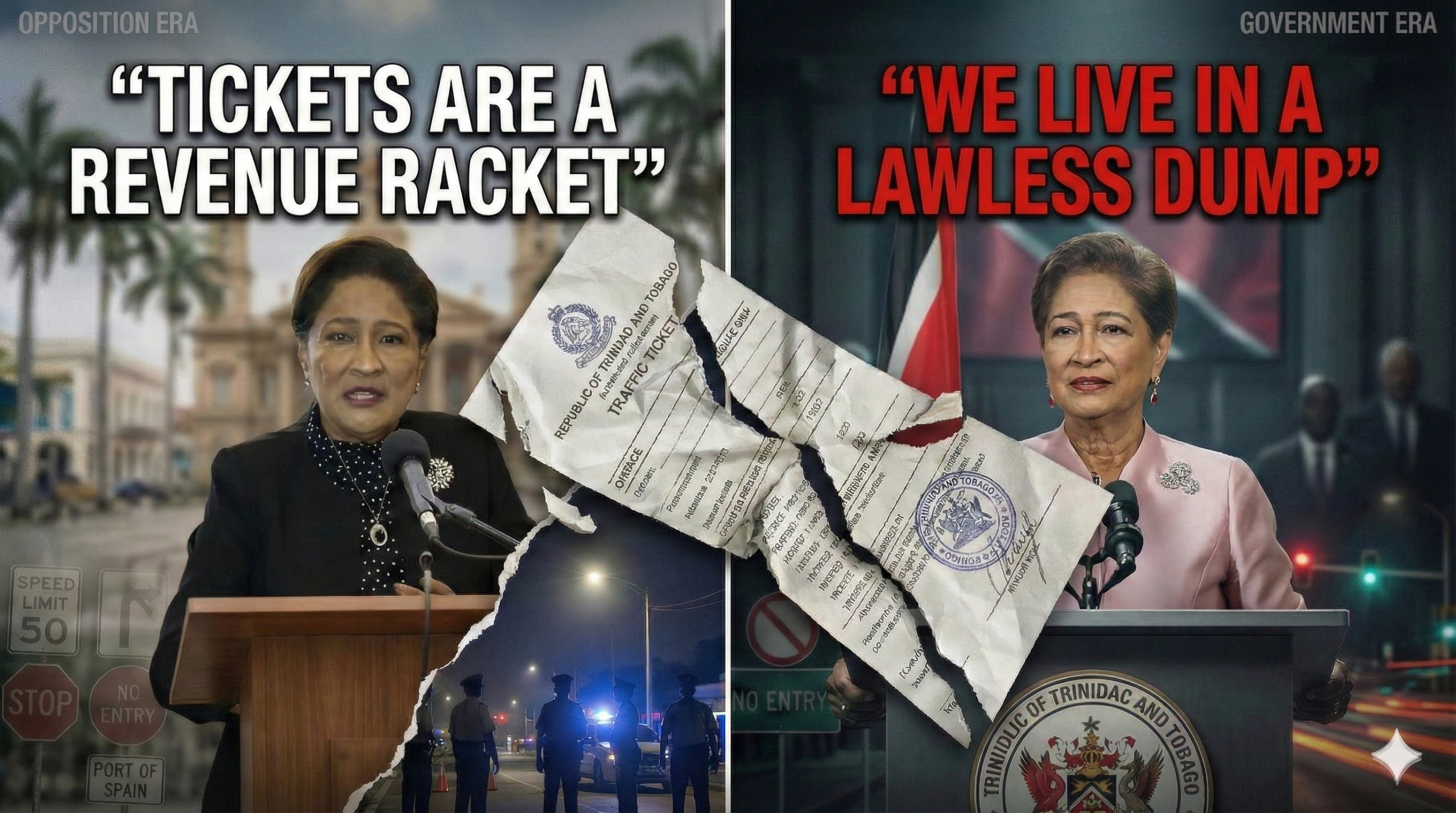
For years, drivers in Trinidad and Tobago were told a familiar story. Traffic tickets were not about safety. They were about money. According to the opposition narrative at the time, the system had morphed into a revenue-generating machine, squeezing ordinary motorists while potholes multiplied and discipline on the roads kept evaporating.
Fast-forward to today, and the story has been rewritten. Kamla traffic fines are no longer a symbol of state greed. They are now being sold as moral medicine. Necessary. Urgent. The cure for a country sliding into chaos.
Same tickets. New sermon.
When tickets were “a revenue racket”
Back when she sat on the opposition benches, Kamla Persad-Bissessar was blunt about the direction of traffic enforcement. Heavy penalties, she argued, were being used less to reform driver behaviour and more to pad state coffers. It was a criticism that resonated with commuters watching fines rise while congestion, reckless driving, and road deaths stubbornly refused to fall.
The promise was reform. Fewer punitive measures. A move away from what was framed as ticketing for cash rather than safety. The public message was clear: drivers were being punished financially, not protected physically.
It was an easy sell in a country where almost everyone has felt the sting of a sudden ticket and wondered where exactly that money was going.
“If fines are for safety, why does the Treasury always seem to be the first beneficiary?”
That question hovered in the background then, and it hasn’t gone away.
Kamla Traffic Fines, rebranded as discipline
Now in government, the tone has shifted dramatically. Faced with criticism over steep penalty hikes, the Prime Minister’s defence is rooted in a stark diagnosis of national decay. The country, she says, has descended into lawlessness. Strong medicine is required. Traffic fines, in this telling, are not punishment but protection for the law-abiding majority.
This is the core of the new argument: fear of consequences restores order.
Where once tickets were framed as economic extraction, they are now positioned as behavioural correction. The fines are high because the problem is severe. If drivers are reckless, pedestrians unsafe, and roads deadly, then softer penalties are portrayed as indulgence Trinidad and Tobago can no longer afford.
The logic is internally consistent. Politically, however, it carries baggage.
The disappearing demerits and the growing bill
One of the most curious twists in the Kamla Traffic Fines debate is the removal of demerit points for most offences. The explanation offered is administrative clarity and fairness. But in practice, it has produced a strange outcome: punishment did not disappear; it was concentrated into cash.
No points accumulating quietly in the background. No gradual warnings. Just immediate financial pain.
For drivers, the lived experience is simple. You may no longer lose points, but you will lose money. Sometimes a lot of it.
In fact, under Legal Notice 471, several common traffic offences now carry fines that have doubled, a reality broken down in detail in TriniLulz’ analysis of the new traffic penalty hikes.
“They didn’t remove punishment. They just compressed it into your wallet.”
This is where the opposition-era rhetoric boomerangs. A system once criticised for extracting revenue now relies almost entirely on monetary penalties to enforce compliance.
The optics are not subtle.
Same roads, same chaos, bigger tickets
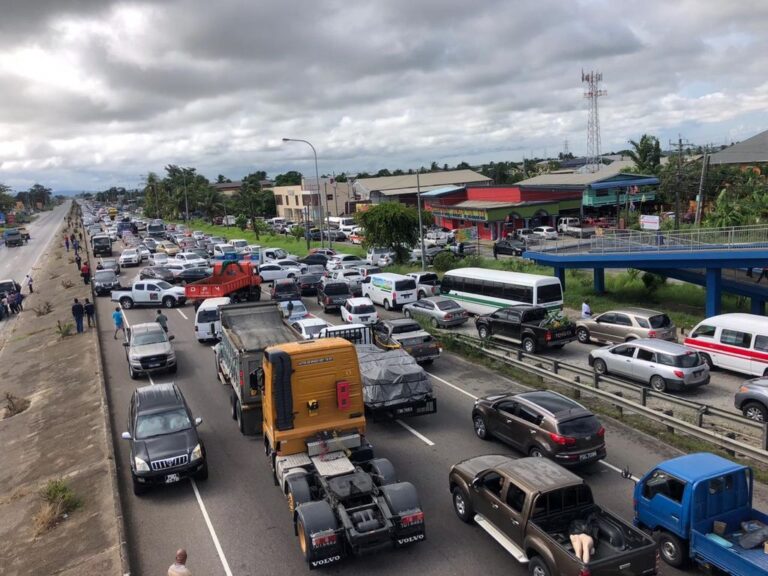
Here is the uncomfortable question many motorists are asking: what exactly has changed on the roads themselves? Congestion remains brutal. Enforcement feels uneven. Reckless driving still trends on social media daily. Yet fines have grown teeth.
If Kamla Traffic Fines are the solution, the public naturally expects measurable results. Fewer deaths. Better behaviour. Safer commutes. Without those outcomes, the suspicion returns that punishment is outpacing reform.
This is not a uniquely Trinidadian dilemma. Around the world, governments wrestle with whether deterrence through pain actually reshapes behaviour, or simply breeds resentment. But in a small society with a long memory, political reversals are noticed quickly.
The political U-turn that won’t stop trending
The reason this issue refuses to die is not just the money. It is the narrative flip. Yesterday’s injustice has become today’s necessity. Yesterday’s revenue racket has become today’s civic duty.
Politics allows for evolution. Circumstances change. Evidence accumulates. But when explanations change faster than the potholes get fixed, scepticism is inevitable.
Kamla Traffic Fines sit at that uncomfortable intersection between governance and memory. Voters remember what was said before. Drivers remember what they were promised. And every new ticket quietly reopens the argument.
“In Opposition: ‘Revenue racket.’ In Government: ‘National discipline.’ Same ticket, different justification.”
So what is this really about?
At its core, this debate is not just about traffic offences. It is about trust. Trust that punishment is proportionate. Trust that enforcement is fair. Trust that today’s justification will not be tomorrow’s contradiction.
Until that trust is rebuilt, every ticket will feel less like a lesson and more like a lecture Trinidad and Tobago has already heard before.
This story is part of our wider Trinidad Politics Explained coverage. Explore the full hub for political analysis, key background, major controversies, and the latest updates.