1,700 TICKETS IN 6 DAYS: ROAD SAFETY… OR ROAD TAX?
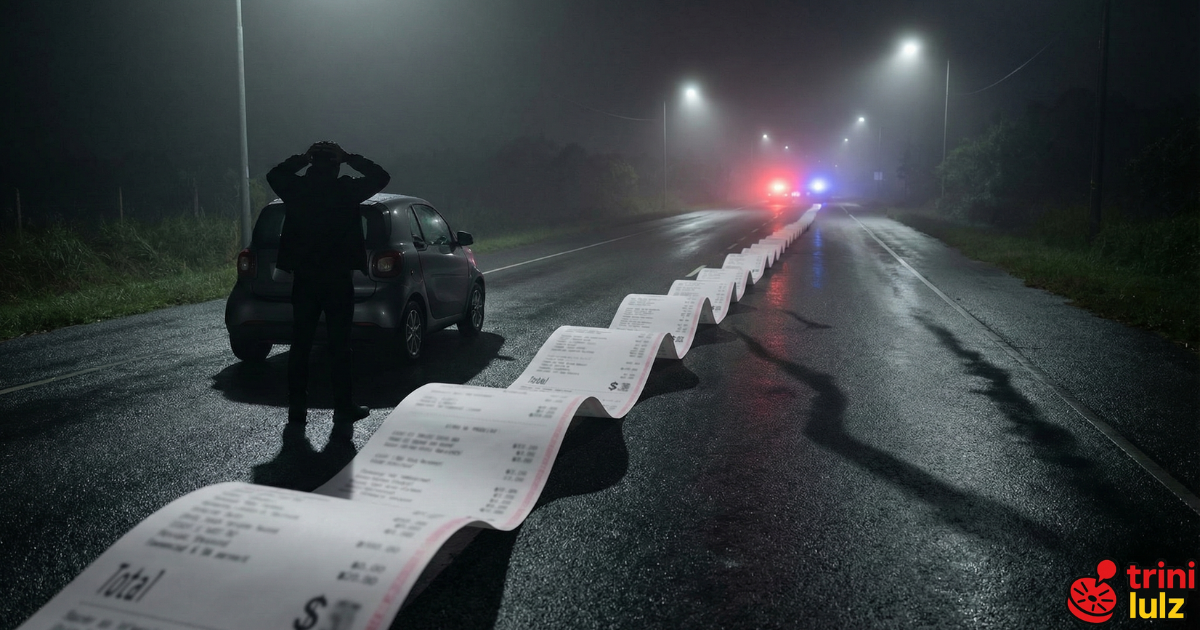
By the time most Trinidadians finished scraping the black-eye peas out of their teeth and putting Christmas decorations back in the box, the roads had already delivered the first shock of the new year.
1,700 traffic tickets. Six days.
That’s not a typo. That’s not social-media exaggeration. That’s the figure publicly cited by the Minister as justification for the newly increased traffic fines in Trinidad and Tobago — a number so large it landed like a collective slap across the windscreen of the nation.
The official explanation is simple and serious: lawlessness on the roads has reached alarming levels. Dangerous driving. Unroadworthy vehicles. People treating traffic laws like optional suggestions.
All fair points.
But when 1,700 tickets rain down in under a week, the question shifts gears fast.
Is this about fixing behaviour — or filling a hole?
A NEW YEAR, A NEW PRICE LIST
The first thing drivers learned in January is that traffic violations now come with luxury-level consequences.
Fines that once stung now properly burn. Minor infractions can rack up into thousands. Multiple tickets at one stop can wipe out a week’s wages before lunchtime.
The timing didn’t help perceptions either. The increases were gazetted during the Christmas season and kicked in on January 1, when pockets were already thin and patience thinner.
No phased rollout. No public education blitz beforehand. No grace period announced upfront.
Just enforcement — heavy, fast, and expensive.
And then came the number.
1,700 tickets in six days.
That’s not targeted intervention. That’s saturation bombing.
Behaviour change is a programme. Revenue generation is a vibe.
WHEN SAFETY STARTS TO FEEL LIKE A BILL
Let’s be clear before anyone reaches for the keyboard: traffic laws exist for a reason.
Defective tyres kill people. Uninsured vehicles ruin lives. Unsecured loads turn highways into obstacle courses. No serious society argues otherwise.
But enforcement is supposed to correct behaviour, not create panic.
When enforcement arrives as an avalanche of tickets, drivers don’t think, “Let me improve.”
They think, “How I paying this?”
That’s where the public outrage lives.
Because many of the people being caught aren’t reckless speed demons. They’re working people in old vehicles, juggling maintenance costs, insurance premiums, licensing fees, fuel prices, and now — fines that feel deliberately unforgiving.
Which is why one story hit so hard.
THE COCONUT VENDOR MOMENT
If enforcement had a face, it became the coconut vendor who reportedly walked away from a traffic stop with TT$19,000 in tickets.
Six tickets. One pickup. One man trying to earn.
That story exploded because it captured the fear everyone felt but hadn’t yet experienced.
You can read that full breakdown here:
👉 Road Safety or Road Robbery? The TT$19,000 Coconut-Vendor Bill That Have Trinidad Talking
https://www.trinilulz.com/road-safety-or-road-robbery-the-tt19000-coconut-vendor-bill-that-have-trinidad-talking/
It wasn’t about coconuts. It was about scale.
When enforcement becomes financially catastrophic in one encounter, it stops feeling corrective and starts feeling extractive.
If one stop can financially cripple a working man, the policy has stopped teaching and started punishing.
1,700 TICKETS DON’T APPEAR BY ACCIDENT
The government’s position is consistent: the roads are lawless, enforcement is necessary, and fines will not be reduced. There has been talk of grace periods and warnings for fixable defects, but the core message remains firm.
The Trinidad and Tobago Police Service says drivers must comply. Full stop.
Still, numbers tell stories too.
Issuing 1,700 tickets in six days suggests a strategy designed to maximize contact, not selectively target the worst behaviour. It suggests checkpoints, sweeps, and wide nets.
And wide nets always catch more than just the dangerous fish.
In a country where public finances are under pressure and citizens already feel squeezed from every direction, it’s impossible to ignore how this looks.
Safety policy should reduce violations over time.
Revenue policy peaks early.
FIXING ROADS VS. FIXING BALANCE SHEETS
If the goal is genuinely safer roads, the toolbox is bigger than ticket books.
- Public education before penalties spike
- Grace periods for mechanical defects
- Affordable inspection access
- Better road engineering
- Consistent enforcement, not blitzes
None of that excuses dangerous driving. But all of it builds compliance without breeding resentment.
Right now, the danger isn’t just bad driving.
It’s public trust skidding on bald tyres.
Because once citizens believe enforcement is less about safety and more about survival of the Treasury, every ticket becomes suspect — even the justified ones.
And that’s how you lose the moral high ground.
THE QUESTION TRINIDAD CAN’T SHAKE
So yes — maybe the roads are lawless.
But when 1,700 tickets fall in six days, the public is entitled to ask:
Is this a road-safety campaign?
Or is it a road tax with blue lights?
Until the answer feels clear, every siren will sound less like protection — and more like a receipt being printed.