Top 25 Most Influential People in the Caribbean: The Leaders, Legends, and Revolutionaries Who Shaped the Region
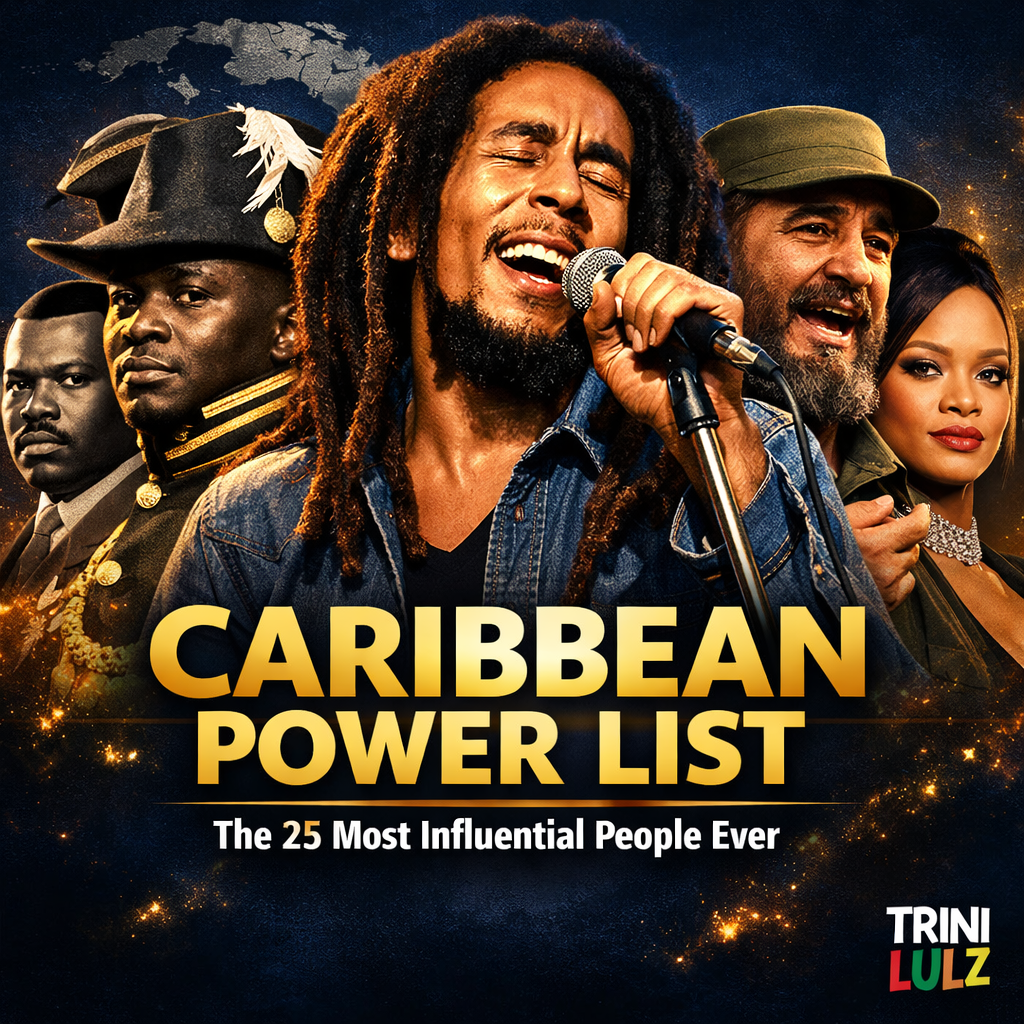
The Caribbean’s True Power List
When people talk about the Caribbean, they usually start with beaches, rum, and carnival. That is a pleasant stereotype, but it hides something far more interesting: the Caribbean has produced an astonishing number of individuals who reshaped global politics, music, economics, religion, and culture.
From anti-colonial revolutionaries to musical prophets, from cricket legends who became national symbols to intellectual giants who rewrote how the world understands colonialism, the region’s influence punches far above its geographic size.
Some of these figures changed their own islands. Others changed entire continents. A few changed the course of world history.
Here is a ranked look at the 25 most influential people in Caribbean history, based on the scale and lasting impact of their contributions.

1. Marcus Garvey (Jamaica)
Few Caribbean figures have influenced global political thought as profoundly as Marcus Garvey.
In the early 20th century, Garvey founded the Universal Negro Improvement Association (UNIA) and built what became the largest Black nationalist movement in history. His message of Black pride, economic self-reliance, and Pan-African unity spread across the Americas and Africa.
Garvey’s ideas later influenced civil rights leaders like Martin Luther King Jr., Malcolm X, and Nelson Mandela. Even the Rastafarian movement draws heavily from his philosophy.
Quote Box:
“Up you mighty race, accomplish what you will.”
Garvey didn’t just shape Caribbean identity. He helped redefine Black consciousness globally.

2. Toussaint Louverture (Haiti)
If influence is measured by shaking the foundations of global power, Toussaint Louverture sits near the very top.
Louverture led the Haitian Revolution, the only successful slave revolt in modern history. His leadership helped destroy the French colonial system in Saint-Domingue and ultimately gave birth to Haiti in 1804.
The revolution terrified slave-holding societies throughout the Americas and reshaped global politics.
It also helped trigger Napoleon’s decision to sell Louisiana to the United States, dramatically expanding America’s territory.

3. Fidel Castro (Cuba)
Love him or hate him, Fidel Castro became one of the most consequential political figures of the 20th century.
The Cuban Revolution of 1959 transformed the island into a socialist state aligned with the Soviet Union, triggering decades of Cold War confrontation with the United States.
From the Cuban Missile Crisis to revolutionary movements in Africa and Latin America, Castro’s geopolitical footprint extended far beyond the Caribbean.
For more than half a century, Cuba became one of the world’s most recognizable political symbols.

4. Bob Marley (Jamaica)
No Caribbean voice has echoed across the world like Bob Marley.
Through reggae music, Marley carried messages of spirituality, resistance, and unity to millions of people. Songs like One Love, Redemption Song, and Get Up, Stand Up became global anthems of justice and liberation.
Marley transformed reggae into a global cultural force and helped introduce Rastafarian philosophy to international audiences.
Few musicians in history have shaped both music and political consciousness in the way Marley did.

5. Eric Williams (Trinidad and Tobago)
Eric Williams was the intellectual architect of modern Caribbean independence.
A historian at Oxford, Williams wrote the groundbreaking book Capitalism and Slavery, which reshaped academic thinking about the relationship between slavery and the rise of European wealth.
He later became the first Prime Minister of Trinidad and Tobago, leading the country into independence in 1962 and shaping the political model many Caribbean states would follow.

Next: Up next one of the most important intellectuals the Caribbean has ever produced. → Page 2 ▸