Machel Montano’s Brooklyn Spotlight Shows How Soca History Is Being Saved for the Next Generation
A Brooklyn exhibition celebrates Machel Montano while revealing how family archives, libraries and Caribbean communities keep musical history alive.
The fete ends. The history must stay.
Machel Montano’s Brooklyn Spotlight brings that idea into focus at Brooklyn Public Library, where Journey of a Soca King: The Exhibition is presenting materials from the Trinidadian performer’s career. Scheduled from August 22 to September 12, 2026, the exhibition offers a chance to consider what survives after the stage lights go down—and who does the work of keeping it. BPL’s exhibition listing identifies costumes, trophies and vinyl records among the objects on view.
For readers in Trinidad and Tobago, the appeal is immediate: one of our most recognisable entertainers has a cultural platform overseas. For families in the diaspora, there is another possibility. A record or a photograph can start a conversation between someone who remembers a Carnival season and someone discovering that history for the first time.
Anybody who ever defended a box of old records from a household clean-out might appreciate this one. Sometimes, “old stuff” is the evidence.
What Machel Montano’s Brooklyn Spotlight puts on display
Created by the Machel Montano Foundation for Greatness and presented with BPL, the exhibition places a performing career inside a public library. The organisers describe a vinyl listening station, career footage and related activities at neighbourhood branches. This is a temporary exhibition drawing on an existing personal archive; the announcement does not say Brooklyn has acquired the entire collection. BPL’s announcement explains the partnership and programme.
The setting changes what an audience can do. A concert asks you to respond in the moment. An exhibition gives you room to look closely, compare eras and ask who made the clothes, recorded the music or kept the photograph. Those questions widen the story beyond the person holding the microphone.
Montano’s career provides plenty of ground to cover. BPL dates his performing beginnings to 1982, at seven, and identifies Too Young To Soca, released in 1985, as an early milestone. More than four decades later, those childhood beginnings can sit alongside the work of an established international performer. The library’s career summary supplies that chronology.
The mother who kept the record
One of the most important people in this story is Elizabeth “Lady” Montano.
In a February 2025 statement, NALIS credited Montano’s mother with collecting and curating materials throughout his career. It said the authority had assisted the collection’s nomination to UNESCO’s regional Memory of the World register and would provide oversight of its continued care. The statement also reported that researchers could request access at Xtatik Limited. NALIS’s account makes the work behind the recognition visible.
That is a useful way to understand legacy. Fame generates material, but somebody must recognise its value and keep it. The routine task of retaining a clipping can become part of the record a future researcher uses to establish when something happened or how it was understood at the time.
The archive also raises questions worth asking of any celebrated career: whose contributions are recorded, whose names appear in the credits, and which experiences sit outside the star’s own collection? A personal archive provides a particular perspective. Other musicians, designers, technicians, promoters and audiences have histories that can enrich it.
What the UNESCO recognition actually means
UNESCO’s entry identifies The Machel Montano Collection (1983–2024) as documentary heritage on the Memory of the World register for Latin America and the Caribbean. Its inventory includes recorded music, press clippings, films, music videos, costumes, awards, books, photographs and official documents. The inscription was among the additions announced in November 2024. UNESCO’s collection entry and 2024 announcement establish the scope.
The distinction matters: the recognition applies to this collection on a regional documentary register. It does not mean that the Brooklyn exhibition itself received UNESCO status, or that all soca has been inscribed on an intangible cultural heritage list.
It also helps explain why different objects belong together. A recording preserves sound. A dated photograph can establish appearance and setting. A newspaper clipping records how a performance was reported. Read together, such items allow later generations to investigate a career rather than rely entirely on recollection.
Brooklyn was part of the journey
There is a reason this particular overseas location carries weight. BPL’s account connects Brooklyn with Montano’s early training through Marie Brooks’ summer programme, a later period living on Utica Avenue and the recording of “Big Truck,” his first Road March winner.
“Brooklyn helped raise me,” Montano said in the library’s announcement.
That short statement gives the diaspora a more active place in the narrative. Overseas communities can provide audiences, working relationships and spaces where Caribbean music develops. Returning to those communities with an exhibition acknowledges a connection that extends beyond ticket sales.
For a Trinidadian parent taking a child through a display, the conversation might move between two homes: the place a family came from and the place it now lives. That is an opportunity the format offers, rather than a claim about any particular visitor’s experience.
Preserving the people around the music
The wider preservation story includes ordinary voices. Brooklyn Public Library’s Center for Brooklyn History lists the West Indian Day Carnival among the subjects covered by its oral-history collections. Interviews offer a different kind of evidence from a trophy cabinet: people explaining their lives and communities in their own words. The centre’s research guide points researchers towards those resources.
Cornell documented another example in 2017, when students recorded life stories from Caribbean residents in Brooklyn through an oral-history and urban-ethnography course involving caribBEING. This was a specific historical project, but it illustrates a practical method: make time to listen, record the account and preserve the context in which it was given. Cornell’s report describes the work.
Such projects can help expand the record beyond the famous. A community’s musical life also includes the people who organised events, taught children, built businesses and made audiences feel at home. Their accounts can complicate an easy success story in useful ways, bringing migration, work and neighbourhood change into the picture.
Carnival memory has another New York stage
In Harlem, the Caribbean Cultural Center African Diaspora Institute’s 2026 exhibition Jab, J’ouvert, Revelry & Resistance approaches Carnival through history, identity and collective memory. Curated by Know Your Caribbean, it combines archival material with contemporary art, sound and interactive elements. CCCADI says the project draws on its Living Archive and community contributions. Its exhibition announcement describes that approach.
Harlem and Brooklyn are distinct locations, and these are separate projects. Together, however, they offer examples of Caribbean culture being interpreted through objects, testimony and creative practice overseas.
They also suggest why celebration and preservation can support each other. Music brings people through a door. The material surrounding it gives them something to investigate once they are inside.
The connection runs back to Trinidad and Tobago
There is longstanding work at home to place overseas music stories before local audiences. The National Archives records a collaboration with TUCO and the University of Trinidad and Tobago to screen Charlie’s Records in 2019. Directed by Tina Charles, the film follows Rawlston “Charlie” Charles and his work recording and promoting calypso in the United States. The National Archives’ account connects that enterprise with artists including Calypso Rose, Kitchener, Shadow and Sparrow.
That example puts another family’s documentary work alongside the Montano story. It also reminds readers that the history crosses water in both directions: music travels, businesses develop, records accumulate, and films or exhibitions bring those experiences to new audiences.
NALIS, meanwhile, has publicly encouraged people with valuable collections to seek preservation advice. Its conservation services include care for paper-based materials. There are institutions and expertise at home to build upon. Its preservation appeal is a practical starting point.
The editorial takeaway is simple: keep the context as well as the object. A photograph becomes more useful when the people, date and occasion are identified. Future cultural projects will need those details, including the names that never appeared in the biggest type on the poster.
Planning a visit during the final week
Exhibition: Journey of a Soca King, Central Library, Brooklyn Public Library, through September 12, 2026. BPL’s website advises that all locations are closed September 5–7 for the holiday. Check the current listing and opening hours before travelling.
Conversation: Elizabeth “Lady” Montano and Maxine Williams are scheduled to discuss King of Soca on September 9, from 7–9pm, at Central Library’s Dweck Center, 10 Grand Army Plaza. Consult the event page for registration and updates.
Machel Montano’s Brooklyn Spotlight offers a reason to celebrate—and to look again at the things we keep. Which soca record, photograph or Carnival keepsake would you preserve for the next generation?
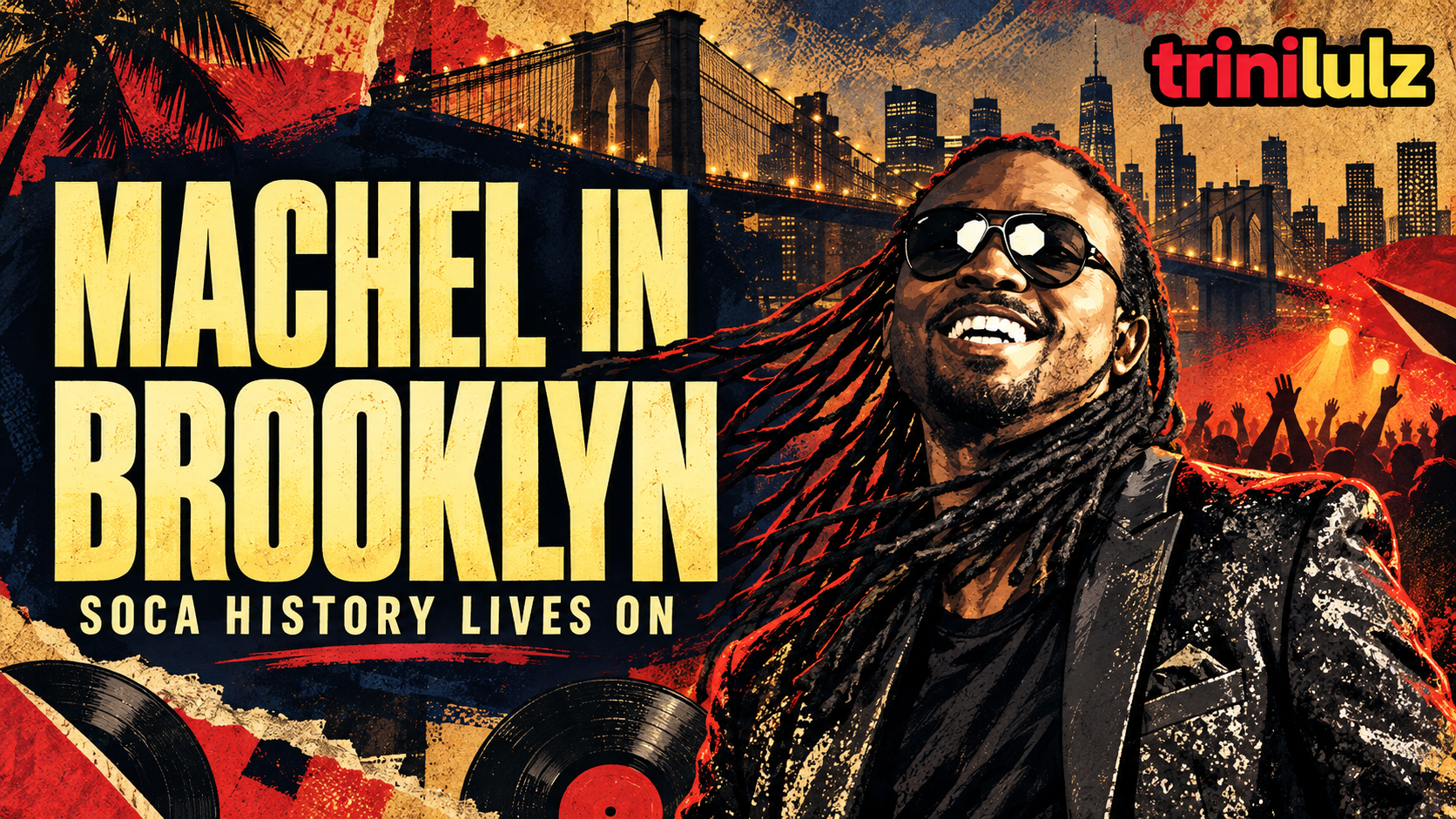
Reporting note: This culture feature draws on the linked institutional records and programme announcements, checked September 7, 2026. Event details may change. The featured artwork is an editorial illustration.