The UNC Opposed a Six-Month Scrap Metal Export Ban. Will Its Own Stop Theft?
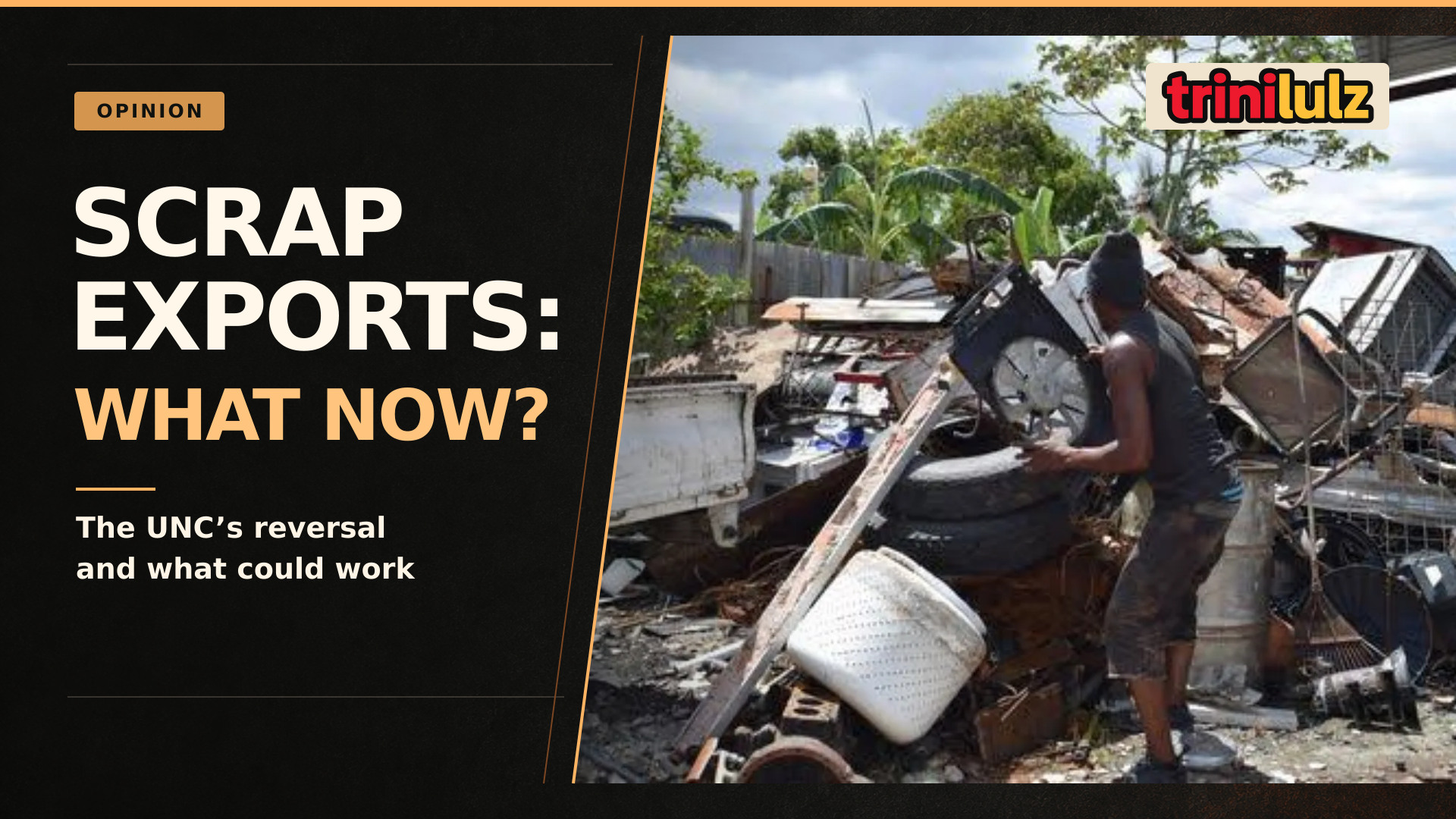
In August 2022, the UNC argued that legitimate scrap dealers should not lose their livelihoods because thieves were stripping the country’s infrastructure. Then-Opposition MP Roodal Moonilal argued at a UNC press conference that police should pursue the people stealing copper and iron instead of punishing lawful businesses. Four years later, his party wants to go further than the PNM government it criticised.
On November 22, Prime Minister Kamla Persad-Bissessar announced a total ban on the export of scrap iron, copper and brass by December 31, 2026. The government intends it to be permanent. Her case is that successive governments have worked with dealers and the thefts have continued, hitting water, electricity and other public services. The danger is real. The government still owes workers and the public an answer to the question it raised in opposition: why is shutting down the market a better fix than going after the part of it that buys stolen metal?
The announcement concerns exports of three named metals. It does not, by itself, ban all collecting or recycling. But for yards that depend on overseas sales, losing that outlet can still mean closing.
What changed since 2022?
| Date | What changed |
|---|---|
| August 2022 | The PNM government imposes a six-month ban on exports of old metal, with limited exceptions. In opposition the UNC argues against it. |
| 24 February 2023 | The government lifts the general ban and allows licensed exports again under a new framework. Copper remains subject to a separate restriction. |
| 10 July 2026 | A new one-year copper export restriction takes effect (Legal Notice 540), with a narrow route for licensed manufacturers’ own by-products or surplus. |
| 15 October 2026 | A separate order restricts brass exports, also with a manufacturer exception (Legal Notice 830). Another order gives eligible existing dealers until 14 October 2027 to transition to the new licensing framework (Legal Notice 831). |
| 22 November 2026 | Persad-Bissessar announces a total ban on exports of scrap iron, copper and brass by 31 December. The government says it is preparing legislation for a permanent ban. |
There is a revealing detail in that October extension: the Trade Ministry called it the seventh since the industry reopened. An extension for a dealer to meet licensing requirements is separate from permission to export metal. But the two decisions leave yards with urgent questions about stock they have already bought and which lawful activities can continue. As of November 26, the government had announced the broader ban and was preparing legislation.
Why this trade is so hard to police
Consider Tabaquite. On November 18, according to WASA, someone removed electrical cables and equipment from its booster station, leaving it out of service and disrupting piped water in several communities. The resale value of the missing metal is only a fraction of the damage a theft like that can cause. WASA has to replace equipment and restore service. Households have to get by without water.
The hard part is establishing ownership once metal changes hands. An old appliance, documented factory offcuts and a length of stolen cable can all arrive at a yard with resale value. They carry very different risks. When material is cut up or mixed into a larger load, an officer inspecting it later may have little to connect an individual piece to its owner. An export inspection can check a shipment against its paperwork. It cannot reliably reconstruct a purchase that was never properly recorded.
An export ban could make theft less lucrative if overseas buyers are the main outlet for stolen metal and the government can actually close that outlet. It could also squeeze legitimate collectors while illicit buyers keep operating away from licensed yards. Continued vandalism while the copper restriction is in force makes it worth tracing where stolen material goes. It does not tell us that the copper order achieved nothing, or that banning more metals will solve the problem.
What could work better than a permanent blanket ban?
Keep the riskiest material out of ordinary scrap purchases
Require verifiable proof of origin before any buyer can accept utility cable, manhole covers or other identifiable public infrastructure. A utility replacing its own equipment should be able to send it to an authorised recycler with a disposal record the recycler can check directly with the utility. Unverified material should be refused and reported. Clean industrial steel offcuts with a documented source could qualify for a tightly monitored pilot, if the law allows one and the state can staff it.
Make the records useful to investigators
The Scrap Metal Act, 2022 already provides for dealer licensing, seller and transaction records, and inspections. Start by publishing which parts are in force, how many yards hold valid licences and how many have been inspected. For a permitted trade, give every purchase a record that connects the verified seller, source, material, weight and payment to the outgoing load. Audit those records against what is on site. Traceable payments for higher-risk purchases would give investigators another check, provided small collectors have low-cost ways to get paid. Trade, Customs, police and utilities should share the evidence needed for cases without putting sellers’ personal details on a public register.
Protect the infrastructure and plan for the workers
WASA, T&TEC and other utilities should prioritise repeatedly targeted facilities for tamper alerts, physical protection and quicker restoration. Meanwhile, workers interviewed by the Guardian have asked for alternative jobs before the deadline. Pay experienced collectors to work on municipal bulky-waste pickup, clean-ups or dismantling where there is funded work and a verified outlet for the material. Give lawful yards written rules for documenting and safely clearing existing stock. Domestic recycling is worth exploring, but the state needs to show which buyers can take which grades, in what volume and at a price that will support collection. A promise to process everything locally is no substitute for buyers.
Judge the policy by whether the theft falls
If the government proceeds with the December halt, give it a public review date. Publish police reports of metal theft, affected utilities’ downtime and repair costs, and the outcomes of inspections and cases. Track lawful tonnage and how many displaced workers actually find paid work. Compare those figures with the periods before and after past restrictions, and say what the data cannot establish. A drop in legal exports is easy to count. The result people need is fewer thefts and shorter outages.
The UNC was right in 2022 to ask who would pay for a blanket ban. It still has to answer that question in office. Close the market for stolen infrastructure, give lawful workers a way to earn, and make the government show which measures are doing the work.
This story is part of our wider Trinidad Politics Explained coverage. Explore the full hub for political analysis, key background, major controversies, and the latest updates.