Randall Mitchell’s Insult: Did Kamla Help Set the Tone?
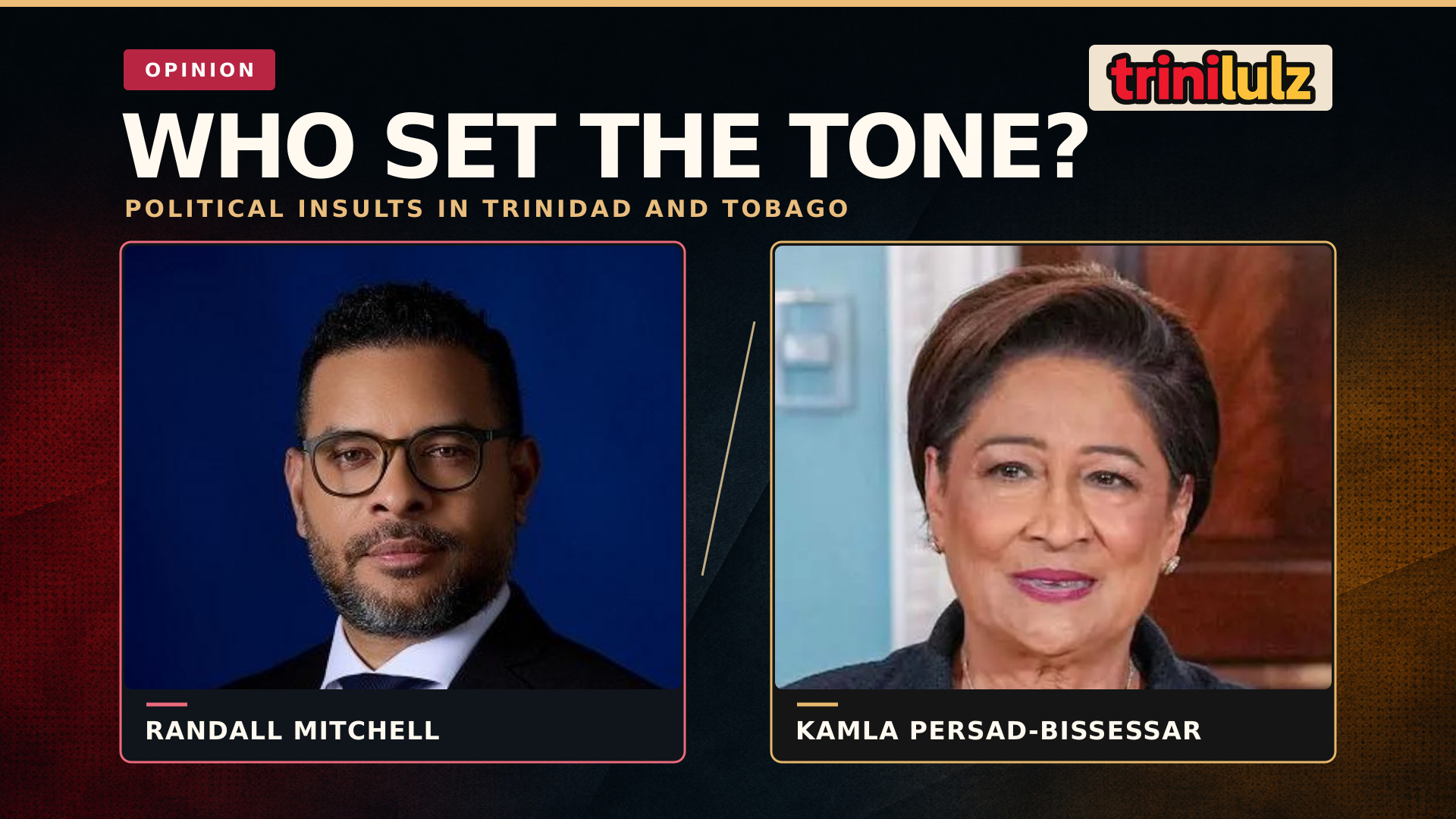
Randall Mitchell raised a fair question about the government’s pitch to attract billions in foreign investment through data centres. Then he gave people something else to talk about. In a Facebook post challenging the plan, the former PNM minister called Prime Minister Kamla Persad-Bissessar “Low Budget Vagina Kamla”, the Trinidad Guardian reported.
That was a sexist insult, and Mitchell is responsible for it. Persad-Bissessar’s own record raises a separate question: has she helped make personal attacks an accepted part of Trinidad and Tobago politics, through her own words and through the example she sets for the people she brings into government? There is a case that she has. It takes nothing away from her right to object to what Mitchell said.
A policy question lost in the insult
The UNC Women’s Arm called for a public apology and asked the PNM leadership to condemn the remark, according to TTT’s November 22 report. When Guardian Media asked Mitchell whether he would withdraw it, he said he was unwilling to do so at that point. Instead, he pointed to the “Small Pin” nickname directed at former prime minister Stuart Young and asked whether objections to sexually degrading political language extended to men. The same standard should apply to everyone. Mitchell can make that case and still take responsibility for his own words.
In the Guardian’s November 25 report, Persad-Bissessar brought up Mitchell’s election loss in La Brea and suggested a crapaud was better than him. The response makes it harder for the government to argue for a better standard. It also leaves the question about data centres where it started. How much of the investment is backed by signed commitments? How many permanent jobs are expected, and what would the government have to put into power, land or incentives to secure them? Those are the questions the Prime Minister should have to answer.
What Kamla said about Keith Rowley
In September 2018, as opposition leader, Persad-Bissessar called then prime minister Keith Rowley an “Oreo” at a UNC meeting in Claxton Bay, the Guardian reported. She was arguing that he served the interests of the wealthy one per cent. That is a claim voters can test against contracts, budgets and policy decisions. The racialised nickname turned the discussion toward Rowley’s identity. Rowley rejected it as racial, and the PNM Women’s League called for an apology.
There is a different record for the July 2020 campaign speech. Rowley accused Persad-Bissessar of race-baiting after remarks that some heard as “the black man on the other side”. Persad-Bissessar said she had used “blank man”, in a speech that also played on filling in the blanks. Newsday covered the dispute at the time. The two versions are disputed.
What a leader signals by whom she backs
In 2025, Persad-Bissessar brought Phillip Edward Alexander and Anil Roberts into her government as ministers in the Ministry of Housing. Their records put the question of standards squarely in front of the Prime Minister. Alexander acknowledged at his swearing-in that he would have to adjust his online approach in office. In April 2026, after a live broadcast drew scrutiny for reported disparaging remarks, he told the Guardian that clips had been edited out of context. He also said the Prime Minister had not reprimanded him and defended his approach as a form of political activism.
Roberts faced a formal reckoning as an opposition senator in 2021. After remarks on his online programme about then Senate President Christine Kangaloo, a majority of the Senate’s Privileges Committee found that his statements amounted to a personal attack on her conduct and character and breached privilege. The Senate adopted the report, and Roberts apologised to Kangaloo and the Senate that September. What matters here is both the conduct and the response: an institution called for a standard, and he apologised.
Neither appointment proves Persad-Bissessar endorsed everything either man has ever said. It does give her a responsibility to say, and show, where she draws the line for people speaking as members of her government. The public should be able to tell what that line is even when the person crossing it is a political ally.
The test is what you tell your own side
The PNM has a test of its own. Its Women’s League was right to demand an apology over the “Oreo” remark in 2018. In its response reported by the Guardian this week, the league turned the focus back on Persad-Bissessar’s record without directly condemning Mitchell’s words. It could do both. The UNC Women’s Arm was right to object to Mitchell; its standard also has to survive an insult aimed at a PNM politician.
Persad-Bissessar helped set the tone. So did the people who cheered the personal jabs, excused them or told themselves the other side deserved them. Mitchell made his own choice. He should withdraw the insult and put his questions about the investment plan back on the table. The Prime Minister, in turn, can make clear what she expects of her own ministers, then answer those questions on their merits.