CARRIER ON OUR DOORSTEP: U.S. Moves Its Super-Carrier Into Caribbean Waters — And We Should Be Watching
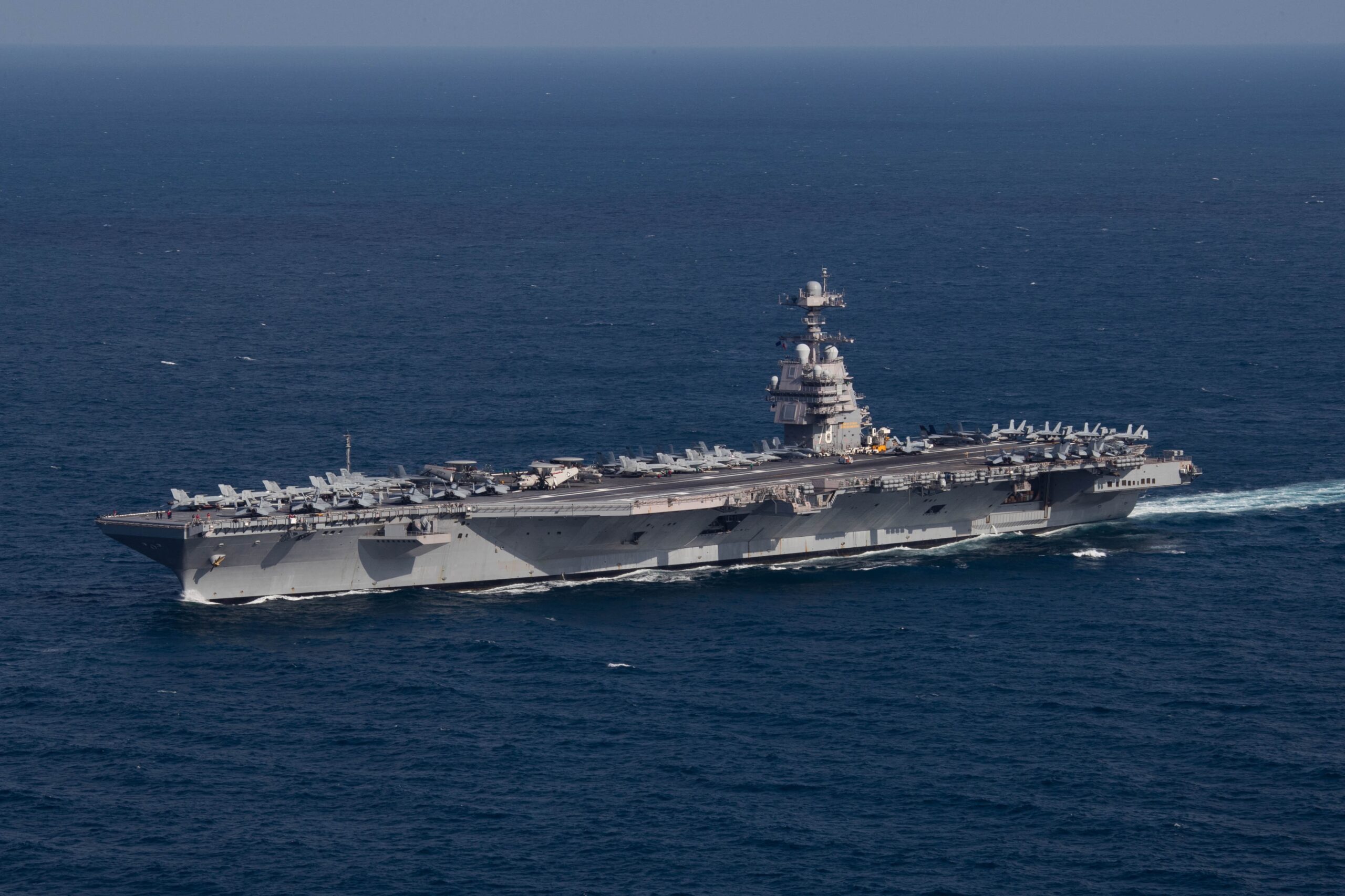
The U.S. has announced that its latest super-carrier is coming into the neighbourhood. The deployment of the U.S. aircraft carrier to the Caribbean signals a major shift in Washington’s posture in our hemisphere, and for those of us in Trinidad & Tobago watching from just across the sea, it should raise questions.
What’s going on?
In late October 2025, the USS Gerald R. Ford (the most advanced aircraft carrier in the U.S. fleet) was ordered by the Pentagon to sail from the Mediterranean toward the region of the United States Southern Command (which includes the Caribbean Sea and parts of Latin America).
The stated purpose: to “bolster U.S. capacity to detect, monitor, and disrupt illicit actors and activities that compromise the safety and prosperity of the United States homeland and our security in the Western Hemisphere.”
But — and you know there’s a “but” — analysts note that this isn’t a routine deployment. Carriers are not usually shuffled into the Caribbean for long-term patrol. This move stands out.
Why it stands out (and why it matters for us)
1. The rarity factor
Normally, U.S. aircraft carriers are stationed or deployed in what are considered “primary” areas of strategic interest: the Indo-Pacific, the Middle East, the Atlantic/Europe. Maintaining a carrier in the Caribbean or Latin American waters is comparatively rare. For example, carrier presence in dedicated forward areas helps project power — and shifting one to our region changes the script.
2. Symbolism + capability
An aircraft carrier like the Gerald Ford is more than just a ship: it carries a full air wing of jets, has enormous logistics support, and sends a visible signal of power. Analysts call carriers “indispensable” for projecting U.S. naval power.
3. Context: drug-trafficking, narco-terrorism, Venezuela
The immediate justification for this deployment: anti-drug operations. The U.S. has launched multiple strikes in the Caribbean/Eastern Pacific since September 2025 against suspected drug-smuggling boats, killing dozens. The Guardian+1
But there’s also broader context: rising tensions with Venezuela, questions over regime change, and U.S. efforts to assert its hemispheric role. One article headline put it bluntly: “Drugs are the excuse.” The Times of India
For us in Trinidad & Tobago and the wider Caribbean, the presence of such a vessel means the backyard is being treated with bigger strategic tools. That raises regional implications: sovereignty, maritime domain awareness, spill-over risks, and geopolitical signalling.
What the aircraft carrier really brings to the table
- Mobility: The carrier can move to sea, launch jets, sustain operations. This means the U.S. doesn’t need local bases (though it may work with them).
- Airpower at sea: Fighters, surveillance platforms, helicopters — the kind of assets that before would require land bases.
- A “floating fortress” + command centre: The ship functions as a base, command hub, and powerful deterrent.
- Messaging: Deploying a super-carrier sends a message far beyond the specific mission. Others watch.
The regional and local angle — why should you care
- Maritime space: We live in a region of many small states, many sea lanes, many informal maritime actors. When a big power insists on a major naval platform in our waters, the rules of the game shift.
- Sovereignty & partnerships: If the U.S. is operating near our shores, does that alter how we engage with the U.S., or with neighbours like Venezuela, Colombia?
- Risk of escalation: What starts as “anti-drug” might widen. With advanced weapons, large platforms, and high stakes, a mis-calculation can have local consequences (e.g., collisions, intrusions, contested seas).
- Opportunity for visibility: Small states can leverage such presence — for training, support, observation — but must also manage the dynamics carefully.
In short — a working theory
Here’s our hypothesis (and yes, it’s speculative): The U.S. is signalling that the Western Hemisphere is not a “safe zone” from major power deployments. By sending the Gerald Ford, the message may be: “We can bring our top naval tool here when we choose — so you’d better pay attention.” For the Caribbean, that might mean a shift in how maritime security and geopolitics are understood.
What to watch next
- How close the carrier group comes to our region (Caribbean Sea, Trinidad & Tobago waters) and if there are port calls or joint exercises.
- Whether the focus remains purely anti-narcotics or expands into broader “illicit actor” operations (which could mean paramilitary, regime-change, surveillance).
- How regional governments respond: Will there be statements from Venezuela, Trinidad & Tobago, or others about U.S. ships in the zone?
- The local maritime security implications: Will Trinidad & Tobago’s coast guard/navy deal with increased U.S. presence, shared intelligence, or changed patrol patterns?
- How the timing aligns with other Caribbean or Atlantic events: Are there changes in drug-trafficking routes, increased naval flights, intelligence sharing?
Sources:
US is sending an aircraft carrier to Latin America in major escalation of military firepower, AP News
US to escalate military presence in South America with aircraft carrier group, Reuters
Aircraft Carrier Math Is No Conundrum, Maritime Strategy Center
Aircraft Carriers: Still Indispensable, U.S. Naval Institute
This story is part of our wider Caribbean Geopolitics & Global Affairs coverage. Explore the full hub for regional security updates, diplomacy, migration, energy politics, and deeper analysis of how global power plays shape Caribbean realities.