THE RADAR IN TOBAGO: HOW TRINIDAD AND TOBAGO ENDED UP IN TRUMP’S MADURO TAKEDOWN
For years, the Caribbean has tried to keep one big promise: we doh want war in we yard.
Then 2026 opened with a scene that still sounding like a WhatsApp voice note somebody made up for views: Donald Trump’s administration ousts Nicolás Maduro and holds him on US soil, and suddenly the region realising that “geopolitics” is not a Channel 5 documentary. It is a thing that can park up by your coastline.
And here’s the part that hitting nerves from Port of Spain to Point Fortin:
Trinidad and Tobago wasn’t just watching. Trinidad and Tobago was helping set the stage.
Not with a dramatic invasion scene. Not with soldiers marching down Frederick Street. But with the kind of quiet “ally” decisions that sound harmless… until history does its ugly little reveal.
THE DAY A RADAR APPEARED IN TOBAGO AND NOBODY LAUGHED
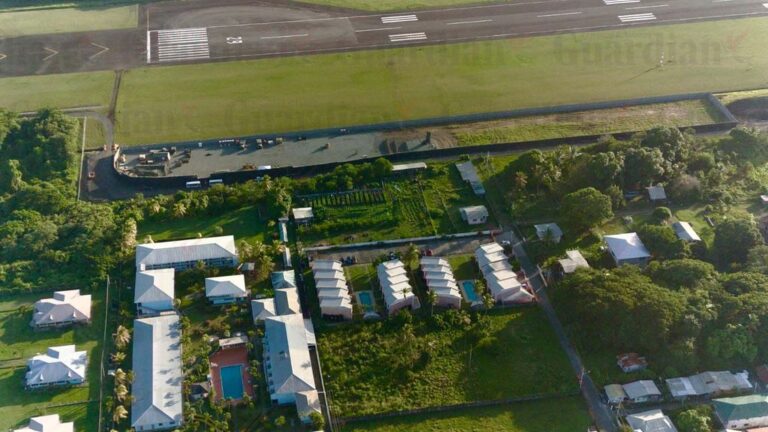
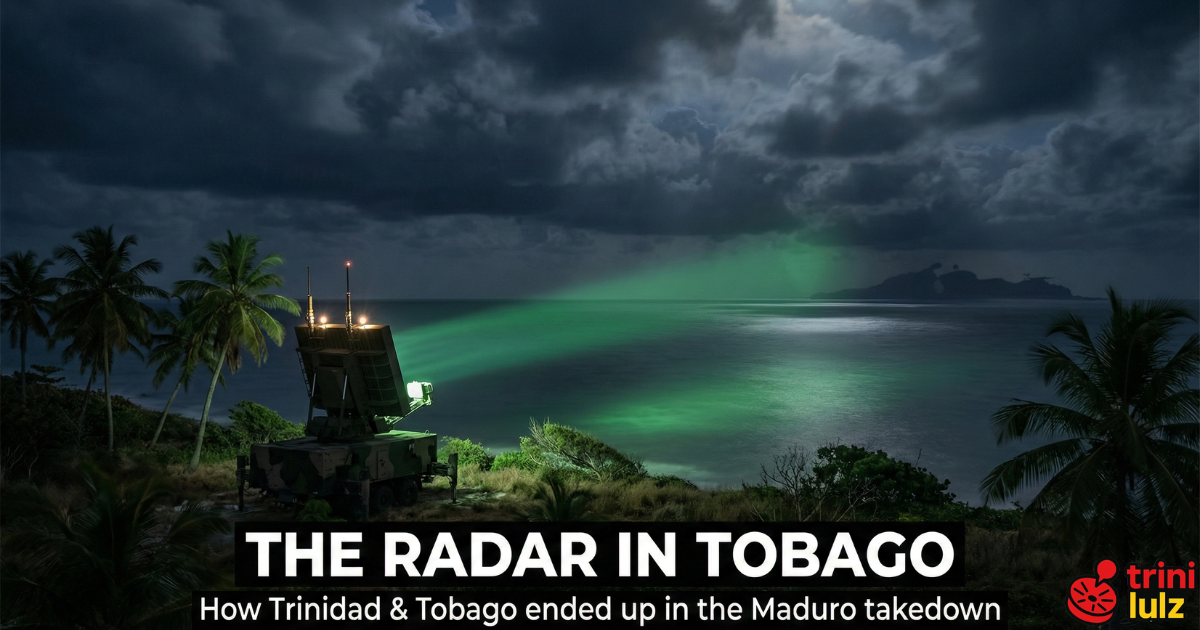
On 28 November, a serious piece of US military hardware showed up in Tobago: a US Marine long-range sensor system described as G/ATOR. Worth “tens of millions,” not the kind of thing you bring for a beach lime and a bake-and-shark.
Along with it came US jets and troops, on an island roughly seven miles from Venezuela. Tobago is not “near” Venezuela in the way Chaguanas is “near” Couva. Tobago is close-close.
So if you’re a citizen watching this unfold, the first question writes itself:
What exactly did we sign up for?
The public explanation floated in the wider reporting is the familiar one: transnational crime, counter-narcotics, security cooperation. The kind of words governments use when they want you to stop asking questions and start nodding like you’re in a press conference.
But the timeline starts looking real suspicious, real fast.
Since September, the US reportedly carried out at least 21 airstrikes on alleged drug smugglers in regional waters, with more than 80 people killed, including reports of Trinidadian citizens among the dead.
Then in December, Trinidad and Tobago allowed US military aircraft to transit through local airports, publicly framed as “logistics.”
And then… Maduro gets taken.
So yes, people are going to ask: was this really just “logistics”… or logistics with a destination?
“In the Caribbean, ‘logistics’ is the new ‘nothing to see here’.”
TRINIDAD AND TOBAGO, TRUMP, AND THE SWEET SMELL OF “RESOURCE POLITICS”
Here is where the story gets spicy, because it stops being only about security and starts smelling like energy desperation.
One regional analyst quoted in the Guardian piece (Peter Wickham) puts it bluntly: Trump wants oil. Trinidad and Tobago’s leadership wants gas.
And if you know anything about the energy map right now, you know exactly which gas everybody keeps staring at like it’s the last doubles on the tray:
Venezuela’s Dragon Field, long discussed as a potential supply source for Trinidad and Tobago, sitting near Tobago waters with an estimate of about 4.2tn cubic feet of gas.
The old approach was negotiation, diplomacy, threading the needle with US permissions.
The new approach feels like: ally up hard, and hope the big man in Washington break yuh off a piece.
That’s a risky bet even on a good day. Betting on Trump is like betting on rain not falling in Carnival season.
And the Guardian reporting flags another uncomfortable layer: Trinidad and Tobago is party to the International Criminal Court (ICC), while the US is not. So if this whole episode ends up being treated internationally as extra-judicial action, “being helpful” could start to look like “being implicated.”
“When superpowers ‘snatch’ presidents, small states don’t get to stay neutral. They get audited by history.”
CARICOM QUIETNESS: WHEN SMALL ISLANDS REALISE THE ROOM HAS NO DOOR
Traditionally, Caricom has tried to maintain a unified, principles-first foreign policy, including the idea of the Caribbean as a “Zone of Peace.”
But after the Maduro capture, the region largely did what small countries do when the big powers start rearranging borders like Monopoly pieces:
They went quiet.
The reporting suggests Caricom avoided a joint condemnation, taking “the path of least resistance,” because if major western leaders are cautious, Caribbean leaders are going to be even more cautious.
And there’s another fear under the fear: the idea that US legal language about “those who facilitated and supported” Maduro could be used like a net, wide enough to catch plenty Caribbean leaders who had normal diplomatic relationships with Venezuela, including through programmes like Petrocaribe.
Because let’s be real: Venezuela didn’t only do oil politics. Venezuela did regional aid and regional deals. The story notes examples like support after Hurricane Maria and infrastructure involvement in the region.
So now everybody watching Trinidad and Tobago and thinking:
If that is what “alignment” brings, what does “non-alignment” cost?
SO WHAT NOW: “ROAD SAFETY” LOGIC, BUT FOR FOREIGN POLICY
Trinidad and Tobago has a real crime problem. People are frightened, tired, and angry. The “no sympathy for traffickers” line will always get applause from citizens who feel abandoned by the violence.
But foreign policy is not a traffic stop. You can’t issue six tickets and go home.
When you invite hard power into soft territory, the bill does not come as a fine. It comes as fallout.
And the Caribbean is now stuck with three messy truths at the same time:
- Crime is real.
- Energy is survival.
- Superpowers do not do favours. They do interests.
If Tobago can quietly become the place where a radar appears, then any island can quietly become the place where “regional stability” becomes “regional theatre.”
And once the theatre opens, the Caribbean never controls the script.
Related TriniLulz Analysis
To understand why removing a single man does not equal regime change, read our deep dive:
👉 Maduro IS GONE. THE REGIME IS NOT
This article draws on investigative reporting from The Guardian, which details how regional cooperation intersected with the U.S. operation against Nicolás Maduro:
👉 How Trinidad and Tobago helped Donald Trump depose Nicolás Maduro