From Common Law to “Kamla Law”: The Truth Behind Trinidad Stand Your Ground Bill
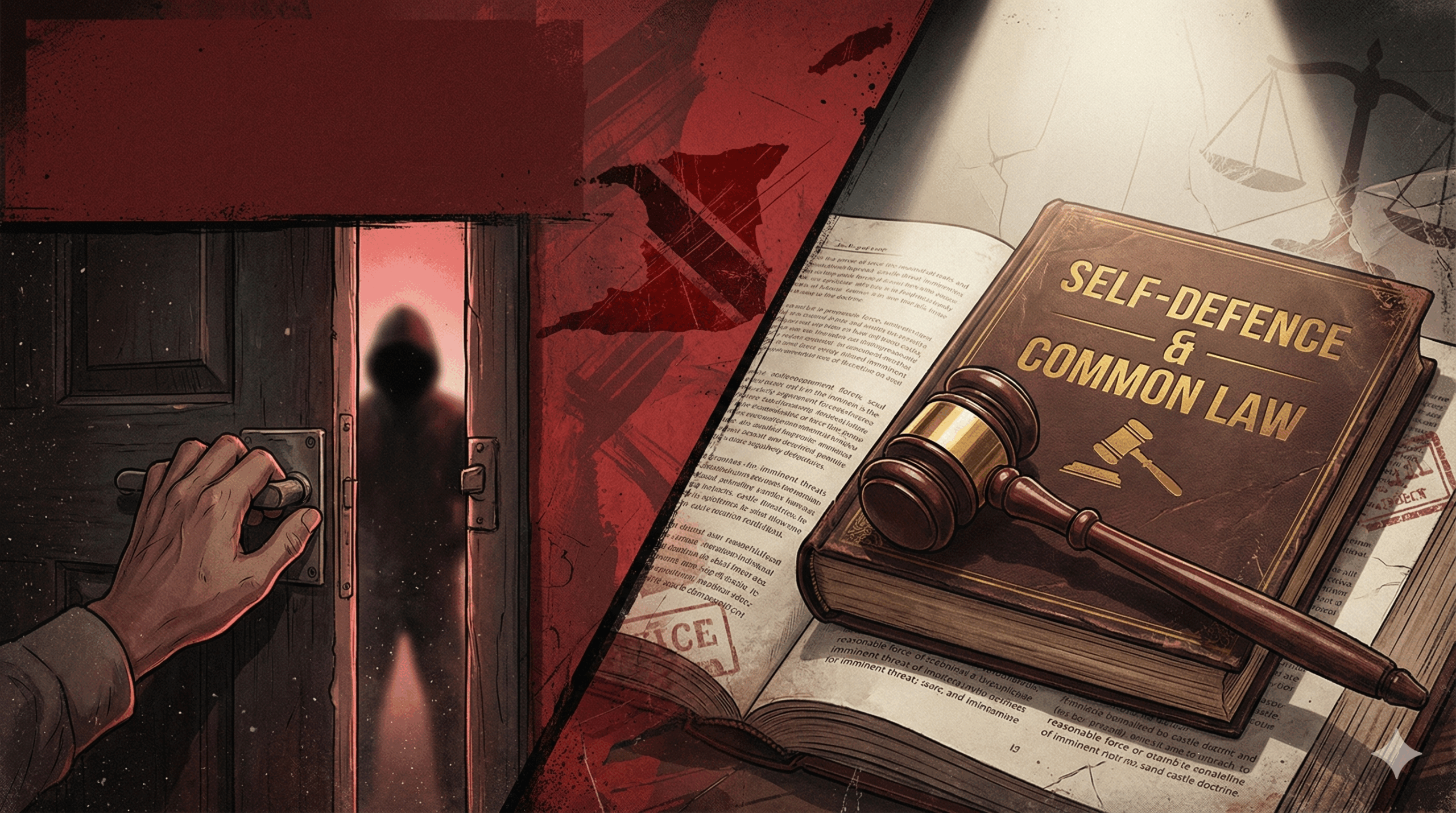
The Politicians Say “Shoot Your Shot.” The Law Says… Not So Fast.
The minute the phrase Trinidad stand your ground bill hit Parliament, half the country started vibing like we suddenly turned into a Caribbean chapter of Florida. Overnight, WhatsApp lawyers declared: “If a man step in yuh yard, is legal headshot!” Meanwhile, real lawyers quietly sighed and reached for Panadol.
Because here’s the part nobody’s saying out lound: Trinidad already had most of these self-defence protections under common law, long before anybody decided to brand it as a shiny new crime-fighting miracle.
To understand what the Bill really does, you have to peel back the political paint and look at the laws we already had — and what happens now that “Kamla Law” is in the chat.
What You Already Had: The Common Law Nobody Read but Everybody Benefited From
Contrary to social-media mythology, Trinidadians were never legally required to drop their groceries and sprint out the backdoor if a bandit appear. Our courts already operated under principles developed through English common law.
In simple terms:
- You could use force — even deadly force — if you honestly believed you were in danger.
- Your actions were judged by what you reasonably thought was happening at the time.
- Whether you could run away was one factor in judging your response, not a rule carved into stone.
“Long before the slogan, the law already allowed Trinis to defend themselves — including with deadly force, if necessary.”
In other words, the population didn’t suddenly unlock Level 10 Self-Defence this year. The powers were always there. The new Bill doesn’t invent the right — it rebrands it.
The Home Invasion Bill: Strong Law or Strong Marketing?
Trinidad Stand Your Ground Bill: what the new Bill actually changes
The Home Invasion (Self-Defence and Defence of Property) Bill adds three major ingredients:
- A new criminal offence called “home invasion” with heavy penalties, especially when vulnerable persons are present or when weapons are used.
- A clear statutory statement that in a home invasion scenario, you have no duty to retreat and can use defensive force — including deadly force — to defend life and property.
- A political slogan, polished, packaged, and advertised like a Carnival band launch.
The new law goes further than the old common law when it comes to defending property, since traditional common law severely restricted deadly force unless life was threatened. That’s where the real legal shift lives — not in the “stand your ground” phrase itself.
“The Bill didn’t create self-defence rights. It created a marketing opportunity.”
Florida Vibes Without Florida Fine Print
America’s stand-your-ground laws are famous for removing the duty to retreat everywhere you’re lawfully present, not just inside your home. They also come with years of justice-system upgrades, oversight debates, bodycam protocols, and, let’s be honest, a mountain of troubling case studies.
Trinidad is borrowing the vibe of Florida without importing the infrastructure or the guardrails. What we’re left with is a political buzzword slapped onto a limited but powerful home-invasion statute, where the risks are real and the misunderstandings are even more real.
People already confusing “no duty to retreat” with “no consequences whatsoever.” And that’s how citizens end up standing their ground in court instead of their living room.
Who Really Ends Up in Court? The Hidden Risk
Self-defence hasn’t magically transformed into a “shoot and go home” arrangement. It never worked like that under common law, and it won’t work like that under the new statute either.
After a violent encounter, the police still investigate. The DPP still decides. The courts still judge whether your force was reasonable. And the justice system is still, how to put this gently, not known for lightning speed or perfect balance.
A wealthy homeowner with cameras, lawyers, and community support may be believed. A working-class father defending his family in a dark yard may not be granted the same grace.
The law promises clarity. Reality promises complications.
Is This Crime Plan or Comfort Blanket?
The country’s fear is real. Home invasions are terrifying, traumatic, and destabilizing. But no single law fixes the ecosystem that allowed them to flourish, weak detection rates, illegal firearms flooding in, under-resourced policing, and communities feeling abandoned.
This is where political theatre steps in. After all, it’s easier to pass a daring-sounding law than to rebuild institutions.
This isn’t the first time we’ve seen a dramatic symbol being sold as a national safety solution. You can revisit TriniLulz’s earlier coverage of high-stakes government moves, like the State of Emergency extension, right here:
Trinidad’s State of Emergency Extended
Final Verdict: More Noise Than New Rights
The population deserves honesty. The truth is:
- You already had broad self-defence protections.
- The Bill strengthens specific areas but also creates new grey zones.
- The real danger is not the law — it’s the public misunderstanding of the law.
And when misunderstandings meet fear, and fear meets firearms, the ground gets shaky. Not “stand your ground.” More like “hope the ground you stand on not in the Hall of Justice.”
Want the bigger picture? Explore our Trinidad Crime & Security hub for dashboards, explainers, updates, and deeper coverage of one of the country’s most urgent ongoing stories.