Trinidad’s State of Emergency Extended for 3 Months— But Are We Still in an Emergency?
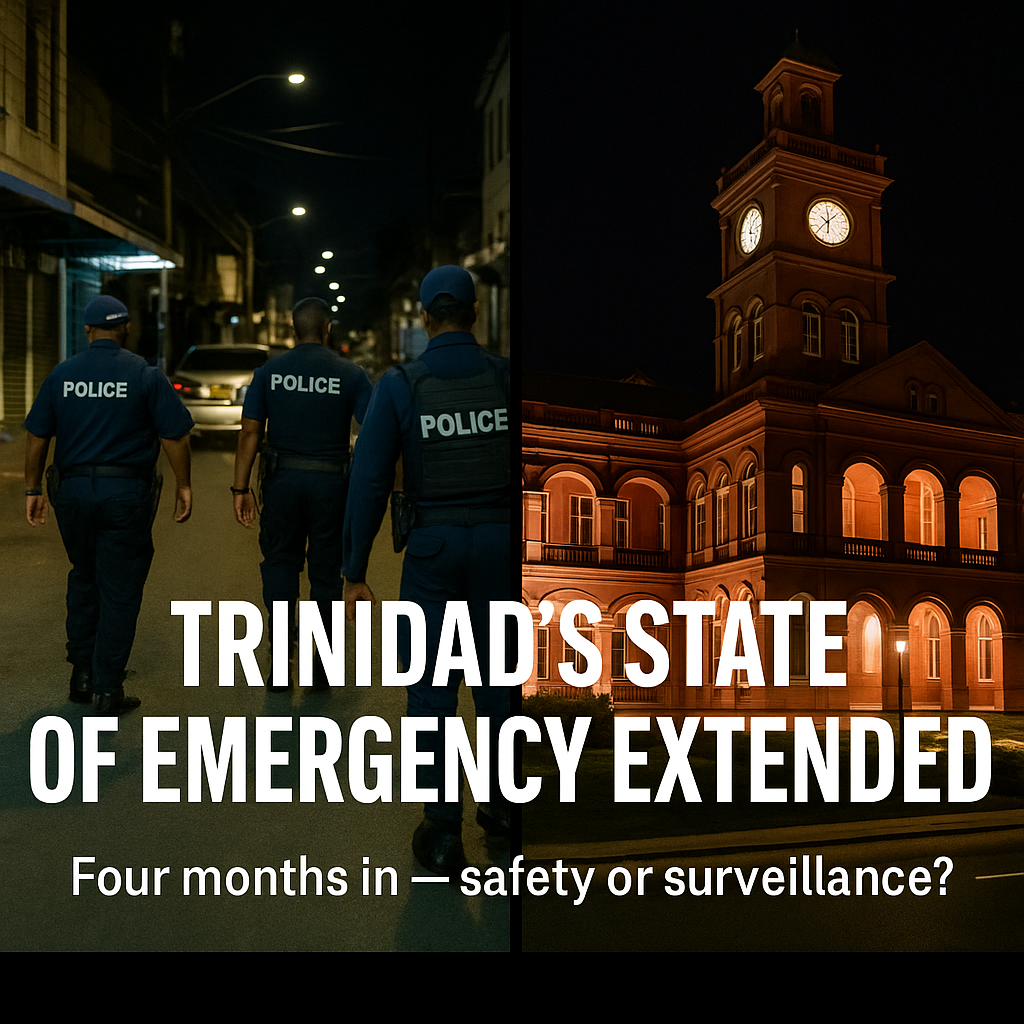
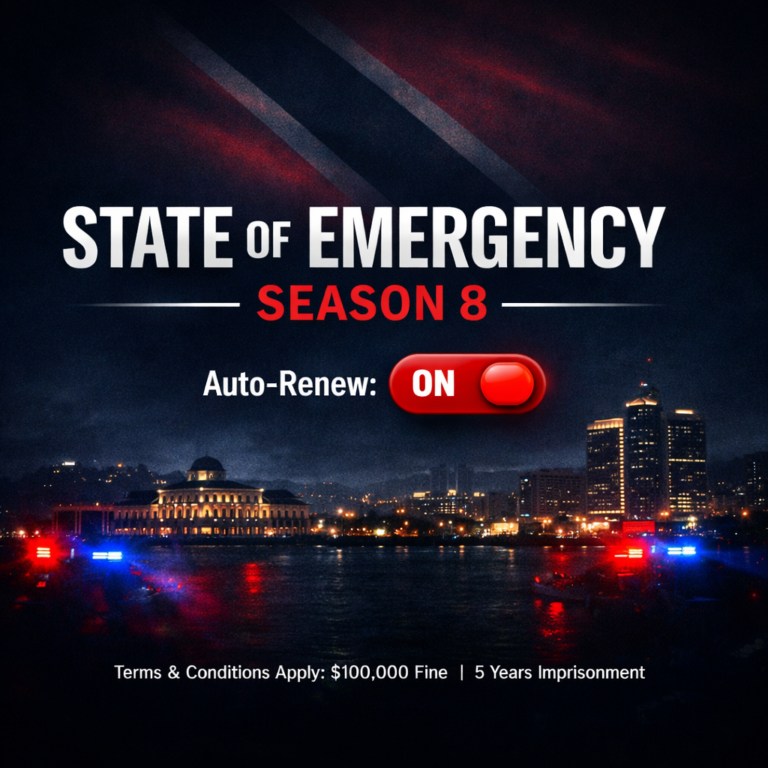
The government says the State of Emergency (SoE) is staying on for another three months. The official story is to finish dismantling criminal gangs. But with murders already down 45% and the original prison-based threat neutralized, Trinis are asking: why we still living under lockdown lights?
From Prison Plot to National Pause
The State of Emergency was declared on July 18 after intelligence warned of a planned attack by a criminal syndicate operating inside the prison system, targeting politicians, judges, and state buildings.
Attorney General John Jeremie says security forces “efficiently dealt with that crisis.” The ringleaders were removed from Maximum Security Prison, communications cut, and order restored.
So if the plot was stopped, then what exactly are we extending for?
The New Reason: “Mop Up” Operations
Jeremie told Parliament that security agencies want extra time to dismantle gang structures, arguing the State of Emergency’s enhanced powers make it easier to:
- Search without warrants
- Impose curfews
- Restrict movement and assemblies
- Detain suspects for extended periods without charge
He reported over 48,000 searches, 3,409 arrests, and 192 firearms seized since July.
Murder numbers reportedly dropped from 514 to 285 over the same period — a ten-year low.
But civil rights groups like Fixin’ T&T and T&T Transparency Network warn that the SoE can easily turn from security tool to political comfort blanket.
The Constitutional Fine Print
Under Section 10(1) of the Constitution, an SoE can be extended by simple majority — but only for six months total. Beyond that, the government needs a three-fifths majority in both Houses.
The UNC and TPP combined have that majority in the house but in the Senate it would require the support of the independents. So if this SoE rolls past January, brace for political bacchanal in the Senate.
The Scorecard So Far
Government claims victory:
“The amalgamated gang leadership was removed from the prison, effectively severing their influence on the streets.”
Fair enough — gang murders are down. But street crime, robberies, and small-arms trade still thriving in pockets of East Port of Spain and Central.
Analysts say that’s because the SoE targets visible gangs, not the financial networks and police leaks that keep them alive.
The Big Question: When Does State of Emergency Become Routine?
If a State of Emergency starts as a short-term fix, it shouldn’t become a long-term policy.
After four months, we have fewer murders — but also fewer freedoms:
- Journalists restricted from accessing certain areas
- NGOs blocked from holding community events
- Citizens detained without charge for “questioning”
Even some former national security officials quietly admit: “Once you give the state sweeping power, it rarely gives it back easy.”
TriniLulz Verdict
No one’s saying drop the guard — but Trinis deserve clarity, not just curfews.
The SoE crushed one conspiracy and weakened a few gangs, yes.
But if the mission was accomplished, then why the extension?
At some point, “security” starts sounding like “strategy.”
And if the state keeps the SoE light on too long, it’s not protecting us anymore — it’s watching us.
Want the bigger picture? Explore our Trinidad Crime & Security hub for dashboards, explainers, updates, and deeper coverage of one of the country’s most urgent ongoing stories.