PRIME MINISTER OF WHICH FAMILY? KAMLA’S INDEPENDENCE MESSAGE FAILS THE TEST OF NATIONAL UNITY
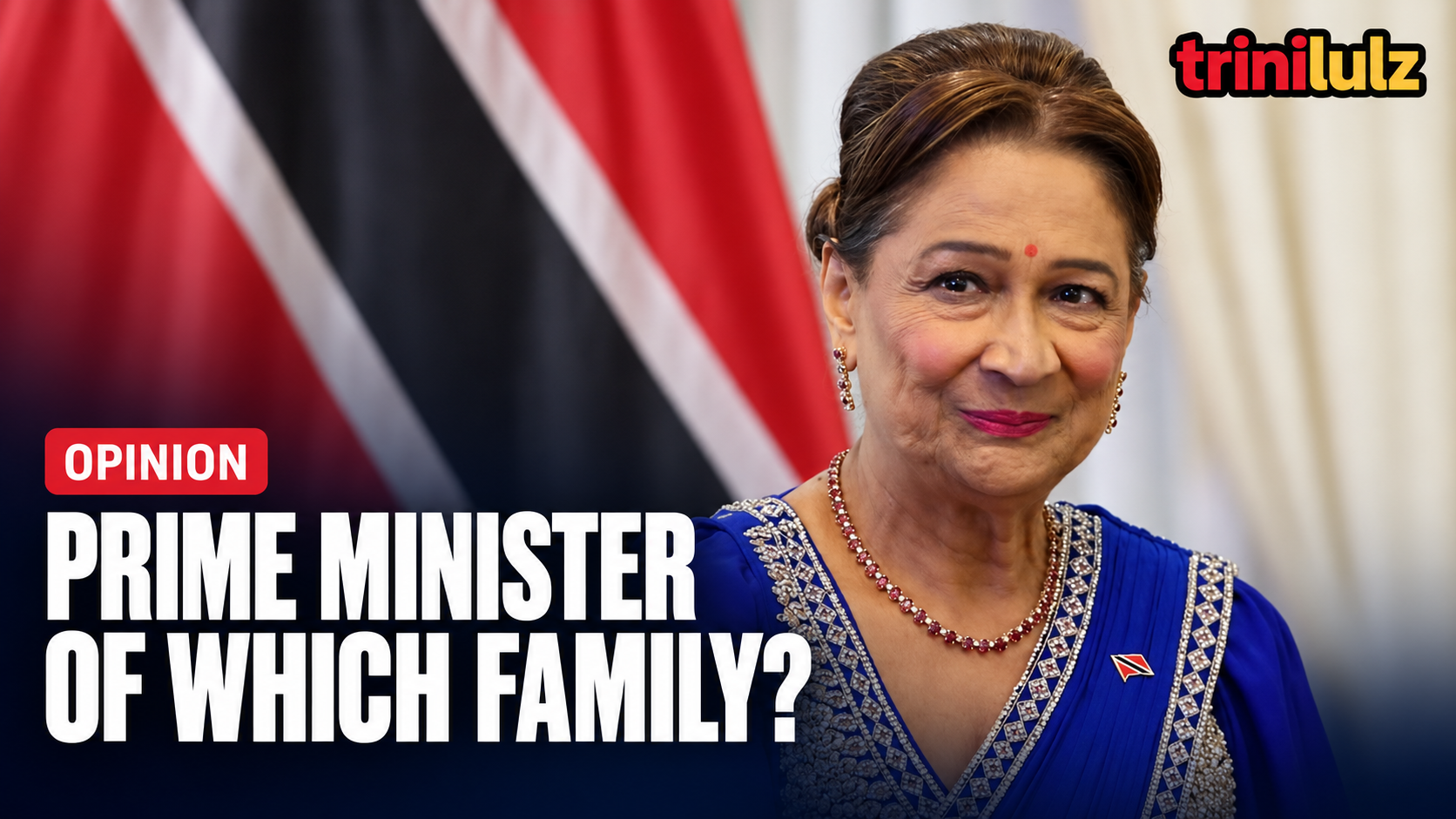
An Independence appeal to a political family, followed by combative defences, raises serious questions about the Prime Minister’s commitment to national unity.
Kamla’s Independence message to her UNC supporters fails a basic test of national leadership: whether every citizen can hear themselves included in the Prime Minister’s words.
As Trinidad and Tobago marked 64 years of Independence on August 31, Prime Minister Kamla Persad-Bissessar singled out “the most important people to me, the UNC family.” Her message combined appeals for love and advancement with talk of total war and savagery. The two messages are reproduced here.
A politician can appreciate her supporters. A Prime Minister must also consider what her public expressions of loyalty communicate to everyone she governs.
Independence belongs equally to the enthusiastic supporter, the disappointed voter and the citizen who wants nothing to do with either major party. Each should be able to recognise themselves within the national community their leader describes.
A citizen should never need a party card to feel equally valued by the Prime Minister.
What Kamla’s Independence message asked of the nation
Her national statement, issued on August 30, urged citizens to accept responsibility for decisions made since Independence. It praised the foundation inherited from Britain and argued that the colonial past could no longer explain the country’s shortcomings.
The statement also invoked “one citizenship, one homeland.” That inclusive principle provides the standard against which her separate party message should be judged.
To the UNC membership, she emphasised ancestral deprivation, sacrifice and mistreatment under the PNM. The difference in emphasis is striking: common responsibility for the wider public; inherited grievance and combative solidarity for the party.
A country can possess valuable infrastructure while many families endure poverty. Recognising those realities requires a fuller history, rather than pretending one automatically disproves the other.
The question is what political work those different accounts perform. A national leader should help citizens understand their shared history and their different experiences together. She should be especially careful when historical suffering becomes the basis for describing a present-day political family under threat.
When political disagreement becomes a siege
Persad-Bissessar told supporters:
“Do not crawl on your belly for anyone. It’s either peace or total war, nothing in between.”
She also said diplomacy must be backed by “steeliness and savagery” when required to defend UNC members. These passages appeared alongside encouragement to pursue education, entrepreneurship and love within communities. That constructive content belongs in any fair account of the message.
The text contains no explicit instruction to commit physical violence. Its political imagery nevertheless deserves scrutiny. A Prime Minister’s metaphors help establish what supporters understand as acceptable conduct towards opponents.
Democratic life contains plenty between submission and total war: negotiation, criticism, compromise, lawful protest and accepting that disagreement can be legitimate.
Her allegation that criminal and elite interests had captured the PNM added another hostile element. The reproduced message supplied no evidence establishing that charge; it remains her allegation.
A leader can defend supporters firmly while recognising opponents as fellow citizens. Independence Day called for that discipline.
Why the racial undertones deserve scrutiny
References to ancestral hardship deserve respect. Poverty, rural life and particular foods are not inherently racial messages. Meaning also comes from the audience, the surrounding claims and the political division a speaker constructs.
Former independent senator Sunity Maharaj interpreted the references to lagoons and subsistence food as coded appeals to Indo-Trinidadians. She described the message as “full of dog whistles” and said many Indo-Trinidadians rejected its divisiveness. Those are her assessments, not a survey of an entire community.
In our reading, Kamla’s Independence message carries deep racial undertones because it places a culturally recognisable account of deprivation inside a partisan story of persecution, then presents combative leadership as protection.
That combination risks making the defence of personal dignity sound inseparable from the defence of the UNC.
People must remain free to honour their ancestors, cherish their culture and disagree with a party claiming to represent them. Their political choices cannot diminish their heritage or their standing as citizens.
The criticism reaches beyond party opponents
Opposition Leader Pennelope Beckles and Mickela Panday both criticised the messaging. Panday, the daughter of UNC founder Basdeo Panday, argued that Independence Day belonged to all citizens and questioned using supporters to shield the Prime Minister’s leadership from scrutiny.
Separately, Sanatan Dharma Maha Sabha secretary general Vijay Maharaj said the message had added to racial division. He interpreted it as an effort to consolidate the UNC’s traditional East Indian support.
He also said he had not observed widespread racial favouritism by the administration. That distinction matters: criticism of rhetoric does not establish discriminatory treatment in government services.
These responses show why the dispute cannot be reduced to a single community speaking with one voice. Political leaders should engage with the substance of criticism, including criticism from people whose cultural background overlaps with that of their supporters. Shared heritage creates no obligation to share a political judgment.
Padarath’s defence deepens the problem
Couva South MP Barry Padarath insisted that the Prime Minister’s message was intended to strengthen a political constituency rather than appeal to a racial group.
Yet, in the same defence, he described some unnamed Indo-Trinidadian critics as “self-loathing” and “self-hating,” accusing them of distancing themselves from their cultural and racial identity to obtain acceptance from others.
That response deepens the concern about confusing party loyalty with ethnic belonging. An objection to a politician’s language becomes an accusation about the critic’s relationship with their own identity.
No political party owns an ethnicity. No politician should get to decide that a person’s criticism makes them less comfortable in their own skin.
If the original message was solely about political solidarity, its defence should be able to stand on political arguments. Making a critic’s racial identity part of the rebuttal moves the dispute directly into the territory its defenders say was never involved.
Loving a party does not settle the national question
Persad-Bissessar dismissed the backlash as “fake outrage.” She argued that someone unable to love and defend their own family could not do so for others, and maintained that protecting UNC members was compatible with her national responsibilities. She also promised a response delivered “savagely and swiftly” to abuse of the membership.
Her supporters are entitled to protection from mistreatment. So is everyone else. The Prime Minister should make that equality clear without requiring citizens outside her party to infer it from assurances directed at those inside.
Leadership also requires distinguishing abuse from legitimate scrutiny. A critical journalist, an opposition voter or a disappointed supporter should be able to challenge a government without being placed within a story of enemies threatening the family.
Public office enlarges the circle of responsibility. The stronger the language used to defend a political base, the greater the responsibility to explain how disagreement and equal citizenship will be respected.
The promise to govern for everyone
After being sworn in on May 1, 2025, Persad-Bissessar explicitly included people of different political affiliations in her promise of fair government. “You will be treated equally and fairly,” she said. Newsday’s report of her inauguration address.
That promise deserves to remain the standard. It should guide how a Prime Minister speaks when she is challenged, how she describes opponents and how she asks supporters to respond to criticism.
A unifying Independence message could honour ancestral sacrifice, recognise continuing disadvantage and demand accountability while leaving every citizen confident of their place in the nation. It could celebrate the achievements of UNC supporters without making political militancy a test of strength.
Kamla’s Independence message failed that test. Its appeals to love were undermined by a divisive account of political belonging and rhetoric that invited people to understand disagreement through the language of conflict.
The Prime Minister’s responsibility extends to the entire country. Her public language should leave that beyond doubt.
Her national family must be Trinidad and Tobago.
This story is part of our wider Trinidad Politics Explained coverage. Explore the full hub for political analysis, key background, major controversies, and the latest updates.