The True Story of the Couva Children Hospital — From PP Prop to Pandemic Hero
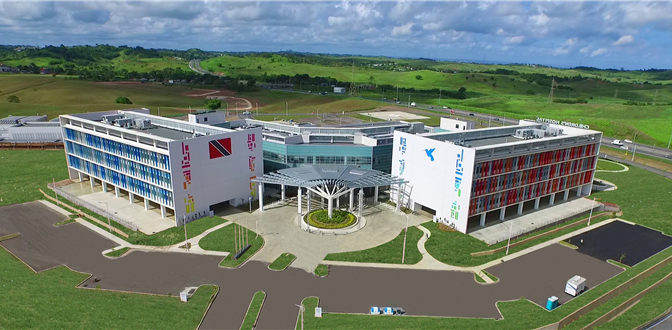
The journey of the Couva Children Hospital is one of the most dramatic arcs in modern Trinidad and Tobago politics. It was born as a Chinese-funded mega-project, launched with ribbon and thunder in 2015, then left sitting idle until the PNM government stabilised and repurposed it into the country’s frontline Covid-19 war bunker. Today, after years of controversy, upgrades and political back-and-forth, it is finally stepping into the role it was meant to play. The story is equal parts bacchanal, geopolitics, and public service.
A Hospital Opens With More Ribbon Than Readiness
If you were around in August 2015, you remember the scene. The People’s Partnership government, only weeks away from a general election, staged the grand “opening” of the Couva Children Hospital. The building was 96 percent complete, not commissioned, not staffed, and not ready to accept a single patient.
As if nature itself wanted a cameo, a sudden downburst ripped the stage roof off mid-ceremony. Supporters say it was a blessing. Critics say it was a warning. Either way, the optics were unforgettable.
Behind the pageantry were big promises. A 230-bed modern facility. A burns unit. A helipad. Training labs. A gateway to medical tourism. All of it sounded good on paper. The problem was that paper is not patients, and an uncommissioned building is not a functioning hospital.
Many agreed on one thing: the government at the time opened the structure too early. A hospital is not a mall. You cannot fling open the doors with no staff, no certification, and no operational systems and pose for a photo.
The PNM Inherits a Monument and a Mess
After winning the 2015 election, the new PNM administration faced an uncomfortable reality. The Couva Children Hospital was undeniably impressive from the outside, but the back-end systems that actually make a hospital work were incomplete or missing.
There were equipment installation issues. Gaps in documentation. Unstaffed departments. Budgetary holes. And no operational plan for how the facility would run, who would manage it, or what services would roll out first.
This was not a simple case of “turn the key and open the doors.” It was a complex public health project that required audits, certification, procurement checks and staffing programs from scratch. While the opposition framed the delay as spite, to build long-term stability, the government shifted the model toward a teaching hospital through partnerships with UWI and UTT. It was a slower approach, but one rooted in sustainability rather than showmanship.
TIMELINE SNAPSHOT: COUVA CHILDREN HOSPITAL
2012: Project announced and sod turned
2013: Construction begins
2014: Integrated into PSIP planning
2015: Ceremonial PP “opening” before commissioning
2015–2019: PNM audits, replanning, teaching hospital framework
2020–2022: Becomes national Covid-19 treatment centre
2023–2024: Underuse controversies and equipment revelations
2025: Re-dedication, upgrades and phased activation
Couva Goes From Ghost to Guardian During Covid
Everything changed in March 2020. When Covid-19 hit Trinidad and Tobago, the then PNM government activated the Couva facility as the primary tertiary care centre in the parallel healthcare system.
Suddenly the building that once stood empty became the country’s most critical asset. Severe cases were moved there. ICU care was centralised. Doctors later noted improved outcomes because of the hospital’s newer infrastructure and dedicated Covid model.
In the words of one frontline worker, “Couva saved lives.” For many, this was proof the government had been right to stabilise the facility carefully instead of rushing it open.
The Equipment Bacchanal and the 2025 Rebirth
In 2025, when the UNC returned to office, new stories emerged about equipment left idle for years and expensive machines degrading from non-use. Their narrative was that PNM wasted resources.
From the PNM perspective, the reply was straightforward. Most of the equipment was procured under the PP, installed late or incompletely, and left without the operational systems needed to use them. If the facility had truly been ready in 2015, the equipment would have been serving patients from day one.
Still, Couva needed upgrades. The new government committed to ten million dollars in enhancements, restored the original name, and by late 2025 rolled out same-day surgeries as part of a phased activation.
The irony again was thick. A hospital that began life as a political prop became a pandemic hero and is now a bipartisan necessity. No matter who holds office, the country cannot afford to lose it again.
THE REAL LESSON OF COUVA
“Two governments fought over the hospital. One opened it too early. One opened it slowly. And a virus forced both sides to admit the country needed it.”
A Final Word on the Couva Children Hospital
The Couva Children Hospital is not just a building. It is a decade-long case study in how politics can slow public progress — and how crisis can force leaders to deliver what should have been done long before.
The PP unveiled it. The PNM stabilised and operationalised it. Covid proved its worth. And 2025 finally saw it returning to its intended purpose.
Sometimes a country builds a hospital. Sometimes a country grows into one.
This story is part of our wider Trinidad Politics Explained coverage. Explore the full hub for political analysis, key background, major controversies, and the latest updates.