“Steel Leviathan in Our Backyard?” — What the USS Gerald R Ford Means for the Caribbean
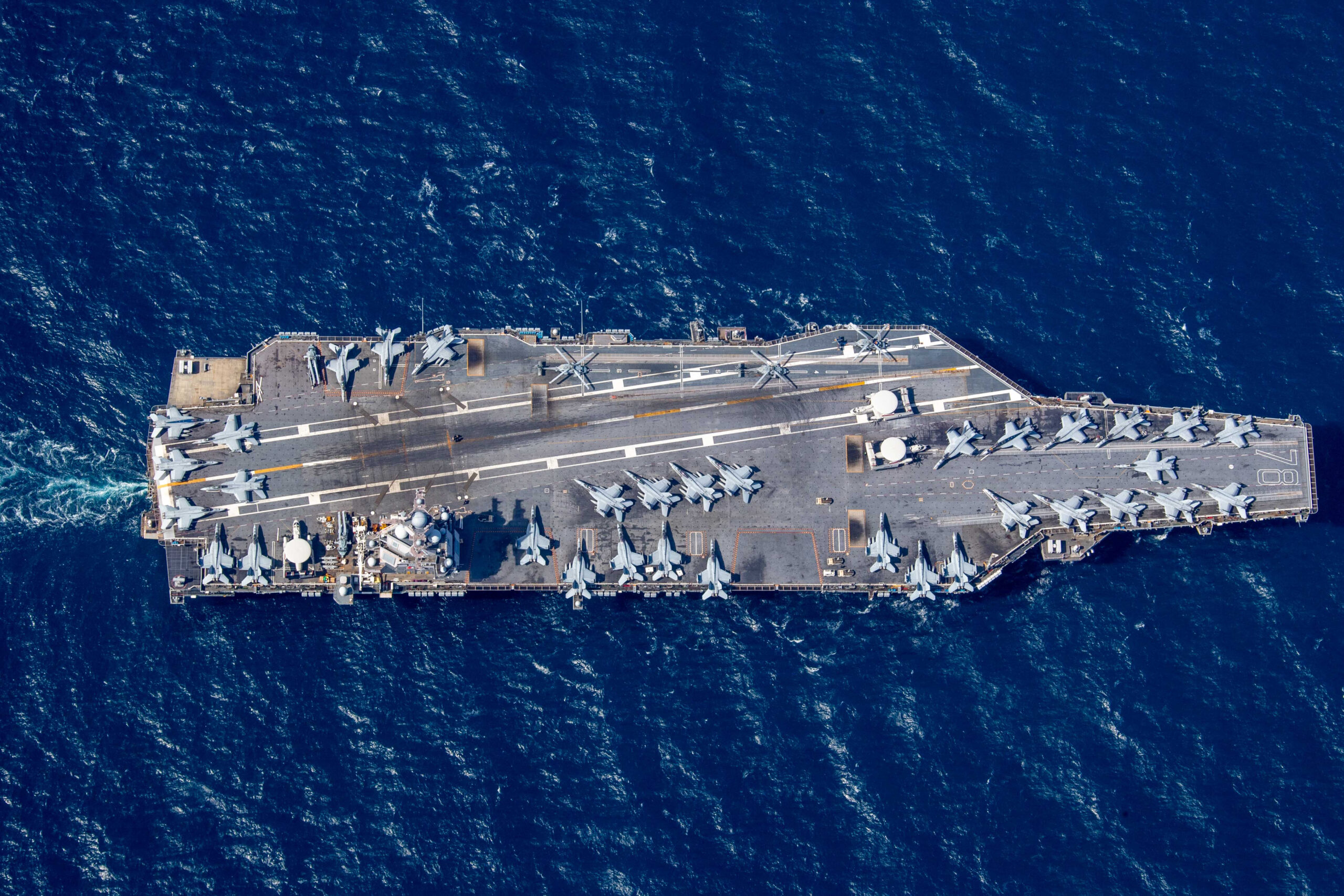
The Day the Caribbean Sea Got a New Neighbor
The headline blared across news feeds: “Giant carrier headed this way.”
The USS Gerald R Ford, the U.S. Navy’s newest and most advanced aircraft carrier, is sailing into the Caribbean basin.
For islanders used to hurricanes, fishing boats and cargo ships, the arrival of this nuclear-powered beast feels almost unreal.
It’s not a rumour. It’s the biggest warship on the planet, and it’s moving through waters that lap at our shores.
The Ship That Redefines “Massive”
Commissioned in 2017, the USS Gerald R Ford (CVN-78) is the pride of the U.S. Navy. A 100,000-ton, nuclear-powered aircraft carrier packed with bleeding-edge technology.
She’s 333 meters long, her deck spans 78 meters, and she runs on two A1B Nuclear Powered reactors that can keep her moving for 25 years without refueling.
“When a seventy-thousand-ton island of steel and jets sails our seas, the ripple doesn’t stop at the hull, it reaches the small boat, the fishing line, the coastline.”
Her new toys include the Electromagnetic Aircraft Launch System (EMALS) and Advanced Arresting Gear (AAG), tech that replaces old steam systems with electromagnetic precision.
It means smoother launches, fewer mechanical failures, and more planes in the air.
Even the elevators that lift bombs and missiles are computer-controlled. The ship needs fewer sailors but delivers more firepower than ever.
(Source: US Navy AirLant)
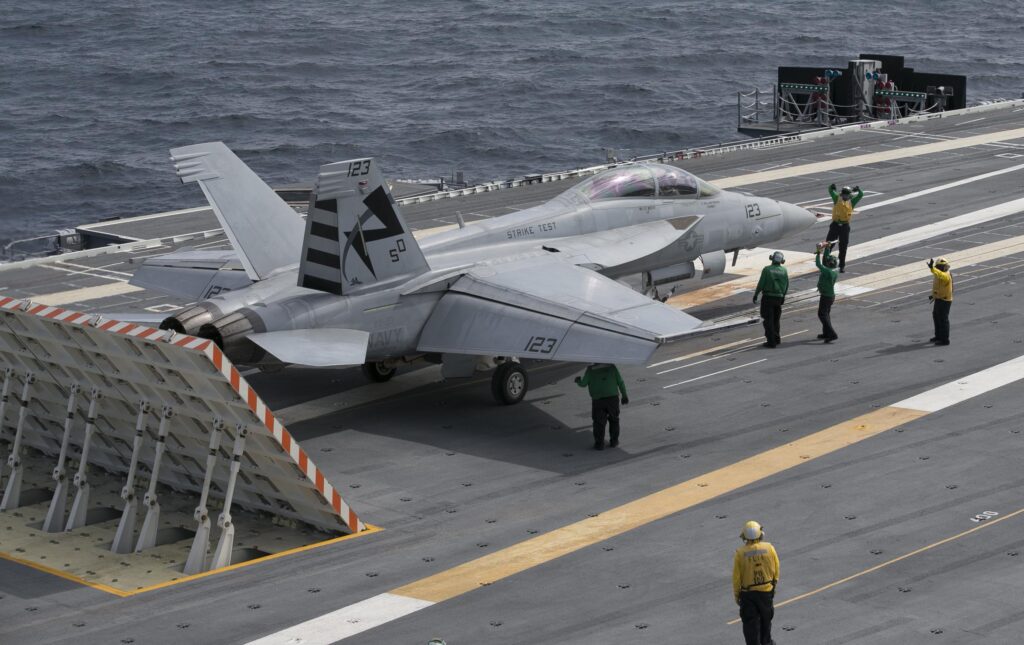
A Power Move — And the Caribbean Is the Stage
So why is a ship designed for global wars now sailing in our neighborhood?
According to multiple reports from Reuters, AP News, and USNI News, the USS Gerald R Ford (CVN-78) strike group has been redeployed to the U.S. Southern Command — which covers Central and South America, including the Caribbean.
The Pentagon says the mission is about “counter-narcotics, surveillance and maritime security.”
Analysts note it’s also a strategic move amid mounting tensions with Venezuela.
That’s the polite way of saying the U.S. wants to show strength — and remind everyone who really commands the hemisphere.
Between the Fishing Boat and the Fighter Jet
This is where the Caribbean story really begins.
Picture a small fishing vessel off Tobago, pulling seine nets at dawn.
Now imagine a floating city the size of downtown Port of Spain gliding past the horizon — launching jets while radar waves blanket the ocean.
That’s the surreal overlap between global geopolitics and island livelihood.
Fishermen might never see the carrier up close, but they’ll feel its presence in restricted zones, new patrol routes, and maybe even more Coast Guard activity.
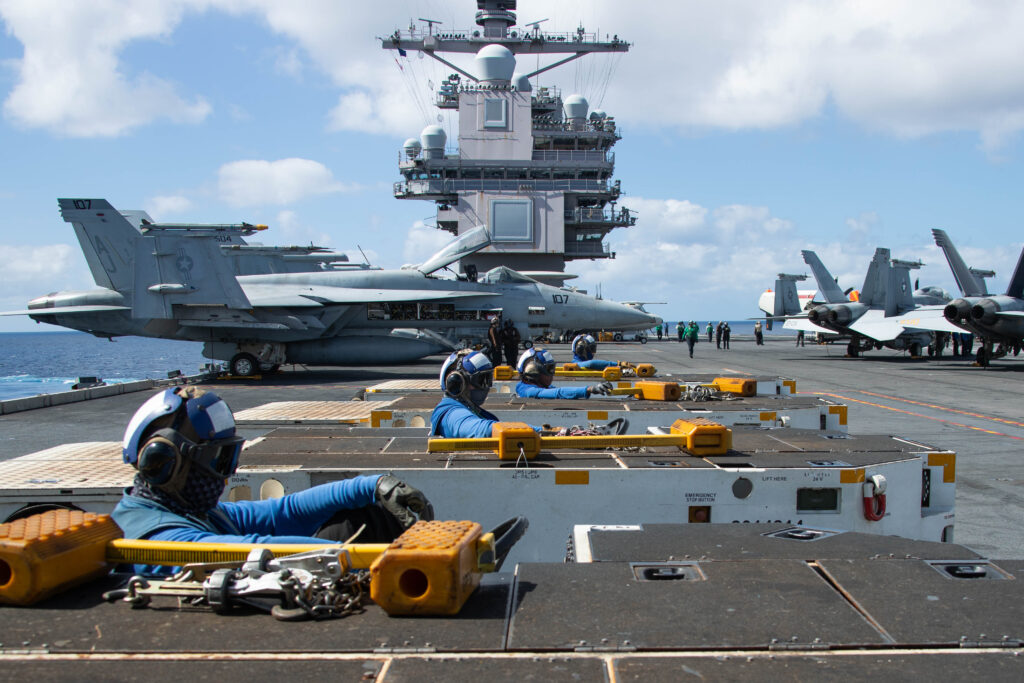
Who Really Benefits From the “Zone of Peace”?
Caribbean leaders often speak about maintaining the region as a “Zone of Peace.”
Yet when aircraft carriers enter that zone, it raises hard questions:
- Is this about regional security — or regional control?
- Are our governments consulted, or just informed after the fact?
- What happens if a U.S. fighter jet strays too close to Venezuelan airspace — or vice versa?
The Caribbean doesn’t have the firepower to push back, but it does have diplomacy, and a moral voice.
As global currents shift, we must ensure our sovereignty isn’t reduced to a line on someone else’s map.
(Internal link: Read our earlier feature — “CARRIER ON OUR DOORSTEP: U.S. Moves Its Super-Carrier Into Caribbean Waters — And We Should Be Watching”)
⚓ Reality Check — Not Just a Hollywood Moment
The USS Gerald R Ford (CVN-78) official goal is regional stability and the suppression of narco-traffic.
But its very presence alters that stability.
Every radar ping, every surveillance flight, every patrol changes the rhythm of our waters.
Analysts at Jane’s Defence note the Ford’s arrival “significantly increases U.S. firepower in the region” — the kind of sentence that sounds reassuring in Washington, but unsettling in Port of Spain.
Because power, once projected, is rarely rolled back quietly.
Watching the Waves Ahead
Here’s what Caribbean citizens should keep an eye on:
- Port visits: Will the Ford dock in Trinidad & Tobago, Barbados or Curaçao?
- Air patrols: Expect increased flight activity — and noise — if jets operate nearby.
- Statements from CARICOM: Silence or concern will speak volumes.
- Regional cooperation: If the U.S. starts joint patrols, it changes how our navies operate.
The Final Word
In the age of global surveillance and silent diplomacy, a massive ship cutting through Caribbean waters is never just “passing by.”
It’s a message written in steel, reactors and jets — one that says the world is watching our region closely.
The question for us is: Will we simply watch back, or will we speak up?
This story is part of our wider Caribbean Geopolitics & Global Affairs coverage. Explore the full hub for regional security updates, diplomacy, migration, energy politics, and deeper analysis of how global power plays shape Caribbean realities.