Trump Says Land Strikes in Venezuela “Very Soon” – What That Really Means for the Caribbean
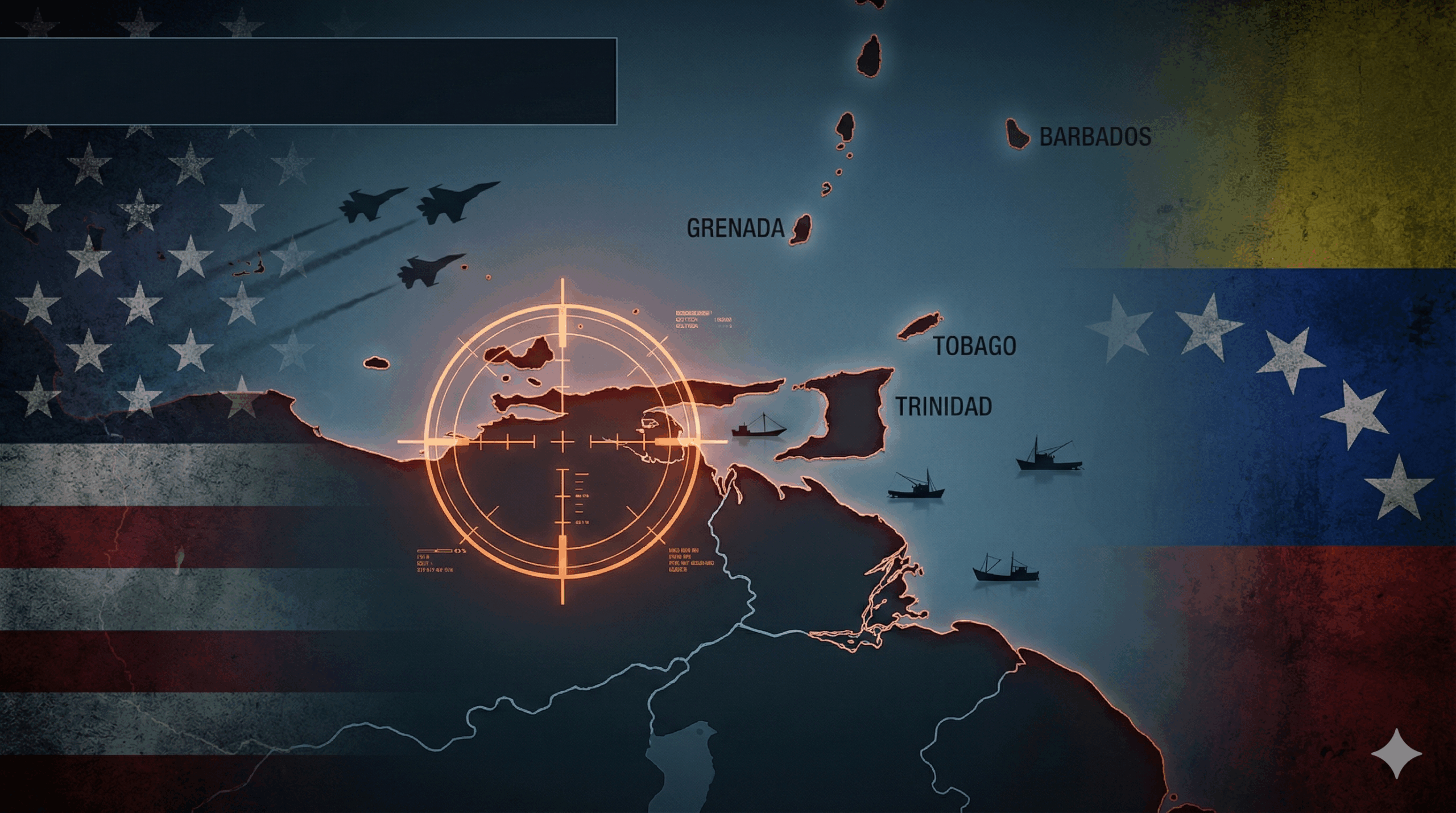
The Caribbean Scrolls Past Another Meme… Into a War Headline
Donald Trump has reportedly stated that land strikes in Venezuela are coming “very soon.”
Trump’s boast came after weeks of U.S. “anti-drug” raids on boats in the Caribbean — operations that have killed dozens of alleged traffickers. Now he says the sea phase was just the opening act. The land phase is next.
But what does land action inside Venezuela actually mean? And why does it matter so much to the Caribbean?
To understand the bacchanal about to unfold, we need to rewind a bit.
What Trump Actually Said — Minus the Fog Machine
In a Thanksgiving call to service members, Trump declared:
- The U.S. “shut down 85%” of drug routes by sea (his statistic).
- The “land is easier.”
- And land strikes in Venezuela will begin “very soon.”
He framed it as stopping “narco-terrorists.”
But language like that isn’t new — Washington used the same vocabulary in Iraq, Afghanistan, and Colombia.
For the authoritative breakdown of Trump’s comments, see the Al Jazeera report here:
👉 https://www.aljazeera.com
And unlike U.S. domestic audiences, the Caribbean doesn’t hear “drug war.”
The Caribbean hears: “That’s happening right next to us.”
Previously on Season 3 of the U.S.–Venezuela Bacchanal…
In the months leading up to Trump’s announcement:
- U.S. forces carried out repeated strikes on boats near Venezuelan waters.
- A surge of U.S. military hardware — warships, aircraft, surveillance platforms — began rotating through the Caribbean.
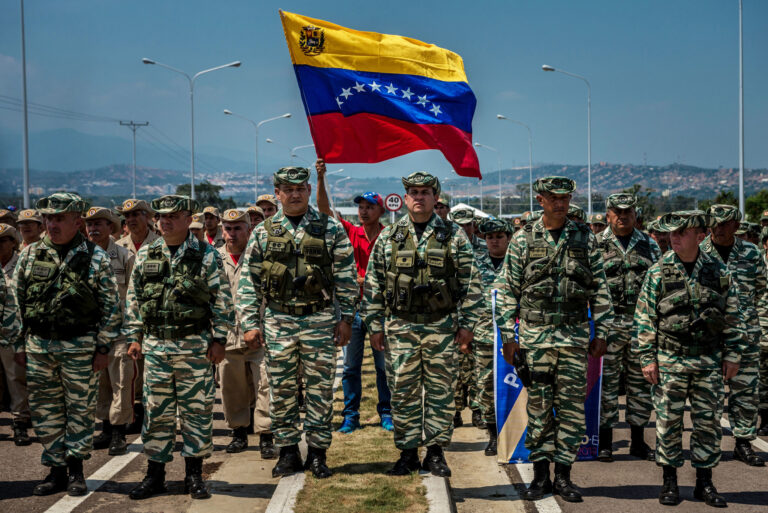
- Venezuela responded with warnings and heightened coastal security.
- Caribbean governments tried to stay polite while pretending not to notice the carrier group parked 200 miles offshore.
This tension isn’t theory. It’s geography.
Across from Trinidad sits Venezuela’s Sucre state — the same coastline where many of those boat strikes occurred. When Trump speaks about hitting “land targets,” he’s talking about territory directly across from us.
What Could “Land Strikes in Venezuela” Actually Look Like?
When a U.S. president uses phrases like “land action,” it can mean a few different things:
- Precision drone strikes on alleged drug labs or staging sites.
- Helicopter or fighter jet raids on suspected “narco-terror” infrastructure.
- Special forces missions launched from regional partners.
- Cross-border actions sold as short, “surgical” operations.
None of these are confirmed — but they’re all possibilities.
And history tells us one thing: “limited strikes” have a way of becoming unlimited headaches.
“Every war starts with the same promise: ‘quick operation, minimal impact.’
Every war ends with: ‘how we reach here?’”
Why the Caribbean Should Pay Attention
Here’s the part nobody in Washington lectures about: the islands live next door to the target.
The Caribbean isn’t just a “strategic zone” on a Pentagon map — it’s where our fishermen, sailors, coastal workers, and families live their lives.
1. Fishermen & Coastal Communities
More patrols. More surveillance. More suspicion.
Small boat operators already face tighter checks — and that pressure will increase when land operations begin.
2. Flight Routes & Tourism
Some airlines have already pulled back from Venezuelan airspace due to rising military tension. That means detours, cancellations, and chaos for regional travel.
3. Migration Pressure
If land strikes hit populated areas, Venezuelan civilians could flee by sea — placing new strain on border islands and coastal towns.
4. Fuel & Energy Markets
Any hit near oil or gas infrastructure can spike regional prices overnight.
This is not a faraway conflict.
It’s a conflict with a front-row seat view from Tobago, Grenada, Barbados, and Trinidad.
Remember the U.S. Warplane in Tobago? That Was a Preview
Not long ago, Trinidad & Tobago made headlines after a U.S. military aircraft landed in Tobago following the visit of the Joint Chiefs Chairman.
We broke down that entire saga here:
👉 https://www.trinilulz.com/the-us-warplane-in-tobago/
At the time, many wondered: “Why now?”
“Well,” this new development answers that question loudly.
Tensions in the region have been simmering.
Trump’s commitment to land strikes in Venezuela is the next spike.
Caribbean Leaders Doing the Diplomatic Limbo
Now for the comedy-that-isn’t-actually-funny:
Caribbean leaders must decide how to respond — or whether to respond at all.
Some will stay quiet.
Some will carefully say “we hope for peace.”
Some will issue cautious statements about protecting sovereignty.
One or two may send thoughts and prayers into the void.
But when a superpower asks, “Can we pass through your airspace?”
…that’s not really a question.
“The Caribbean is small. But somehow, every global power wants to pass through like it’s the Priority Lane at Piarco.”
So Is This Really About Drugs? Or Something Bigger?
That’s the question hanging over the region.
Drug routes are real.
Trafficking is real.
But the scale, intensity, and rhetoric of Trump’s plan sound less like simple interdiction — and more like the opening notes of a larger confrontation with Venezuela’s government.
If land strikes in Venezuela begin, the missiles won’t need visas to cross the Caribbean sky.
But the consequences will land right here.
On our economies.
Our coastlines.
Our people.
Our fragile sense that big wars happen “elsewhere.”
The Caribbean didn’t ask for this drama.
But geography has a wicked sense of humour.
And right now, the joke feels a little too close to home.
This story is part of our wider Caribbean Geopolitics & Global Affairs coverage. Explore the full hub for regional security updates, diplomacy, migration, energy politics, and deeper analysis of how global power plays shape Caribbean realities.