Kamla vs Gaston Browne: The Trade, Power, and Pride Behind the CARICOM Clash
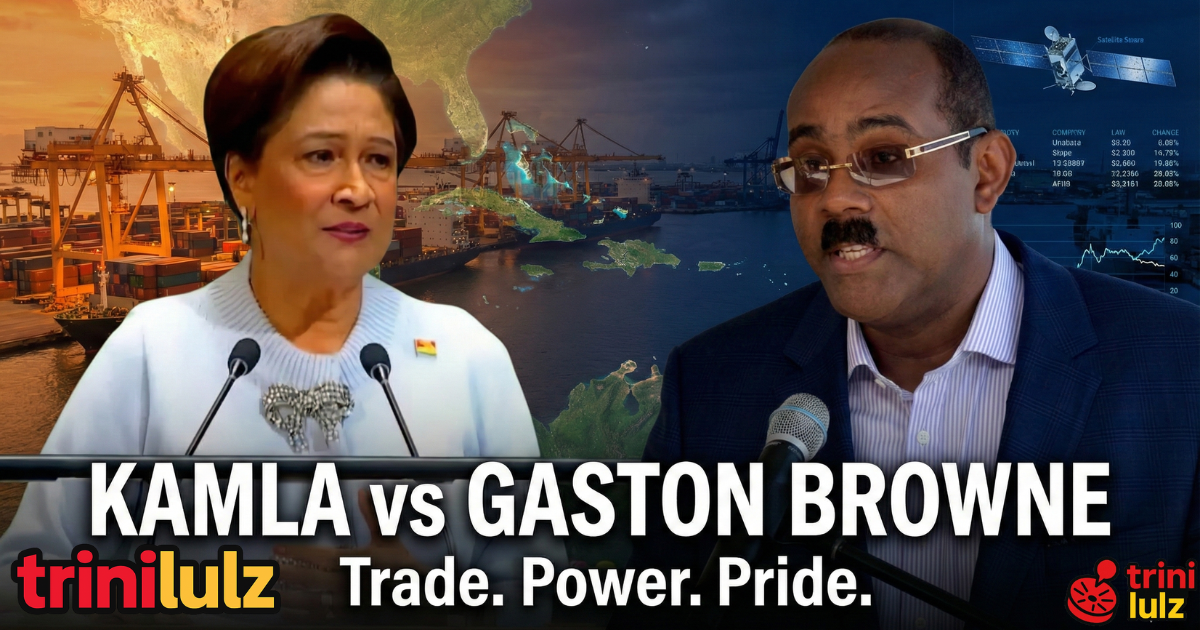
For a region that loves to preach unity, CARICOM has a funny way of airing its arguments. One press statement turns into a diplomatic side-eye. One interview becomes a regional bacchanal. And before you know it, two prime ministers are trading words like rivals in an election season. This week’s showdown between Kamla Persad-Bissessar and Gaston Browne is not really about tone, or even manners. It’s about money, leverage, and the fragile pride that props up Caribbean integration.
At the surface, the fight looks simple. Trinidad and Tobago’s Prime Minister described CARICOM as an “unreliable” partner in the context of recent global pressures and regional responses. Antigua and Barbuda’s Prime Minister did not take kindly to that description. What followed was a sharp rebuttal, complete with figures, reminders, and an unmistakable message: if CARICOM is unreliable, it is still reliably profitable for Trinidad and Tobago.
Scratch beneath the surface, though, and this clash reveals something deeper and more uncomfortable about how the region really works.
When Solidarity Meets the Balance Sheet
The Caribbean Community, CARICOM, was built on a simple idea. Small states survive better together than alone. Shared markets, coordinated diplomacy, and a collective voice were meant to soften the blow of global power politics. But ideals have a habit of colliding with invoices.
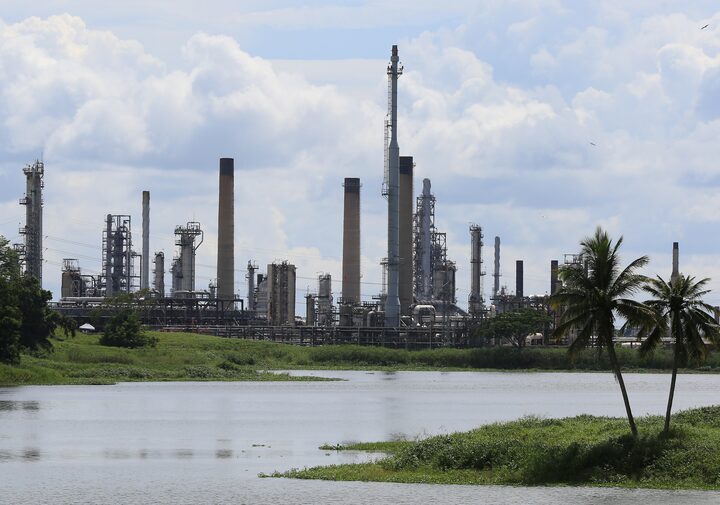
Trinidad and Tobago sits in a unique position inside CARICOM. It is not the biggest by population, but it is the most industrialised. Manufactured goods, energy-linked products, and regional exports flow outward, while finished imports flow inward from extra-regional partners. In plain language, Trinidad sells more to the region than it buys from it.
That trade imbalance matters. According to figures repeatedly cited in regional discourse, Trinidad and Tobago earns well over a billion US dollars annually from trade with CARICOM partners. That is not charity. That is foreign exchange, factory jobs, and balance-of-payments support quietly generated by regional integration.
So when Kamla Persad-Bissessar questioned CARICOM’s reliability, Gaston Browne did not respond with sentiment. He responded with economics. His argument was blunt: you cannot benefit disproportionately from a system and then publicly undermine it when geopolitics gets uncomfortable.
Power, Posture, and the US Factor
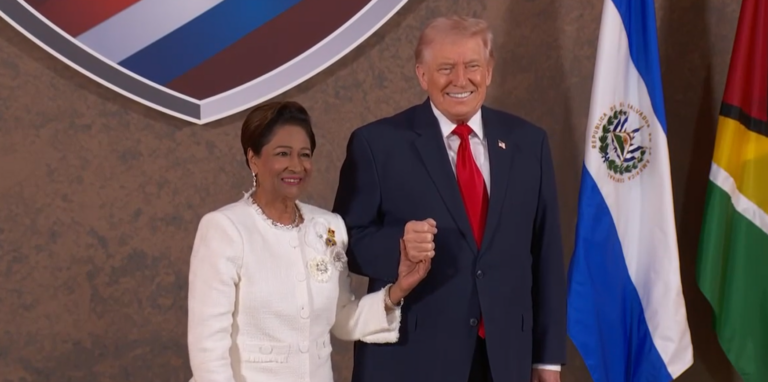
Timing is everything, and this dispute erupted at a particularly sensitive moment. The United States has been tightening scrutiny on several Caribbean states, particularly those with Citizenship-by-Investment programmes. When CARICOM issued a collective response expressing concern about how the region was being treated, the expectation was solidarity.
Trinidad and Tobago’s leadership chose distance instead. The subtext was clear. Not all Caribbean states face the same risks. Not all policies are equally exposed. Why should Trinidad be pulled into a problem it did not create?
That logic makes sense domestically. It also carries a cost regionally.
CARICOM’s value has never been that every member is identical. Its value lies in mutual defence when the global system treats the Caribbean as one indistinct bloc. Gaston Browne’s irritation stems from that principle. Today it is Antigua or Dominica under pressure. Tomorrow it could be any small state whose policies fall out of favour with larger powers.
From Browne’s perspective, Trinidad’s distancing weakened the collective shield.
Trade Is Not Charity, But It Is Leverage
One of the more uncomfortable truths exposed by this clash is how uneven regional power really is. Trinidad and Tobago benefits handsomely from CARICOM trade rules, including the Common External Tariff, which protects regional manufacturers from cheaper imports. Smaller states, in turn, give up customs revenue and policy flexibility to keep the system functioning.
This is not exploitation. It is how regional blocs work. But it does mean that Trinidad carries influence whether it admits it or not.
That is why Browne’s response landed so sharply. It reframed the argument from attitude to arithmetic. CARICOM, he implied, may frustrate Trinidad politically, but it subsidises Trinidad economically.
Calling that arrangement “unreliable” struck many regional observers as tone-deaf at best, arrogant at worst.
Pride, Politics, and the Caribbean Way
There is also a personal dimension here that should not be ignored. Caribbean politics is intimate. Leaders do not just govern states. They guard reputations. A public dismissal from Port of Spain can feel like a regional snub, especially when delivered without the diplomatic cushioning CARICOM usually favours.
Back home, even Trinidad’s opposition urged caution, warning that inflammatory language risks long-term damage to relationships the country depends on. That warning speaks to a broader truth. Caribbean unity is less a treaty than a habit. Once broken, it is hard to rebuild.
This is not about choosing sides. Kamla Persad-Bissessar is defending what she sees as Trinidad and Tobago’s national interest. Gaston Browne is defending the logic of regional reciprocity. Both positions are rational. The problem arises when rational interests collide with regional pride.
The Real Lesson Behind the Bacchanal
Strip away the personalities, and this episode leaves CARICOM facing an old question with new urgency. Is the region a family that closes ranks under pressure, or a marketplace where each state calculates its advantage and speaks accordingly?
The answer, inconveniently, is both.
Trinidad and Tobago cannot pretend that CARICOM is irrelevant when the region remains one of its most dependable sources of foreign exchange. Smaller states cannot ignore the reality that Trinidad’s economic weight gives it disproportionate influence. Pretending otherwise only guarantees more clashes like this one.
For now, the Kamla vs Gaston Browne saga will fade from headlines. Another issue will take its place. But the tension it exposed will linger. In a world where global powers are becoming less forgiving and more transactional, Caribbean unity is not a slogan. It is leverage.
And leverage, once weakened, is very hard to rebuild.
This story is part of our wider Trinidad Politics Explained coverage. Explore the full hub for political analysis, key background, major controversies, and the latest updates: