MONROE DOCTRINE 2.0: “Enlist & Expand”: Washington’s New Plan for the Caribbean Sea
For most Caribbean people, the phrase U.S. National Security Strategy sounds like something that happens far away, in air-conditioned rooms, with maps we never appear on. But read the latest version closely and a different picture emerges. The Caribbean Sea is no longer framed as postcard water for cruise ships and Carnival ads. It is described, indirectly but unmistakably, as a strategic space.
This document does not shout our name. It does not need to. When Washington starts talking about sea lanes, migration routes, ports, cartels, “outside influence,” and “key locations” in the Western Hemisphere, the Caribbean is already standing in the room.
Welcome to Monroe Doctrine 2.0.
From “Backyard” to Security Perimeter
The original Monroe Doctrine of 1823 was blunt: Europe, stay out of the Americas. The modern version is more polished, more legalistic, and wrapped in the language of partnership. But the logic is familiar.
The new National Security Strategy treats the Western Hemisphere as a priority theater, not a neutral neighborhood. It emphasizes control of maritime routes, enforcement against transnational threats, and preventing non-hemispheric powers from gaining “strategic footholds.”
Translation for island states:
The Caribbean Sea is being reclassified from shared space to managed corridor.
When great powers stop calling your region “developing” and start calling it “strategic,” the rules quietly change.
This matters because small states live and die by openness. Our ports, airspace, and telecoms are not luxuries. They are lifelines. When those lifelines become security assets in someone else’s doctrine, sovereignty becomes more complicated than a flag and an anthem.
“Enlist & Expand”: Friendly Words, Firm Expectations
One of the most revealing phrases in the Strategy is its call to “enlist and expand” partnerships across the hemisphere. On paper, this sounds cooperative. In practice, it establishes a hierarchy.
To be enlisted is to be counted.
To be expanded is to be integrated.
To sit outside that circle is to be watched.
Security cooperation, intelligence sharing, joint patrols, and training exercises are all framed as benefits. But benefits come with expectations. Caribbean governments are not just being invited to collaborate. They are being positioned.
This is where Monroe Doctrine 2.0 stops being abstract history and starts becoming present-day policy.
“Reward and Encourage”: Political Alignment as Strategy
Here is the line that should make every Caribbean voter sit up straight.
The Strategy openly states that the United States will “reward and encourage governments, political parties, and movements broadly aligned with U.S. principles and strategy.”
That is not code. That is an admission.
This is not only about borders and boats. It is about political alignment. Parties that broadly agree with Washington’s agenda are framed as partners worth investing in. Those that do not are treated as complications to be managed.
This is the soft-power evolution of influence. No coups. No invasions. Just access, funding, legitimacy, and cooperation flowing more easily to some than others.
In Monroe Doctrine 2.0, nobody tells you who to vote for. They just make some choices much more expensive than others.
For readers who think this sounds exaggerated, policy analysts in Washington itself have flagged this language as unusually explicit. The Center for Strategic and International Studies breaks down how the Strategy links political alignment directly to rewards and engagement, confirming that this is deliberate design, not accidental wording.
The Sea Is the Story
Why does the Caribbean matter so much in this document, even when it is not named repeatedly? Because geography does not need branding.
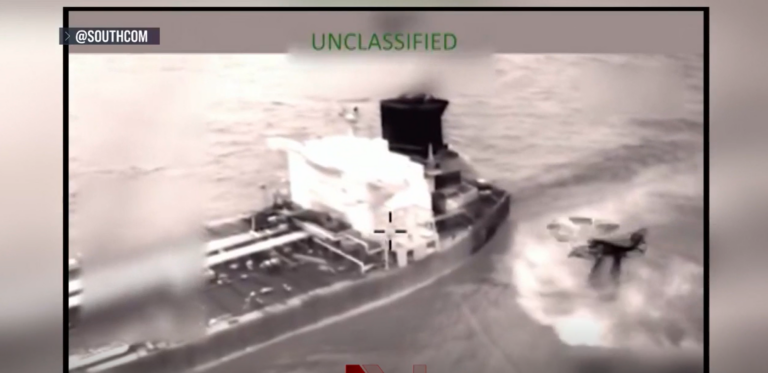
The Caribbean Sea connects North and South America. It hosts shipping routes, energy corridors, submarine cables, migration paths, and naval choke points. Control of that space means influence far beyond island borders.
The Strategy’s emphasis on maritime enforcement, Coast Guard expansion, and naval presence should not be read as abstract security theory. It directly affects how freely Caribbean states can negotiate port deals, accept foreign infrastructure financing, or even posture diplomatically.
In Monroe Doctrine 2.0, neutrality is no longer invisible. It is suspicious.
Partnership or Management?
To be fair, the Strategy also speaks the language of cooperation, development, and shared prosperity. Caribbean governments will hear real offers: training, aid, investment, and security support.
The question is not whether partnership exists. The question is on whose terms.
Small states thrive on flexibility. Great power strategies thrive on predictability. Monroe Doctrine 2 is about reducing surprises in America’s near abroad. That may be rational from Washington’s perspective. It is far less comfortable from Kingston, Port of Spain, Bridgetown, or Castries.
The Quiet Shift Caribbean People Should Not Ignore
This document is not a threat. It is not a declaration of war. It is something more subtle and more durable.
It is a map of expectations.
The Caribbean is no longer framed as peripheral. It is framed as essential infrastructure. And infrastructure, once identified, is never left unmanaged.
The Caribbean may not be named often in Washington’s strategy, but it is clearly priced in.
That is Monroe Doctrine 2.0. Not with cannons, but with checklists. Not with ultimatums, but with incentives. And like all doctrines before it, it works best when the people most affected are too distracted to read the fine print.
This story is part of our wider Caribbean Geopolitics & Global Affairs coverage. Explore the full hub for regional security updates, diplomacy, migration, energy politics, and deeper analysis of how global power plays shape Caribbean realities.