Steelpan Power: Why Panorama & Pan Culture Keep Trinidad’s Soul Beating
🥁 The Only Instrument the World Knows Came From Here
Trinidad and Tobago has given the world plenty — liming, doubles, bad traffic, and vibes — but nothing hits harder than steelpan. It’s not just music; it’s metal turned memory.
Born in the crucible of colonial bans, steelpan became the people’s defiant invention. Out of oppression came orchestras. Out of oil drums came an anthem.
Every time a mallet hits steel, it’s a reminder that creativity and resistance are two sides of the same rhythm.

🔥 From Noise to Nationhood
The steelpan wasn’t born in a lab or factory — it came from backyards, old oil drums, and relentless curiosity.
When drums and African percussion were outlawed in the early 1900s, Trinidadians improvised. Bamboo sticks became tamboo bamboo. Metal tins replaced bamboo. And by the 1930s and 40s, pioneers like Winston “Spree” Simon, Ellie Mannette, and Neville Jules were hammering melody out of scrap iron.
What the colonial authorities called “noise” became a national symbol.
By independence in 1962, the sound of pan was already the sound of identity.
To this day, no other nation can claim to have created a new acoustic instrument in the last century. That’s not just history — that’s invention as rebellion.

🎶 Panorama: The Grand Stage of Passion
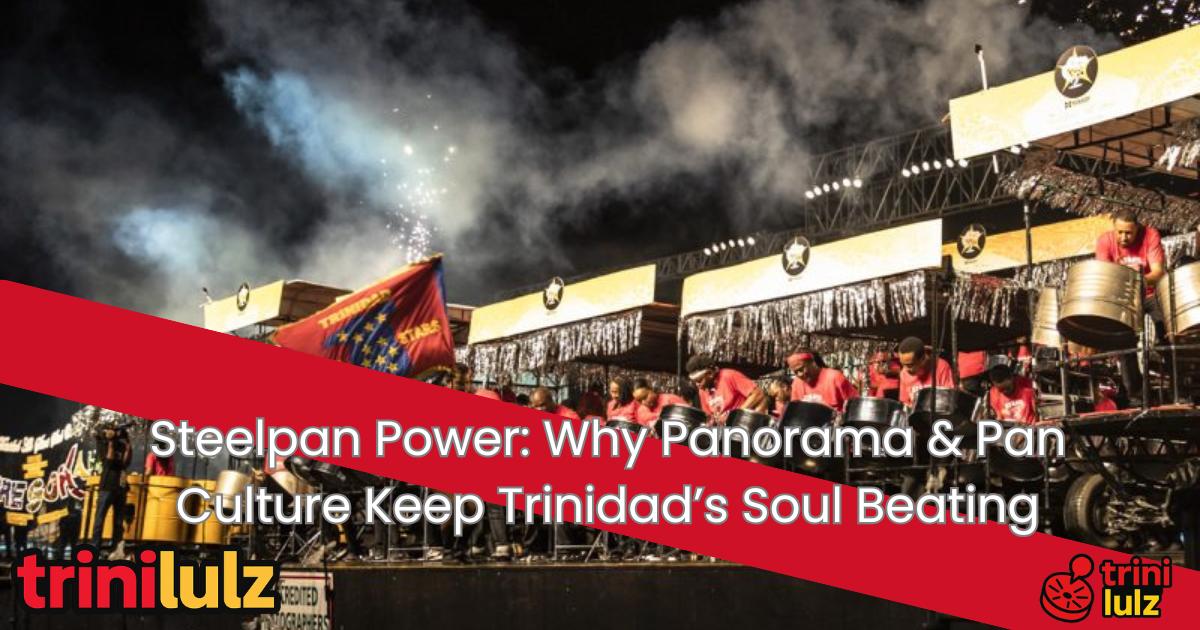
For the uninitiated, Panorama is Trinidad’s Olympics of sound — the annual competition where steelbands bring thunder to the Savannah stage.
Months before Carnival, panyards become buzzing workshops of creativity. Old fridges and bar stools turn into benches; sheet music meets pure instinct. Musicians practice late into the night, blending sweat and symphony.
Then comes the big night — lights blazing, crowds roaring, 100-piece orchestras unleashing fireworks of melody. It’s discipline meets bacchanal. It’s patriotism set to rhythm.
Panorama isn’t just a contest. It’s communion — the yearly pilgrimage of a people to worship at the altar of sound.
🎓 The Panyard: Trini University of Rhythm
To understand pan, you have to understand the panyard — the real heartbeat of the culture.
It’s not just a practice space. It’s classroom, community centre, and vibes factory all in one.
Children learn rhythm before reading music. Veterans teach for love, not pay. People from every walk of life gather: bankers, plumbers, school kids, retirees — all equal behind the drum.
In the panyard, you don’t need a degree to conduct brilliance.
You just need to listen, feel, and belong.
🌍 Steelpan Around the World — But Still Trini to the Bone
From Japan to Sweden to Nigeria, pan has gone global. Universities teach it, orchestras feature it, and international bands compete.
But somehow, the sweetest sound still lives here — in the Savannah dust, in Laventille’s hills, in the echo of a pan striking the cool night air.
Trinidad remains the home of pan’s soul.
Even when others borrow the melody, the heartbeat stays local.
🧠 Innovation, Identity, and the Future of Pan
Steelpan isn’t frozen in nostalgia. It’s evolving — from electronic pans to digital sampling, pan robots, and even AI-arranged compositions (yes, people are training bots to arrange “Pan in A Minor”).
But innovation alone doesn’t keep culture alive. The question now is whether the next generation will see pan as part of who they are — not just background music for Carnival, but a badge of national genius.
The solution? Keep panyards alive. Fund music education. Celebrate pannists like we celebrate cricketers. Let pan reclaim its rightful headline spot every Carnival.
❤️ When Metal Found Its Voice
There’s something poetic about taking a discarded oil drum — a symbol of industry and exploitation — and transforming it into harmony.
That’s the story of Trinidad itself: pain into performance, restriction into rhythm, scrap into song.
The steelpan is the sound of survival.
And as long as it rings, the Trini spirit will never go silent.
For more destination guides, travel warnings, tourism updates, and plain-English Caribbean travel coverage, visit our Caribbean Travel hub.