NOT UNITY, BUT CULTURAL ERASURE: WHY UTT EMANCIPATION DAY PROGRAMME CROSSED THE LINE
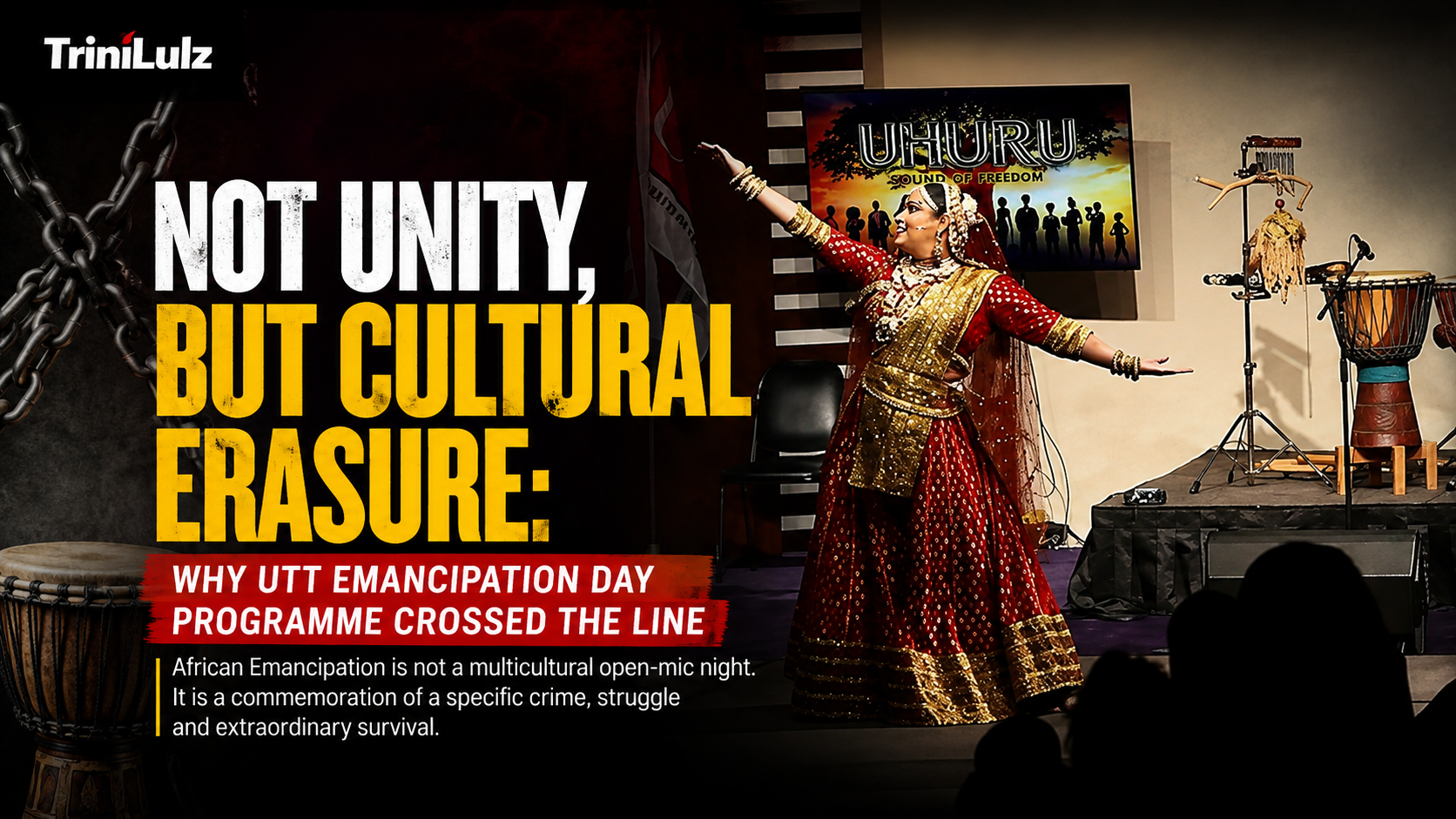
A tassa performance is not offensive. Classical Indian dance is not offensive. Indian culture is not the enemy.
But context matters.
When the University of Trinidad and Tobago staged its UTT Emancipation programme, UHURU: Celebrating Freedom, on July 29, tassa drumming and classical Indian dance were included in an official ceremony intended to commemorate African Emancipation. The programme was organised by UTT in collaboration with the Ministry of Tertiary Education and Skills Training, the Ministry of Culture and Community Development and the National Academy for the Performing Arts.
Videos of the performances quickly provoked public criticism. Some defended the programme as an expression of Trinidad and Tobago’s multicultural identity. Others asked why African drumming, dance and spirituality were not allowed to occupy the cultural centre of a ceremony dedicated specifically to the liberation of enslaved Africans.
That objection was legitimate.
The inclusion of East Indian performances in an African Emancipation ceremony was culturally inappropriate, historically insensitive and institutionally indefensible.
This was not unity. It was cultural erasure disguised as inclusion.
UTT Emancipation was not advertised as a multicultural concert
The problem begins with the purpose of the event.
UHURU: Celebrating Freedom was not an Independence Day concert. It was not a Republic Day programme, a national cultural showcase or a celebration of every community that contributed to Trinidad and Tobago.
It was an African Emancipation programme.
According to UTT, the production was intended to honour the legacy of Emancipation and recognise African contributions to the country’s social, cultural and artistic development. It included theatrical readings, dance and musical performances presented as tributes to those who fought for freedom.
That purpose creates a legitimate cultural boundary.
Everyone should be welcomed at an African Emancipation event. Indo-Trinidadians, Syrians, Chinese, Europeans and citizens of every other background should be encouraged to attend, learn, support and reflect.
But being welcomed into a commemorative space does not mean every community must be artistically represented in the official programme.
There is a difference between participating in another community’s commemoration and inserting your own cultural performance into the centre of it.
Solidarity means standing beside people in their historical moment. It does not require stepping onto the stage and redirecting that moment toward yourself.
“Diversity” cannot excuse every curatorial decision
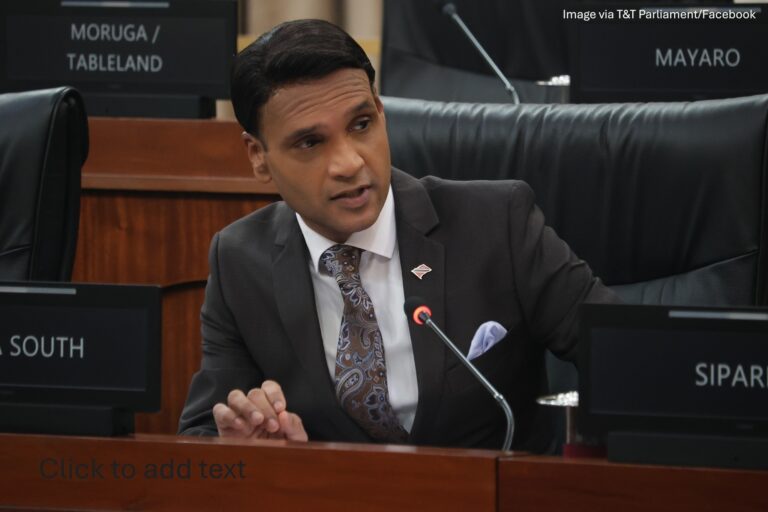
Parliamentary Secretary Hansen Narinesingh used his feature address to connect African Emancipation and Indian indentureship, arguing that both experiences contributed to Trinidad and Tobago’s values of resilience, solidarity and mutual respect.
Those sentiments may sound inclusive, but the setting matters.
There was no need to place Indian indentureship alongside African chattel slavery during an African Emancipation programme. Both histories are important. Both deserve serious study. Both helped shape the country.
But they were not the same historical experience.
UTT’s responsibility was not merely to assemble a programme containing multiple cultural expressions. As a national university, it had a responsibility to understand the meaning of the occasion it was commemorating.
Calling an event “diverse” does not answer whether its artistic choices were appropriate.
A funeral is not improved by inserting a birthday celebration. A Hindu ceremony is not made more inclusive by adding Orisha rituals. A Spiritual Baptist observance does not require Islamic drumming to prove national unity.
Respect sometimes requires restraint.
The issue was therefore not whether tassa and Indian dance are worthy cultural expressions. They unquestionably are. The issue was whether they belonged in that particular ceremony.
They did not.
Both systems were oppressive—but they were not equivalent
Indian indentureship and African chattel slavery were both systems of colonial exploitation. Neither should be sanitised.
More than 140,000 Indians were transported to Trinidad between 1845 and 1917. They endured arduous voyages, deplorable conditions and demanding plantation labour after being assigned to estates across the colony. Their contracts restricted their freedom and were enforced within a colonial system designed primarily to supply plantation owners with cheap labour after formerly enslaved Africans began leaving the estates.
Indentureship was harsh, coercive and frequently abusive.
But acknowledging that fact does not require erasing the defining characteristics of chattel slavery.
Indentureship controlled labour through contracts, penal sanctions and colonial authority. Chattel slavery legally classified the human being as property.
British records show enslaved Africans being bought, sold, inherited and transferred between owners and colonies. Slaveholders were required to submit returns recording changes to their human property, including purchases, births, deaths and inheritances.
When slavery was abolished, the British state compensated slave owners for the loss of what the law had treated as their property. The formerly enslaved received no equivalent compensation for their captivity, labour or suffering.
One system exploited labour for a defined period. The other claimed the person, the family and the future.
Recognising that distinction is not a competition over suffering. It is historical accuracy.
Slavery attacked the person, the family and ancestral continuity
African chattel slavery did more than compel labour.
Africans were violently removed from their societies, transported across the Atlantic, sold in colonial markets and dispersed among plantations containing people from different nations, languages and cultural traditions.
During the Middle Passage, colonial commercial records commonly classified enslaved Africans as goods. Once on plantations, many appeared in official documentation primarily through records created by slaveholders, colonial administrators and courts. Enslaved people could also appear in wills as part of a deceased owner’s estate.
The system claimed authority over marriage, parenthood, movement, labour and the fate of children born into slavery.
This is central to understanding why African Emancipation requires its own protected cultural and historical space.
Indian indentured immigrants also suffered displacement, exploitation and separation. But archival records often retained highly specific details about their identities. Trinidad’s immigration registers documented names, fathers’ names, caste, home villages, next of kin, marriages, ships, occupations and estate assignments. UNESCO describes these records as crucial sources of genealogy for the descendants of indentured labourers.
For many descendants, those records preserve a recognisable route back to a village, family name or region in India.
For many descendants of enslaved Africans, the ancestral trail ends at an estate inventory, an owner’s surname or a colonial registry.
That difference matters.
African culture survived an attempted erasure
The attempt to destroy African continuity was never completely successful.
Enslaved Africans and their descendants preserved and recreated identity through music, drumming, dance, religion, food, oral tradition, healing, craftsmanship and community life.
But much of it survived in fragments, through adaptation or beneath forms acceptable to colonial society.
NALIS describes slaveholders’ attempts to suppress African cultural, social and religious traditions and impose European values, while recognising that African influences nevertheless survived in Trinidad and Tobago’s music, dance, religion, language, food and festivals.
That suppression did not disappear immediately after slavery ended.
The Spiritual and Shouter Baptist faith, which developed among people of African descent and incorporated African doctrines and practices, was legally prohibited between 1917 and 1951. Worshippers were arrested, beaten and jailed, and many were forced to practise in forests and remote areas. African-derived practices were portrayed by colonial authorities and established institutions as backward, barbaric or disruptive.
African Emancipation is therefore not merely a celebration of chains physically falling in 1834 or the end of apprenticeship in 1838.
It is also a reclamation of what colonial power attempted to shame, suppress and destroy.
That is why African drums, African dance, African spirituality and African historical memory should have occupied the centre of UTT’s stage without apology or dilution.
Indian heritage already has recognised spaces of honour
Saying that East Indian performances did not belong in UTT’s African Emancipation ceremony does not diminish Indian culture.
Trinidad and Tobago provides numerous recognised spaces in which Indian history and heritage are celebrated.
Indian Arrival Day commemorates the arrival of the first Indian indentured immigrants aboard the Fatel Razack in 1845. Official observances traditionally include reenactments, Indian music, dance and recognition of outstanding members of the Indo-Trinidadian community.
Divali publicly celebrates Hindu faith and culture. Phagwa, Hosay, Eid and other observances preserve religious and cultural traditions brought and rebuilt by Indian communities.
NALIS notes that Indian immigrants brought religions, festivals, food, clothing, languages and place names that became deeply embedded in Trinidad and Tobago. Hindu and Muslim observances helped immigrants retain values and traditions during the hardships of plantation life.
These cultural spaces should be respected.
African performers should not demand that Orisha drumming be inserted into an Indian Arrival Day ceremony. African dance should not be added to a Divali programme merely so organisers can declare it multicultural.
The principle must be reciprocal.
Respecting Indian cultural boundaries while refusing to respect African cultural boundaries is not multiculturalism. It is a double standard.
Every culture does not have to occupy every stage for Trinidad and Tobago to remain united.
Apply the reversal test
Consider the controversy in reverse.
Imagine that a state institution organised an Indian Arrival Day programme. It selected an Indian name, advertised the event as a commemoration of indentured immigrants and promised to honour the survival of Indian culture.
During the ceremony, however, the programme shifted to African drumming and African dance. A speaker then placed chattel slavery alongside indentureship and explained that both experiences contributed to national unity.
Would Indo-Trinidadians be wrong to object?
Would their objection be dismissed as racism against African performers?
Would they be told that Indian Arrival Day must include African activities because Trinidad and Tobago is multicultural?
Almost certainly not.
Many citizens would immediately understand that a ceremony commemorating Indian Arrival should centre Indian migration, survival, religion, music, dance and historical memory.
The same respect must be extended to African Emancipation.
The purpose of the reversal test is not to promote retaliation or cultural separation. It reveals whether the standard being applied is consistent.
African Emancipation should not be the one national observance that must constantly surrender its specificity to prove that African people believe in unity.
There is nothing divisive about saying that a historical commemoration should remain faithful to the history it was created to honour.
Participation was never the real issue
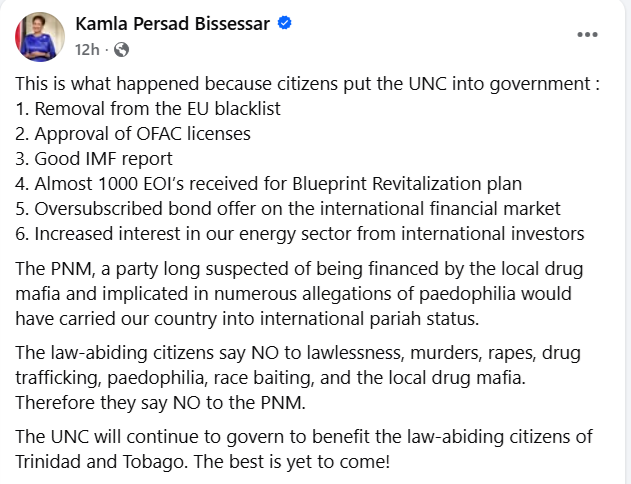
Prime Minister Kamla Persad-Bissessar later framed the controversy partly around whether East Indians should be allowed to participate in Emancipation events, suggesting that those objecting to the UTT programme did not want East Indian involvement.
But that framing avoids the substance of the criticism.
No reasonable argument has been made that Indo-Trinidadians should be barred from African Emancipation celebrations.
The question is not who may attend.
The question is what the official programme should centre.
An Indo-Trinidadian citizen attending an Emancipation procession, wearing African clothing, supporting reparations, studying African history or standing in solidarity with Afro-Trinidadians is participating in national life.
That is entirely different from a state-supported institution inserting tassa and Indian classical dance into the formal artistic presentation of an African Emancipation programme.
The distinction is straightforward.
Citizenship gives every Trinidadian an interest in every part of our national history. It does not mean that every ceremony must contain every culture.
The Prime Minister and other national leaders should have acknowledged the concern, rejected any racist abuse surrounding it and asked UTT to explain its curatorial decision.
Instead, legitimate criticism was too easily transformed into another UNC-versus-PNM quarrel.
That only deepened the division the programme supposedly intended to prevent.
Criticism must not become hostility toward Indian people
There is an important boundary that critics must also respect.
The Indian performers themselves should not be abused or treated as enemies. They may simply have accepted an invitation to perform in a programme created by others.
The responsibility rests with the institutions, officials, producers and cultural advisers who planned and approved the event.
This controversy must not become an excuse for racist attacks against Indo-Trinidadians or for dismissing the suffering experienced under indentureship.
Indian culture is not responsible for UTT’s failure of judgement.
Tassa is not the offender.
The programme was.
A mature country must be capable of discussing cultural boundaries without descending into racial hostility. It must also be capable of recognising that not every objection raised by an African community is an attack on national unity.
The fastest way to deepen ethnic mistrust is to deny people the right to articulate genuine cultural injury.
African citizens should not have to soften every criticism, apologise for centring African history or immediately insert another community into the conversation before their concern is considered legitimate.
Respect must operate in every direction.
UTT owes the country more than a statement
UTT defended the event by saying it honoured Emancipation and celebrated African contributions to the development of Trinidad and Tobago.
That statement does not answer the central questions.
Who approved the inclusion of tassa and classical Indian dance?
What historical, artistic or educational rationale guided the decision?
Were African historians, artists, religious practitioners or cultural organisations consulted?
Why was African drumming not allowed to carry the musical centre of an African Emancipation production?
Was the purpose of the event to commemorate African Emancipation, or was it to use Emancipation as a convenient platform for a general multicultural message?
A national university should be capable of explaining its academic and cultural reasoning.
UTT should not hide behind vague language about diversity and inclusion. Diversity without context can become tokenism. Inclusion without boundaries can become intrusion.
The university should acknowledge that the programme created legitimate hurt, undertake a review of how national commemorations are curated and ensure that future African Emancipation events are developed with meaningful input from African cultural stakeholders.
That would not divide the country.
It would demonstrate institutional maturity.
Unity requires respect—not occupation of every stage
Trinidad and Tobago’s diversity is real, valuable and worth defending.
But genuine diversity does not erase distinctions. It protects them.
African Emancipation and Indian Arrival commemorate different historical experiences. They carry different meanings, traumas, symbols and cultural inheritances.
They do not need to be merged to be respected.
The inclusion of East Indian dance and tassa in UTT’s African Emancipation programme was unacceptable because it blurred the purpose of the ceremony and displaced African culture from a space created specifically to honour African struggle and survival.
The answer is not segregation.
The answer is reciprocal cultural respect.
Attend each other’s ceremonies. Learn each other’s histories. Support each other’s causes. Defend each other against discrimination. Celebrate together where celebration is shared.
But also recognise that some occasions require the humility to stand beside another community rather than at the centre of its stage.
African Emancipation is one of those occasions.
African Emancipation is not a multicultural open-mic night. It is a commemoration of a specific crime, a specific struggle and an extraordinary survival.
UTT crossed that line.
Calling it unity does not make it right.