Caribbean Tourism Is Booming Again — But 2026 Hurricane Season Could Spell Trouble
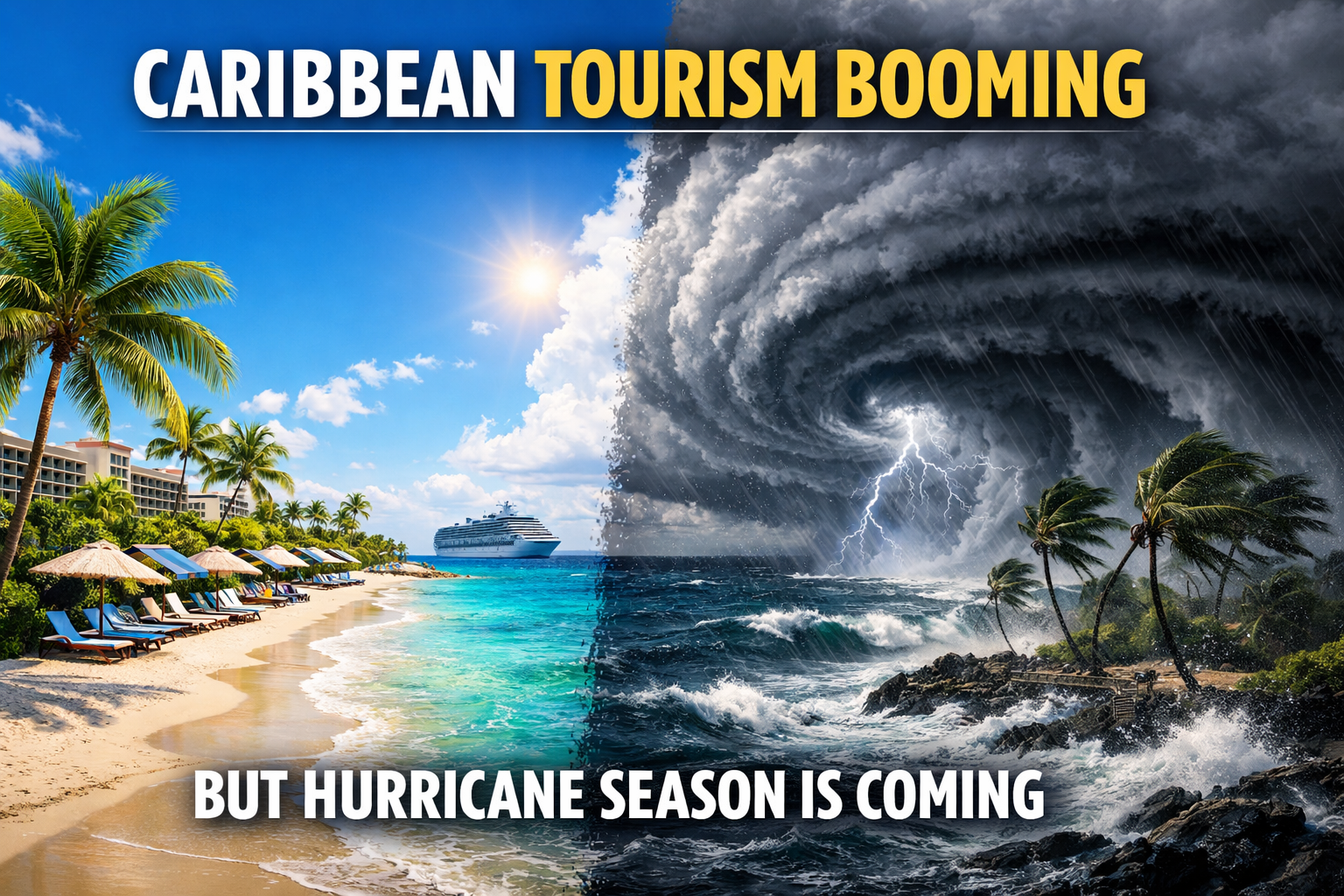
The beaches are packed again. Cruise ships are lining up at Caribbean ports like taxis at Piarco on a Friday evening. Hotels that once stood half-empty during the pandemic years are finally humming again with visitors chasing sunshine, rum punch, and turquoise water.
Caribbean tourism is officially back.
But just as the region begins celebrating its comeback, meteorologists are quietly watching the Atlantic with a raised eyebrow. Because the 2026 Hurricane Season may look “average” on paper — yet for a tourism-dependent region, average can still mean serious trouble.
Forecasts released by Tropical Storm Risk project 14 named storms, 7 hurricanes, and 3 major hurricanes in the Atlantic basin this year. That places 2026 close to long-term averages. Official storm tracking and advisories throughout the season are issued by the National Hurricane Center, the primary authority monitoring tropical systems across the Atlantic and Caribbean.
The problem is that averages don’t pay hotel staff salaries, rebuild docks, or reopen airports after a storm.
And the Caribbean knows that better than most.

A Tourism Boom Years in the Making
After the brutal shutdowns of the COVID-19 pandemic, Caribbean tourism has roared back with surprising speed.
The Caribbean Tourism Organization reported more than 34 million international arrivals in 2024, pushing visitor numbers beyond pre-pandemic levels. Resorts expanded. Airlines added routes. Cruise lines poured billions into new private island destinations.
For many island economies, tourism is not just another industry. It is the industry.
Across the Caribbean, tourism accounts for a massive share of national income, jobs, and foreign exchange. In some countries it drives over a quarter of the entire economy.
Which means hurricane season isn’t just a weather story.
It’s an economic story.
A single storm can shut down airports, damage hotels, cancel cruise itineraries, and wipe out weeks or months of bookings.
“One well-placed hurricane can erase an entire tourism season for a small island.”
That reality is why tourism officials across the region watch Atlantic weather maps with almost as much attention as meteorologists.
The Wild Card: El Niño vs Warm Atlantic Waters
One of the big questions shaping the 2026 Hurricane Season is the evolving climate pattern in the Pacific Ocean.
Scientists say the powerful La Niña conditions of 2025 are fading, with a transition toward neutral conditions already underway. There is also a 50–60 percent chance that El Niño could develop later in 2026.
Traditionally, El Niño increases wind shear over the Atlantic — which can disrupt hurricane formation.
In theory, that should reduce storm activity.
But nature does not always follow the script.
Sea surface temperatures in the Atlantic Main Development Region and Caribbean Sea are already running about 0.3°C above average, meaning storms that do form could strengthen quickly.
The bigger concern is timing.
If El Niño develops too late, the peak hurricane months of August and September could still produce dangerous storms.
And the Caribbean sits directly in that crosshair.
“Average seasons still produce devastating hurricanes. It only takes one.”
The Last Five Years Proved That Point
Recent history shows how unpredictable hurricane impacts can be for Caribbean tourism.
Even seasons that look moderate on paper can deliver brutal hits.
In 2024, Hurricane Beryl ripped through parts of the southern Caribbean, causing massive damage across the Grenadines. Tourism infrastructure, marinas, guesthouses, and coastal businesses were severely impacted.
Recovery took months.
In previous years, storms like Elsa, Fiona, and Lisa also reminded Caribbean governments that smaller islands face unique vulnerabilities. Airports close. Cruise ships skip ports. Visitors cancel trips overnight.
Tourism revenue can vanish almost instantly.
The good news is that the Caribbean tourism industry has become remarkably resilient.
Bookings often rebound quickly in unaffected islands, and travelers tend to return once destinations reopen.
But resilience has limits.
“Tourism rebounds fast — but recovery is never free.”
Preparing Before the Storms Form
With uncertainty surrounding the 2026 Hurricane Season, governments and tourism operators are already discussing how to reduce the risks.
Preparation increasingly focuses on resilience rather than reaction.
Some of the most effective strategies include strengthening hotel infrastructure against high winds, protecting coastal ecosystems like mangroves and reefs that absorb storm energy, improving airport and port recovery plans, and expanding parametric insurance programs that provide quick payouts after disasters.
The concept may sound technical, but it has already proven its value in the region. During the chaos of Hurricane Melissa, Jamaica’s catastrophe bond triggered rapid financial support that helped stabilize the country’s recovery efforts. As we explained in our earlier analysis, How Hurricane Melissa Proved Jamaica’s Catastrophe Bond Was Genius, innovative financial tools can mean the difference between months of economic paralysis and a faster return to normal operations.
Tourism boards also work closely with airlines, cruise lines, and hotels to coordinate crisis messaging so travelers understand which islands are affected and which remain open.
In the age of social media, perception can damage tourism almost as much as the storm itself.
Clear communication helps prevent an entire region from being written off after a single island takes a hit.
The Caribbean’s High-Stakes Summer
The Caribbean’s relationship with hurricanes has always been complicated.
Storms shape the region’s climate, ecosystems, and history. Yet they also threaten the economic lifeblood that millions of people depend on.
That tension is especially visible now.
Tourism is booming again. Flights are full. Beach bars are busy. Resorts are expanding.
But the Atlantic Ocean is warming, the climate signals are uncertain, and hurricane forecasts remain notoriously difficult months in advance.
For Caribbean tourism in 2026, the truth may be simple.
The comeback is real.
But so is the risk.
And as every islander knows, hurricane season doesn’t care how good the bookings look.
For more destination guides, travel warnings, tourism updates, and plain-English Caribbean travel coverage, visit our Caribbean Travel hub.