Guyana Hits 900000 Barrels a Day — The Caribbean’s New Energy Superpower Leaves Trinidad Blushing
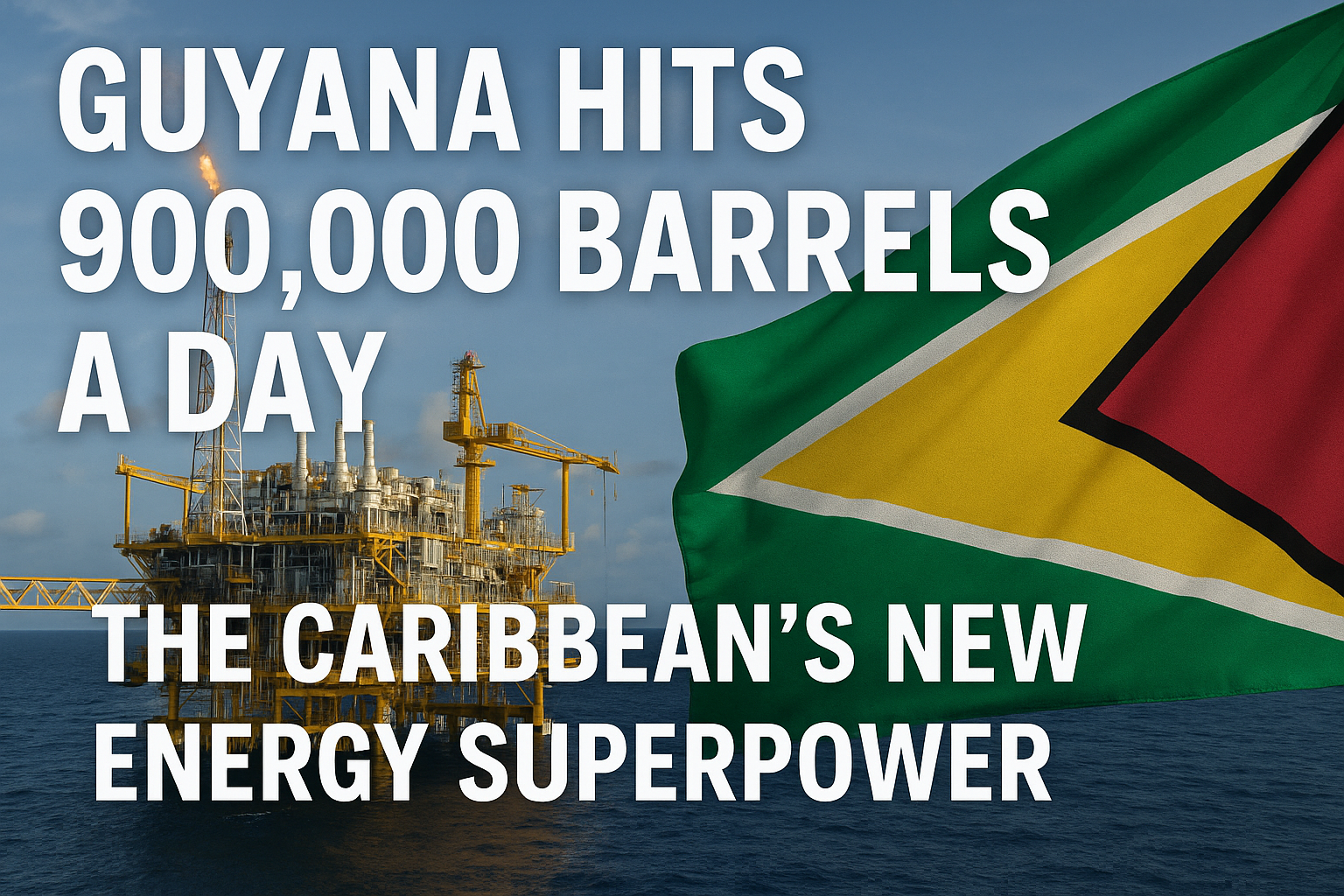
When Guyana hits 900000 barrels a day, the Caribbean’s energy map shifts. In less than a decade, Guyana has gone from “nice rainforest, though” to the Caribbean’s newest energy superpower, pumping out crude like it’s on a speedrun. Trinidad and Tobago, meanwhile, is staring at its old oil trophies like a retired sprinter wondering why the new kid’s running so fast.
This is the story of two nations:
One racing upward on a geyser of fresh crude.
The other coasting on nostalgia and natural gas.
Spoiler: only one of them is hitting 900000 barrels a day.
How Guyana Went From Exploration Footnote to Oil-Boom Phenom
Guyana’s new status didn’t appear out of thin air. The groundwork was laid long before the world cared. Let’s roll back the clock.
In the early 2000s, the oil majors sniffed around Guyana’s offshore blocks. Shell dipped a toe in decades earlier, but nothing stuck. Then came ExxonMobil, Hess, and CNOOC, with a gamble that would turn into one of the most successful exploration runs in modern energy history.
2015: Liza-1 — the well that changed everything.
The discovery unlocked a deepwater province that geologists now describe like they’re reading poetry: “world-class,” “high-quality reservoirs,” “exceptional flow rates.”
By December 2019, production began. And then? Madness.
- Liza Phase 1? Hit targets.
- Liza Phase 2? Overperformed.
- Payara and Yellowtail? Both beasts.
- FPSOs (floating production ships) arriving like new iPhone releases.
By late 2025, the milestone headline was confirmed: Guyana hits 900000 barrels a day. ExxonMobil’s official release announces the moment with the energy of a proud parent showing off an honor-roll student.
The speed of the ramp-up is shocking. No other deepwater startup in the Americas has scaled this fast. Guyana has essentially built an oil industry from scratch — and outperformed legacy producers in half a decade.
“When Guyana hits 900000 barrels a day, the Caribbean gets a new king — and the old king starts checking its crown for rust.”
Meanwhile in Trinidad: The Once-Great Energy Giant Feels… Short
Trinidad and Tobago wasn’t just an energy producer — it was the energy producer of the Caribbean for over a century.
Trinidad struck oil commercially in 1908.
By 1914, it was pumping over a million barrels a year.
By the 1970s, it was an OPEC-era boomtown with steel, petrochemicals, refineries, and LNG plants that made the region respect — and fear — our swagger.
But geology does not care about nostalgia.
- Oil production peaked in the 1970s.
- Declines set in during the 1980s and 90s.
- The gas boom masked the pain during the 2000s.
- Petrotrin collapsed in 2018 like a failing group project.
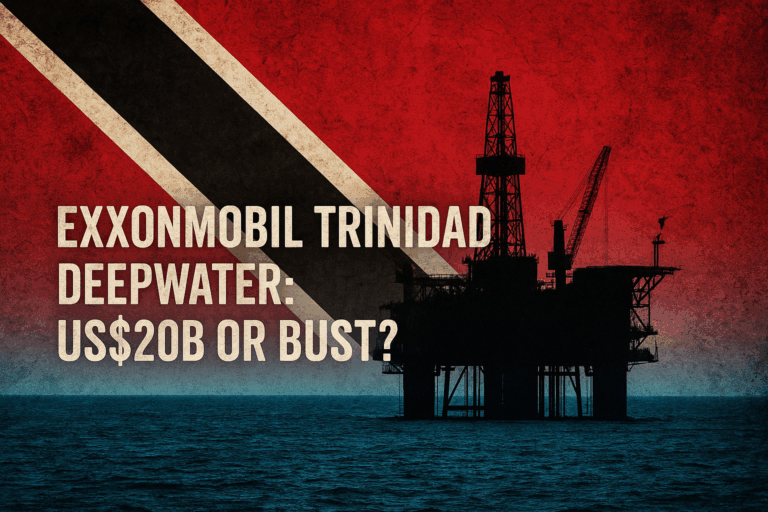
And now, Trinidad’s hopes lie in its deepwater frontier — a frontier that might deliver, or might drag the country into another round of political fantasy planning. If you want to see how Trinidad’s new gamble stacks up, check out our internal breakdown:
The contrast with Guyana hits 900000 barrels a day could not be louder.
Two Energy Histories, Two Futures
The contrast between the two countries is almost cinematic.
Guyana is in its “fast and furious” chapter — FPSOs rolling in, foreign investment flooding, and politicians trying not to faint at the revenue projections.
Trinidad is in its “reflective documentary” phase — still vital, still skilled, still proud, but feeling the gravity of depletion and transition.
One is booming.
The other is balancing.
One is expanding.
The other is maintaining.
One is ramping to 900000 barrels a day.
The other is trying to squeeze more out of deepwater gas.
Both, however, matter to the Caribbean.
“Guyana hits 900000 barrels a day — Trinidad once dreamed those numbers. Now it dreams of diversification.”
The Big Question: What Happens Now?
For Guyana:
Can it manage oil money better than other boom states?
Can the wealth reach ordinary Guyanese and not just multinationals and elites?
Can it balance oil growth with territorial tensions, climate challenges, and infrastructure stress?
For Trinidad:
Does it double down on deepwater gas?
Pivot into tech, green energy, or manufacturing?
Become the Caribbean’s energy service hub even if it’s no longer the crude king?
For the region:
A new energy superpower means new alliances, new risks, and new opportunities.
Caribbean diplomacy will shift.
Investment will chase Guyana.
Power will rebalance.
For more rich lists, business power stories, elite profiles, and regional influence analysis, visit our Caribbean Power, Wealth & Influence hub.