
CARIBBEAN GROWTH IS A MIRAGE: ECLAC Report 2025 Says Remove Guyana and It’s Dismal
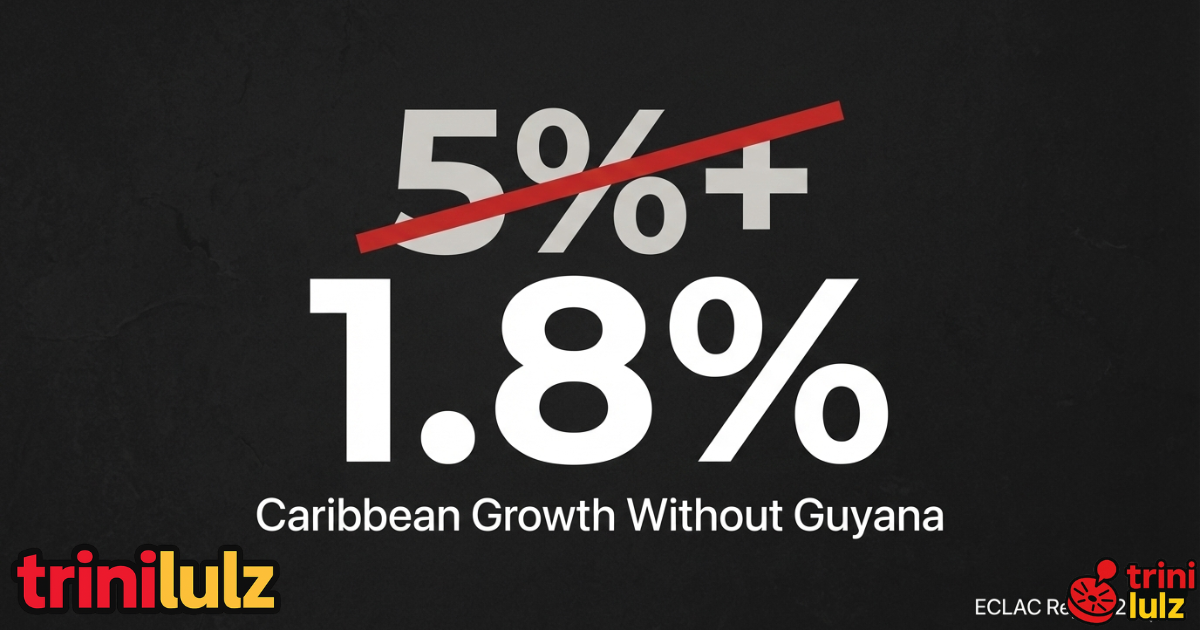
Slide past the headline numbers in the ECLAC Report 2025 and something strange pops out: the Caribbean appears to be cruising, but only because one country is strapped into a rocket. When you peel away Guyana’s oil-fueled boom, the rest of the Caribbean looks like it’s walking uphill in flip-flops. That “growth miracle” suddenly feels like a mirage flickering in the distance.
Regional Glimmer or According to the ECLAC Report, Optical Illusion?
The Economic Commission for Latin America and the Caribbean has been rolling out its latest economic outlook, and the broad picture for Latin America and the Caribbean is the familiar slow-growth storyline — roughly 2.4% in 2025 and 2.3% in 2026. It’s a modest uptick, but still firmly in the low-growth zone that has characterized the region for years. Click here for the full report straight from the source.
But here’s where the Caribbean subplot gets interesting. ECLAC flags that if you exclude Guyana, the rest of the Caribbean is forecast to grow at only about 1.8% in 2025 and 1.7% in 2026, lower than most global peers and slower than the region’s own past.
“Caribbean Growth Strong… Until Guyana Is Removed.”
Guyana: The One-Country Growth Engine
Dig into the numbers and you see the truth: Guyana isn’t just outperforming its neighbours, it’s outpacing almost every economy in the hemisphere. The country’s GDP is projected to expand by around 10.3% in 2025, making it the outlier that tilts the regional average upward. That growth is already reshaping lives and labour markets, so much so that many Caribbean workers are exploring new opportunities across the border, as we discussed in our look at working in Guyana vs Trinidad .
In any other statistician’s world, Guyana’s data point is what we call an outlier, a single value so different from the rest that it distorts the picture if you don’t separate it out. That’s precisely what happens here. With Guyana’s rapid oil-sector-driven expansion factored in, the Caribbean’s headline growth sounds respectable; without it, the subregion’s pace looks sluggish.
Why the Rest of the Caribbean Is Struggling
It’s not just numbers on a page, these figures connect to real structural challenges. For many Caribbean states, tourism is a huge driver of GDP. When global demand for travel softens which is tied to slower U.S. growth or shifting consumer spending patterns, the ripple effects hit island economies hard.
Add to that the lingering impacts of high energy and transportation import costs, vulnerability to natural disasters, and debt servicing pressures, and you get an economy that’s steadying itself but not sprinting. ECLAC highlights these structural headwinds as reasons the subregion can’t break out of the low-growth trap.
Tourism Rebounds, But It’s Not Enough
Yes, tourism has bounced back since the worst of the pandemic slump — but that rebound is uneven. Demand fluctuations from major source markets and lingering external vulnerabilities mean tourism alone can’t lift overall growth significantly. The sector’s performance has an outsized influence on services exports, but it’s not enough to push the Caribbean into robust expansion territory.
Headline Numbers Don’t Tell the Whole Story
That’s the core twist in the ECLAC Report 2025: on paper, the Caribbean’s growth figures give the impression of resilience. Look closer, though, and the engine under the hood is really just one country’s oil boom. Strip Guyana out of the calculation and those “flying colours” of growth drop to modest shades of pastel.
What This Means for You
For policymakers across the Caribbean, the takeaway isn’t just low growth — it’s fragility. The region’s reliance on a narrow set of drivers (tourism, a few commodities) and exposure to external shocks makes collective, diversified growth harder to achieve. While Guyana races ahead, most of the Caribbean remains stuck at slow-motion pace.
The ECLAC Report 2025 paints a picture of a region that’s moving, just not all of it in the same direction. Guyana’s growth is real, dramatic, and reshaping regional averages. But for the rest of the Caribbean, the future still demands solutions that go beyond cheering from the sidelines of someone else’s boom.