Hormuz Shut, Oil Prices Soar: Why Trinidad Could Profit While the Caribbean Pays
When oil prices soar, the shockwaves do not stay in the Middle East. They ripple through airline tickets, grocery bills, shipping costs, electricity prices and national budgets. Right now those waves are crashing straight into the Caribbean.
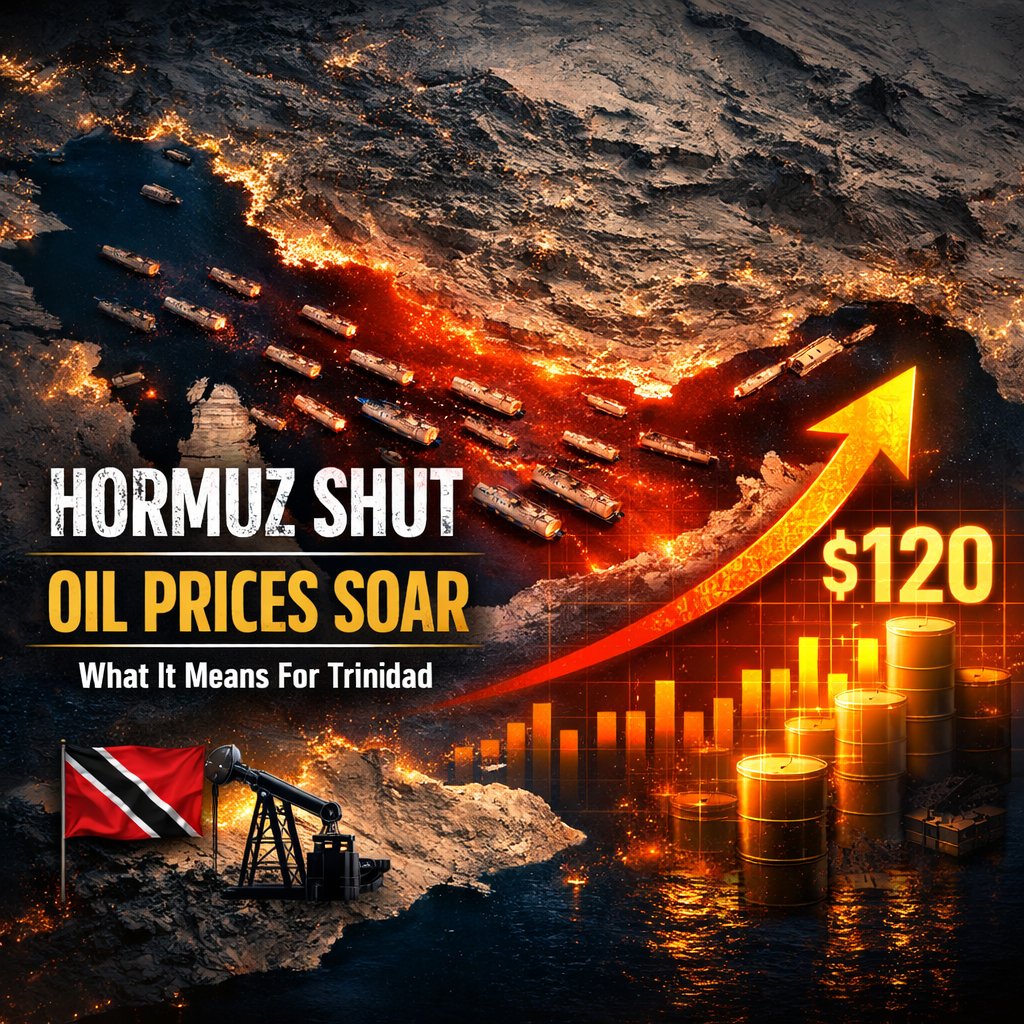
The spark is the escalating conflict between the United States, Israel and Iran. Military strikes in late February pushed the region into open confrontation, and the result has been a near paralysis of traffic through the Strait of Hormuz, the narrow waterway that carries roughly a fifth of the world’s oil supply.
Shipping trackers report vessel traffic through the strait has collapsed by more than 90 percent. At the same time, Brent crude surged close to $120 per barrel, a dramatic spike that has jolted global markets.
For most of the Caribbean, the implications are painful. But for Trinidad and Tobago, the region’s largest oil and gas producer, the story is far more complicated.
“When oil prices soar, the Caribbean pays the bill. Trinidad might collect part of it.”
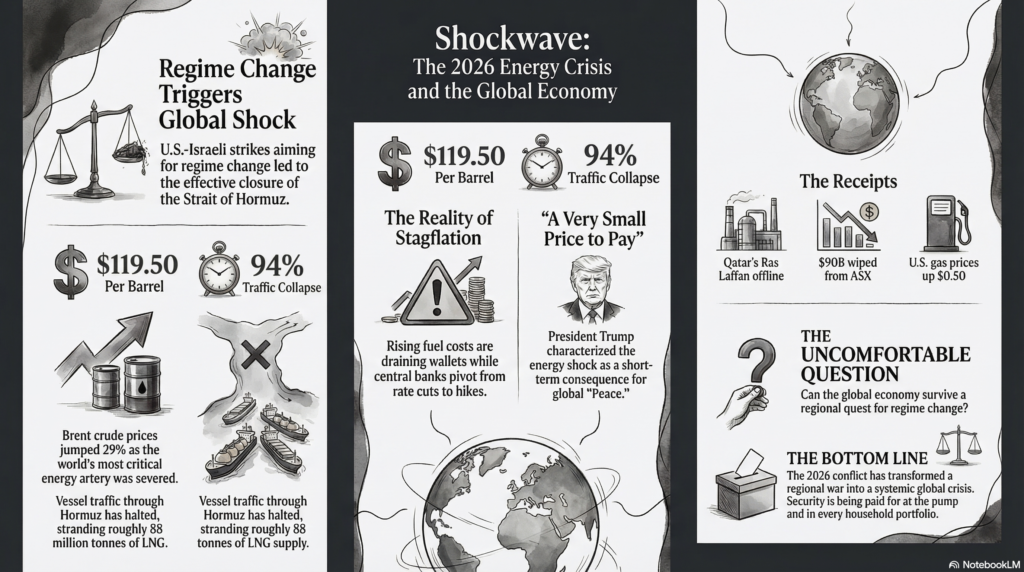
A Tiny Strait With Global Power
The Strait of Hormuz is only about 21 miles wide at its narrowest point, but it functions as one of the most important economic arteries on the planet.
Every day under normal conditions:
- Around 20 percent of global oil passes through the strait
- Huge volumes of Qatar’s LNG exports move through the same corridor
- Asian economies such as China, Japan and South Korea depend heavily on these shipments
According to the International Energy Agency’s global oil market analysis, roughly a fifth of the world’s petroleum flows through this narrow waterway, making it one of the most vulnerable chokepoints in the global energy system.
Read the report here:
https://www.iea.org/reports/oil-market-report
When conflict threatens that corridor, markets panic quickly. That panic is exactly what we are seeing now.
Energy analysts say the collapse in tanker traffic has triggered a sudden fear of supply shortages. Even if oil keeps flowing elsewhere, traders immediately price in the possibility that the global supply chain could seize up.
The result is simple. Oil prices soar.
And once oil spikes, the cost of almost everything begins creeping upward.
Why the Caribbean Feels It First
Small island economies are especially vulnerable to energy shocks because most of what they consume arrives by ship or plane.
When oil rises sharply, the chain reaction looks like this:
- Fuel imports become more expensive
- Shipping companies raise freight rates
- Airlines face higher jet fuel costs
- Food and consumer goods become pricier
- Inflation accelerates across the economy
Tourism-driven economies like Barbados, Jamaica and the Bahamas also face a second risk. If jet fuel prices stay high for long, airlines increase ticket prices and travel demand can soften.
That combination can squeeze island economies hard. Higher import costs collide with slower tourism spending.
For the wider Caribbean, the message is clear: when oil prices soar, the bill arrives quickly.
The Trinidad and Tobago Energy Paradox
Trinidad and Tobago sits in a strange position during global energy crises.
Unlike most of the Caribbean, the country produces oil and natural gas and exports large quantities of energy products.
Energy exports still generate a major share of government revenue and foreign exchange. When global energy prices climb, the state can receive an immediate boost through:
- higher export earnings
- increased tax revenue from energy companies
- improved foreign exchange inflows
In simple terms, higher prices can mean more money flowing into the country.
This dynamic is not new. Historically, Trinidad has benefited from global oil shocks, including previous Middle East disruptions that pushed prices upward.
But the benefit today becomes clearer when you compare current prices to what the government actually expected. In the 2026 national budget, oil revenue projections were based on a price of roughly US$73 per barrel, meaning today’s surge could potentially generate additional fiscal breathing room.
👉 Read our full breakdown of the budget assumptions here:
https://www.trinilulz.com/tt-budget-2026-when-unc-wins-everybody-wins-gas-down-jobs-up-and-plenty-promises-inside/
“Trinidad can profit when oil prices soar, but the country no longer produces enough energy to ride the wave the way it once did.”
Why the Windfall May Be Smaller Than People Expect
There are several reasons the upside may be muted.
First, oil production has declined sharply over the past decade. Trinidad now produces only a fraction of the crude it once did.
Second, the Pointe-à-Pierre refinery remains closed, meaning the country imports much of the refined fuel it consumes.
Third, natural gas shortages have already forced reductions in LNG production in recent years, limiting how much the country can export even when prices jump.
So while the government may collect extra revenue from higher prices, consumers could still face higher gasoline, electricity and food costs.
In other words, the country may gain on the export side but still feel pressure on the cost-of-living side.
The Global Economic Risk
The bigger concern is how long the disruption lasts.
If the Strait of Hormuz remains effectively closed for weeks or months, analysts warn the impact could spread far beyond energy markets.
Potential consequences include:
- global inflation spikes
- slower economic growth
- increased freight and airline costs
- volatility in financial markets
Governments in the G7 are already discussing the possible release of hundreds of millions of barrels from strategic oil reserves to stabilize supply.
Those emergency reserves can calm markets temporarily. But they cannot fully replace the massive energy flows that normally pass through the Persian Gulf.
A Crisis With Two Outcomes for Trinidad
For Trinidad and Tobago, the Iran conflict highlights a fundamental national dilemma.
The country is both an energy exporter and an energy consumer.
That means when oil prices soar, Trinidad experiences two competing forces at once.
On one side, the treasury may enjoy higher revenue.
On the other, households and businesses may face rising costs.
The rest of the Caribbean will likely feel mostly pain from the shock. Trinidad, by contrast, could experience a strange mixture of windfall and pressure.
The final outcome will depend on how long the conflict lasts and whether the Strait of Hormuz reopens before the global economy starts to buckle under the strain.
For now, one thing is certain.
A narrow stretch of water thousands of miles away is suddenly shaping the economic future of the entire Caribbean.
This story is part of our wider Caribbean Geopolitics & Global Affairs coverage. Explore the full hub for regional security updates, diplomacy, migration, energy politics, and deeper analysis of how global power plays shape Caribbean realities.