Trinidad Budget 2027: TT$63.4 Billion, but Where Is the Delivery?
TT$63.4 billion in planned spending deserves a delivery schedule. We examine Opposition criticisms of jobs, housing, pensions, backpay and new charges.

Opinion and analysis
A worker waiting for backpay cannot spend an allocation. A family waiting for a home cannot move into a speech. A young person looking for work needs an employer, a start date and a wage.
That is the test the Trinidad Budget 2027 must pass. Finance Minister Davendranath Tancoo presented plans on October 12 for TT$63.368 billion in expenditure. The question is what that money will deliver, to whom, and when.
The Opposition’s initial response has been fierce. Pennelope Beckles-Robinson attacked the lack of substance and measurable performance. Colm Imbert challenged the fiscal projections and the pension announcement. Stuart Young questioned the Government’s claims over energy projects. Brian Manning pressed for credible jobs and implementation plans. Marvin Gonzales sought answers for WASA workers.
Their strongest argument deserves more attention than the political insults: people need evidence that Government can turn authorised spending into completed work.
Some Opposition claims go too far. Housing, education, youth initiatives and backpay all appear in the statement. But an entry in a document does not settle a worker’s account, complete a house or produce a lasting job. Government should publish results that citizens can check.
Trinidad Budget 2027: what the big numbers require
The spending total comes with an ambitious revenue forecast. The comparison below uses the Budget’s revised fiscal 2026 estimates, rather than the original allocation.
| Fiscal measure | Revised 2026 estimate | 2027 estimate |
|---|---|---|
| Revenue | TT$54.247 billion | TT$59.729 billion |
| Expenditure | TT$61.247 billion | TT$63.368 billion |
| Deficit | TT$7 billion | TT$3.639 billion |
Revenue is projected to rise by TT$5.482 billion, about 10.1%, while expenditure rises about 3.5%. The deficit would fall by roughly 48%. These are calculations from the statement’s estimates, not realised results or audited accounts.
The Budget assumes oil at US$77 a barrel and natural gas at US$5 per MMBtu. Imbert’s scepticism should therefore become a demand for a clear explanation: how much additional revenue depends on energy prices, production, new taxes, better compliance, recoveries and exceptional receipts?
The Ministry’s Budget publications, including the development programme and economic review, let readers examine the supporting documents. Those documents contain detail. What is still needed is a persuasive connection between the assumptions, the projects and the promised improvement.
The Review of the Economy projects a 2.2% decline in real output for calendar 2026. That does not make higher nominal revenue impossible: prices, taxes and collection can change. It does make the growth story urgent. Government should explain what it will protect or postpone if receipts disappoint.
The delivery problem appears in Government’s own figures
Beckles questioned why roughly TT$2 billion in development spending had not been used. The Minister himself said approximately TT$5 billion was budgeted for capital expenditure in fiscal 2026 and approximately TT$3 billion spent, with bills still coming in. He acknowledged concern and pointed to procurement obstacles.
There is a complication that should be explained openly. The national Public Sector Investment Programme, or PSIP, reports a different baseline: TT$4.1 billion approved for 2026, revised expenditure of TT$2.8461 billion, and 69.4% utilisation.
On that baseline, the gap is TT$1.2539 billion, or 30.6%. Government needs to reconcile the scope and accounting basis of the two sets of figures. The Opposition’s rounded TT$2 billion should not be presented as an audited, like-for-like PSIP shortfall.
Both accounts nevertheless support scrutiny of execution. Where planned investment is delayed, communities can wait longer for infrastructure and businesses can miss the work that projects would have generated. Unspent allocations do not prove money was stolen; they raise questions about what did not get done.
For 2027, the PSIP plans TT$3.9996 billion across 1,272 programmes and projects. That is about 2.4% below its reported 2026 approved allocation, although above the amount actually spent. A long project list will mean little unless ministries publish start dates, completion targets, payments and reasons for delays.
Tancoo argues that procurement reforms will improve delivery. If that is the solution, show which bottlenecks will disappear and how oversight will hold. Faster purchasing must still produce useful work at a defensible price.
Jobs: the figures need dates, and the promises need employers
Manning’s demand for a convincing employment plan has support beyond party politics. The Central Bank’s September monetary policy announcement recorded first-quarter unemployment at 5.4%, compared with 4.9% a year earlier. It also reported softer labour demand through July.
Business-lending growth slowed from 3.7% in March to 0.6% in July. Lending was still growing, but more slowly. That is a reason to examine investment conditions, rather than assume that announcing projects will immediately generate hiring.
The Budget also reports 5,100 more people employed year on year in the first quarter, bringing employment to 564,000. That can coexist with higher unemployment when the labour force expands. Over the preceding quarter, the economic review records employment falling by 5,900. Different comparison periods tell different stories.
The Government’s Revitalisation Blueprint projects employment averaging close to 51,000 jobs annually, peaking near 72,000 in 2028. Those are substantial forecasts. Citizens deserve the methodology: permanent or temporary work, distinct workers or repeated assignments, and how many positions depend on financing or contracts still to be secured.
The proposed READY programme provides around 1,300 secondary students aged 16 and over with four weeks of work experience in July–August 2027 and TT$1,500 stipends, backed by TT$2 million. Internships can help. They should be reported as internships, with follow-up on what participants gain.
Education receives a headline TT$8.033 billion allocation, with separate provisions for laptops and technical training. The useful Opposition challenge is whether equipment arrives, training matches vacancies and participants enter sustained employment. Claiming young people receive nothing obscures that stronger question.
Housing: publish the route from allocation to keys
Housing matters twice: as shelter for families and as work for builders, tradespeople, suppliers and transport operators. That makes a credible delivery programme an economic requirement.
The Budget describes public-private partnerships and State projects, provides a TT$904 million headline housing allocation and leaves further detail to the responsible Minister. The PSIP also identifies housing programmes. Beckles’ criticism is strongest when it asks for financed delivery targets, rather than treating the subject as absent.
The PSIP reports 393 units completed and delivered under the Accelerated Housing Programme in fiscal 2026. That is a programme-specific figure, not a verified total for every home delivered nationwide.
Manning has questioned the financing and locations behind the Government’s housing commitments. The response should be a public schedule naming sites, approved funding, contracted builders, completion dates and the process for allocating completed homes.
Families should be able to distinguish a proposal from a funded project, a funded project from construction, and construction from a home ready for occupation. Photographs of ceremonies cannot replace that record.
The TT$250 pension increase needs clear worked examples
The announced TT$250 monthly increase in Senior Citizens’ Pension, Public Assistance tiers and adult and eligible-child Disability Assistance is meaningful intended relief. The stated start date is January 1, 2027. Dismissing it because it comes from the Government would be unfair to households that could benefit.
Imbert raises a legitimate implementation question about people receiving both NIS payments and the means-tested Senior Citizens’ Pension. But the answer requires care.
The Ministry’s currently published pension schedule has several income bands, a maximum pension of TT$3,500 and an income-eligibility ceiling of TT$5,500. That ceiling is not interchangeable with a universal cap on every recipient’s combined pensions.
The statement does not explain how the proposed increase changes the bands or interacts with NIS income. Government should publish worked examples showing what recipients in each band would receive. Until that is clear, claims that a specific number of pensioners definitely get no increase should remain attributed objections, not settled outcomes.
A separate proposal raises the personal income-tax allowance for pensioners from TT$90,000 to TT$102,000 annually. It is not a general allowance increase for all workers, and its benefit depends on taxable income. Both measures need plain explanations, so an announcement does not create expectations the rules cannot meet.
Backpay is in the Budget. Where is the payment calendar?
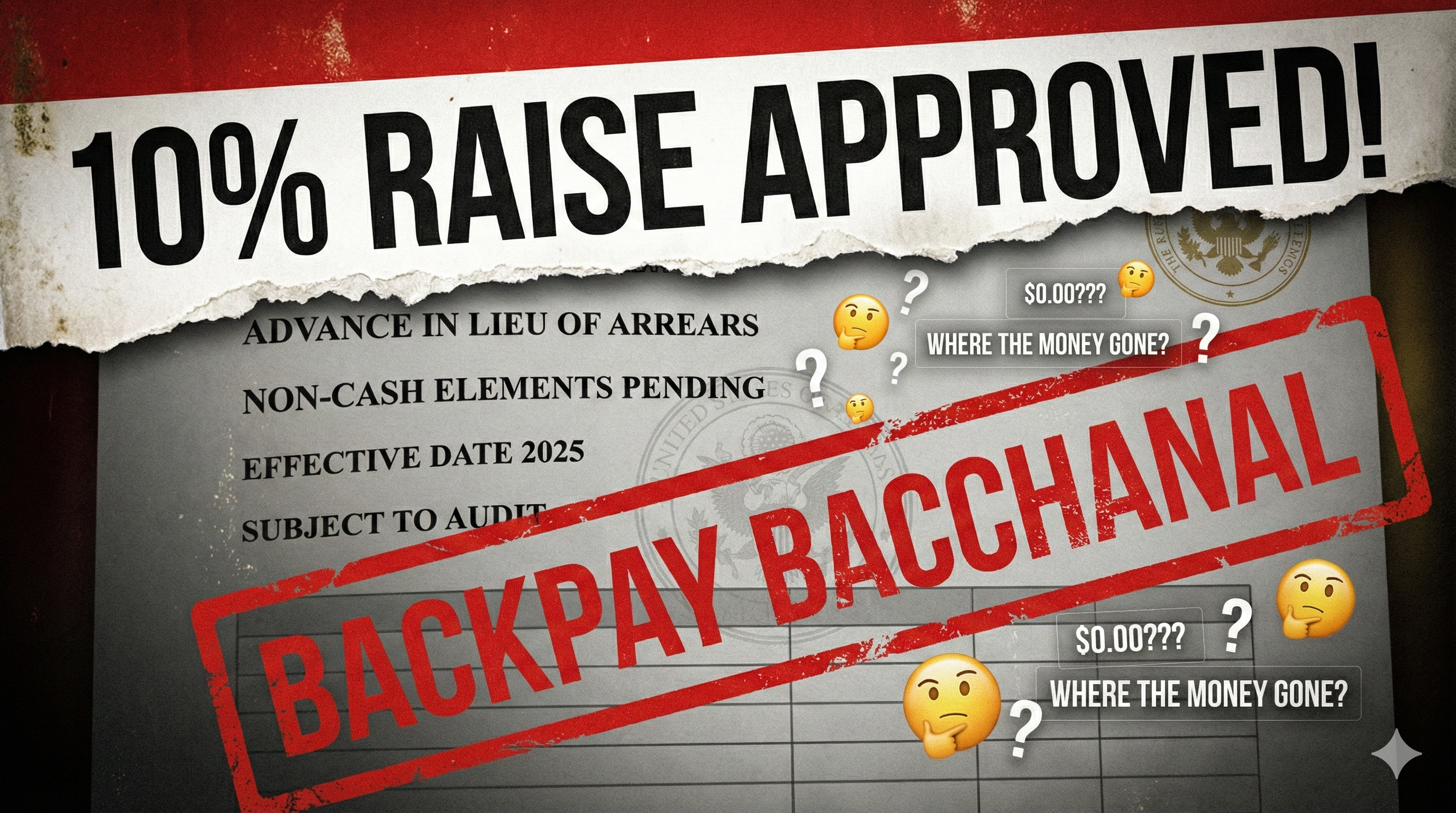
A literal assertion that backpay is not addressed does not survive reading the statement. It refers to the Chief Personnel Officer’s proposal to pay 40% of outstanding arrears in cash and says fiscal 2027 contains an allocation to meet that obligation.
It also identifies TT$252 million for NUGFW new wage rates and cost-of-living allowances, alongside TT$510 million for arrears, and names provisions for other groups.
The sharper questions are when payments arrive, who qualifies, how much remains outstanding and what terms apply to the balance. A cash proposal needs a settlement and payment timetable before workers can plan around it.
Gonzales separately criticised the absence of a specific settlement announcement for WASA workers. That issue should receive a direct update from Government and the bargaining representatives. Announcements for one group cannot answer every other group’s outstanding negotiations.
The Prime Minister has defended the Budget’s support for vulnerable people, investment and workers, while acknowledging that Government cannot meet every commitment at once. That makes transparent sequencing more important. Workers deserve dates for their money, with a clear account of what has been paid and what is still owed.
Household costs: read the conditions, then question the burden
Government gives dates for several revenue measures. The proposed VAT arrangements for foreign digital and remote services start on March 1, 2027. Overseas suppliers would use simplified registration, and the measure is expected to raise TT$18 million.
Calling it a Netflix tax understates its potential reach. Consumers and small businesses need to know which services fall within the final rules and how suppliers will charge. A freelancer’s software costs and a family’s subscription costs are both worth examining, without guessing their final bills.
The proposed residential electricity surcharge is five cents per kilowatt-hour on consumption above 3,000 kilowatt-hours per billing period, from January 1. It is targeted at high consumption. Government says average households with moderate usage will remain unaffected. Worked billing examples would clarify the calculation for those affected.
Another proposal moves selected goods from zero-rated to VAT-exempt status while preserving zero-rating on selected essentials. Both categories attract no VAT at the point of sale, but the treatment of business input tax differs. Losing recoverable input tax can create costs that businesses may pass on.
That is a possible route to price pressure, not proof that every supermarket item will rise. Publish the item list, explain the input-credit consequences and monitor the results.
Business measures include limiting annual use of tax losses to 75% of chargeable profits and increasing the petroleum-company Unemployment Levy from 5% to 8% of taxable profits. The former is not a 75% tax; the latter is not a levy on an unemployed worker. Their investment and cash-flow effects deserve analysis alongside the revenue forecasts.
The proposed maximum fine for false Customs declarations doubles from TT$125,000 to TT$250,000. Enforcement against false declarations serves a purpose, but Government should explain proportionality, procedure and the distinction between error and deliberate wrongdoing. Manning’s broader concerns about taxes and fines merit examination; they do not by themselves establish why unemployment increased.
There are concessions too. Fuel prices are maintained, and alcohol excise rates are proposed to fall by 25%. An excise reduction does not guarantee an equivalent retail-price cut. A fair assessment counts the relief and then asks how much reaches households.
Energy projects need timelines, not ownership fights
Young’s argument that the energy pipeline predates this administration has support in named company records. Shell took its Manatee final investment decision in July 2024. BP records Coconut’s decision in 2024 and Ginger’s sanction in March 2025.
These dates establish continuity for those projects. They do not settle every claim of political credit. Energy developments take years; the present Government remains responsible for the approvals, commercial conditions and implementation within its control.
The public needs to know when additional gas arrives and what it means for plants, exports and employment. Gross production forecasts should also be explained alongside declining output elsewhere, so people can understand the expected net gain.
The refinery discussion remains unfinished. The statement describes shortlisted investors, evaluation and a commercially viable, fully financed restart. It does not announce a signed final deal or firm reopening date. The Prime Minister has also discussed a phased reopening.
Workers and communities need milestones: investor selection, financing, approvals, rehabilitation and recruitment. A return to operations would matter greatly. That is precisely why it requires a schedule citizens can track.
Tobago: money spent there and money controlled there differ
Chief Secretary Farley Augustine’s funding criticism is a separate THA position, rather than a PNM parliamentary response. The distinction matters when assessing what Tobago can deliver.
The statement allocates TT$2.756 billion directly to the THA, or 4.35% of national expenditure. Additional ministry spending of TT$716.5 million brings the stated overall Tobago total to TT$3.473 billion, or 5.48%.
Those totals answer different questions. Wider ministry spending can benefit Tobago, but it is not the same as money under the Assembly’s control. Government should identify who delivers each project, what the THA can schedule and what service improvements residents should expect.
The standard citizens should insist on
The Trinidad Budget 2027 contains real measures and genuine relief proposals. Its weakness is that too many important outcomes still require a clearer route from announcement to delivery.
The Opposition should press for a quarterly public record of money released, projects started and completed, lasting jobs, homes ready for occupation, arrears paid and benefit changes implemented. Where its own claims overreach, it should correct them. A credible challenge needs evidence.
Government has dated the proposed pension increase and several new charges. It can extend that clarity to the other promises that shape people’s lives.
Put dates on delivery as clearly as you put dates on new charges.
TT$63.4 billion is the proposed expenditure total. The test will be what citizens can point to after the money is spent.
Reporting note: This analysis uses the October 12 Budget Statement and supporting publications, the Central Bank’s September assessment, and initial Opposition and Government reactions checked on October 13, 2026. The formal House Budget debate is scheduled to begin on October 16. Announced measures are proposals subject to the relevant implementation processes. Amounts are in TT dollars unless marked US dollars. The feature image is an editorial illustration.
This story is part of our wider Trinidad Politics Explained coverage. Explore the full hub for political analysis, key background, major controversies, and the latest updates.