
‘Cuban Boy’ Backed the UNC. Now He Says He Faces Deportation
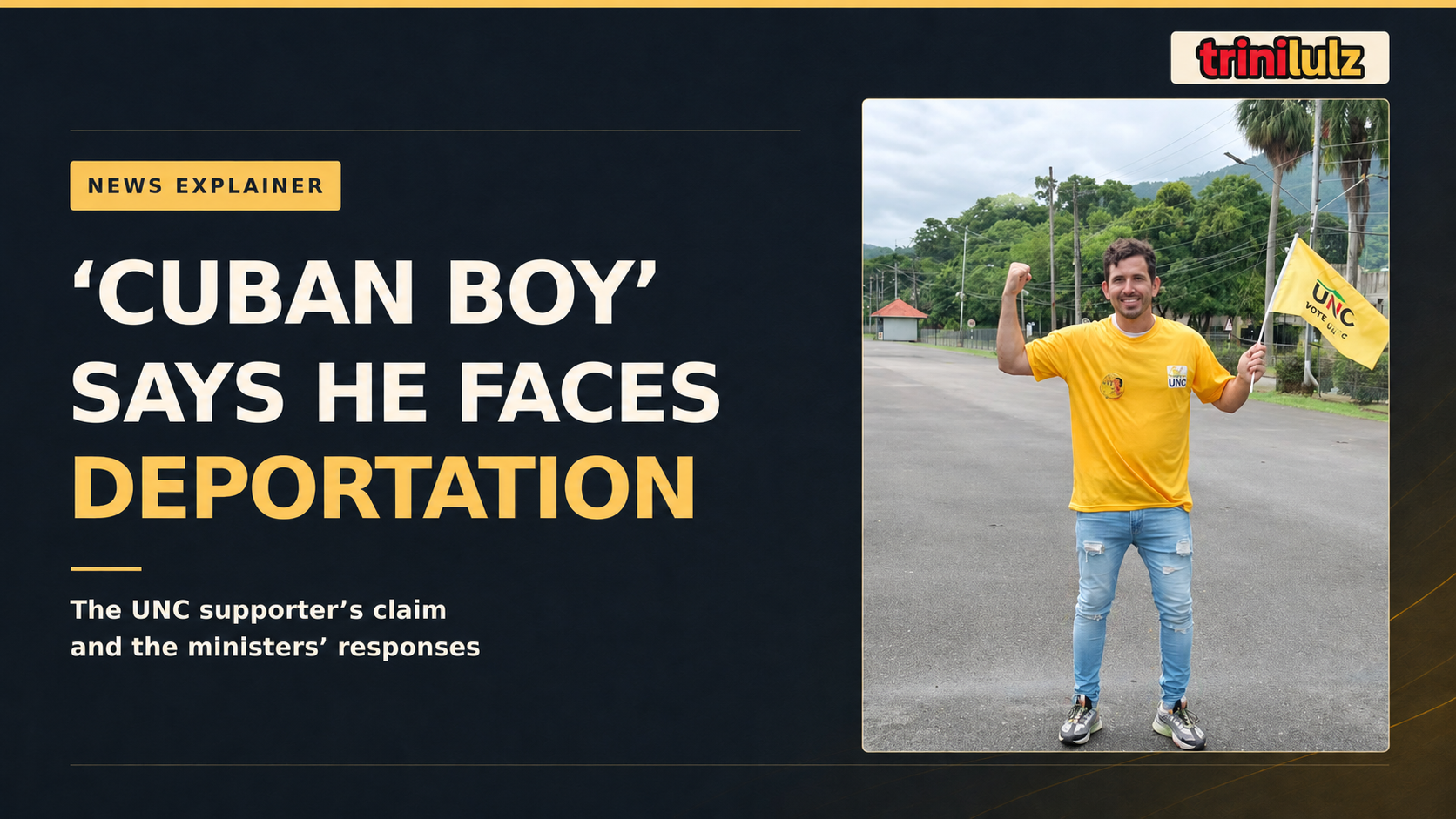
Yasmany García Rodríguez, the Cuban comedian known online as ‘Cuban Boy’, supported the United National Congress (UNC) in the run-up to the 2025 general election. Now he says he has been told Trinidad and Tobago will send him back to Cuba, despite assurances he says two Cabinet ministers gave him about his immigration status.
Defence Minister Wayne Sturge says he does not recall meeting García Rodríguez. Public Utilities Minister Barry Padarath says they did meet, but their meeting was about getting a child into school. As of November 28, TriniLulz had not seen a formal deportation order, an official explanation of his case or a verified date of removal.
The court case came before the UNC campaign
On September 25, 2024, an illegal-entry charge against García Rodríguez was discontinued, Newsday reported from court. The Director of Public Prosecutions’ office reviewed the evidence and decided against continuing the prosecution. The case ended without a conviction. That outcome did not grant him permission to stay in Trinidad and Tobago or resolve what Immigration could do later.
AZP News reported that he lent his support to the UNC ahead of the April 28, 2025 general election. The supplied photo shows him wearing a yellow UNC shirt and holding a party flag. Public reporting does not establish when the alleged assurances were given or whether any assistance was made conditional on his campaign support.
What García Rodríguez says he was promised
In a November 25 Facebook appeal, reported by the Trinidad Guardian and AZP News, García Rodríguez said Sturge had assured him he would get legal status. He said Padarath had promised to help with his status and with enrolling his son in a government school. He also said he applied through the migrant registration process and was refused. AZP News reported that he shared an appointment confirmation and a police certificate of character. Neither document, as described in the report, establishes why his application was refused or whether a deportation order was issued.
García Rodríguez says he has lived here for more than a decade and fears being separated from his children, including a daughter he says is a Trinidad and Tobago citizen. He also says he fears imprisonment and torture if returned to Cuba. Those are his stated fears; the reporting reviewed does not establish what would happen to him there.
How Sturge and Padarath responded
Sturge, who is also a minister in the Ministry of Homeland Security, told AZP News he knew García Rodríguez’s former lawyer but did not recall meeting García Rodríguez or discussing the matter with the lawyer. He said he would check his messages and try to follow up.
Padarath told TV6 that the meeting dealt with the documents needed to enrol a child in a public school. He said immigration falls under Homeland Security and he could not promise legal status, according to TG News’s account of the interview. His account confirms a meeting about schooling, but differs from García Rodríguez’s account of the assistance offered.
Registration, an appointment and an order are different things
García Rodríguez contrasted his case with Venezuelans receiving registration cards. The 2026 Migrant Registration Framework was open to eligible applicants regardless of nationality. Homeland Security said all approved applicants could begin collecting their permits from November 6. The scheme offered temporary permission to live and work for people who were approved. Applying or attending an appointment did not by itself confer that permission. The public record does not explain why he says he was refused.
García Rodríguez identified December 31 as the day he was due at Immigration. In his public appeal, he spoke of being sent to Cuba in 2027. Section 28 of the Immigration Act provides for a deportation order or copy to be served on the person concerned. An appointment date is not proof that an order has been served or that removal will take place that day.
On November 28, the Guardian reported that human rights advocate Tony Mark Ramjewan had appealed to the authorities to put any removal on hold while García Rodríguez’s circumstances were reviewed. He asked them to consider the effect on the children and the safety concerns their father raised. His request does not establish that Immigration has agreed to pause anything.
What still needs an answer
Immigration can clarify what decision has been made: whether it refused a registration application, issued a deportation order, or scheduled him for another step. It can also clarify how his family circumstances and the risk he says he faces in Cuba are being considered. The ministers’ accounts raise a separate question about when an offer to help with paperwork or make a referral is understood as a promise of an outcome.
Campaign support is relevant to why the story drew attention. It is no basis for special treatment. The public interest is whether a person facing removal receives clear reasons for the decision and a fair chance to have his circumstances considered, irrespective of the shirt he wore in 2025.
Reporting last checked November 28, 2026. This story will be updated if an official decision, a court filing or a further response becomes public.
This story is part of our wider Trinidad Politics Explained coverage. Explore the full hub for political analysis, key background, major controversies, and the latest updates.