From ‘Dreaded Property Tax’ to ‘Landlord Surcharge’: How the UNC Rebranded the Same Tax and Doubled the Bill
The property tax has always been one of Trinidad and Tobago’s most reliable sources of political bacchanal. For years, the UNC warned citizens that any form of property tax would “terrorise the poor,” “oppress families,” and “mash up the middle class.” Fast-forward to 2025, and the same UNC government has introduced a brand-new landlord business surcharge that looks, feels, tastes, and bills just like a property tax… except the rates are even higher for rental properties.
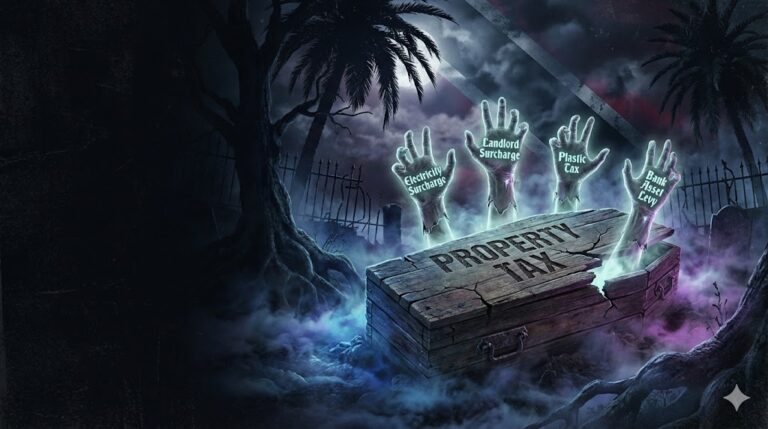
Welcome to the plot twist nobody saw coming: the ‘dreaded property tax’ is back, but it returned with a new wig, a fresh government ID card, and a cute lil nickname.
How the ‘Landlord Surcharge’ Suddenly Became the New Normal
In the 2026 Budget Statement and the Finance Bill 2025, the Government rolled out a new revenue measure targeting landlords. It’s called the landlord business surcharge: a percentage taken from gross rental income, not profit, and not net earnings.
This surcharge sits at around 2.5% on rental income up to $20,000 per year, and 3.5% above $20,000. Landlords must register with the BIR, file paperwork, and face penalties if they miss the deadlines.
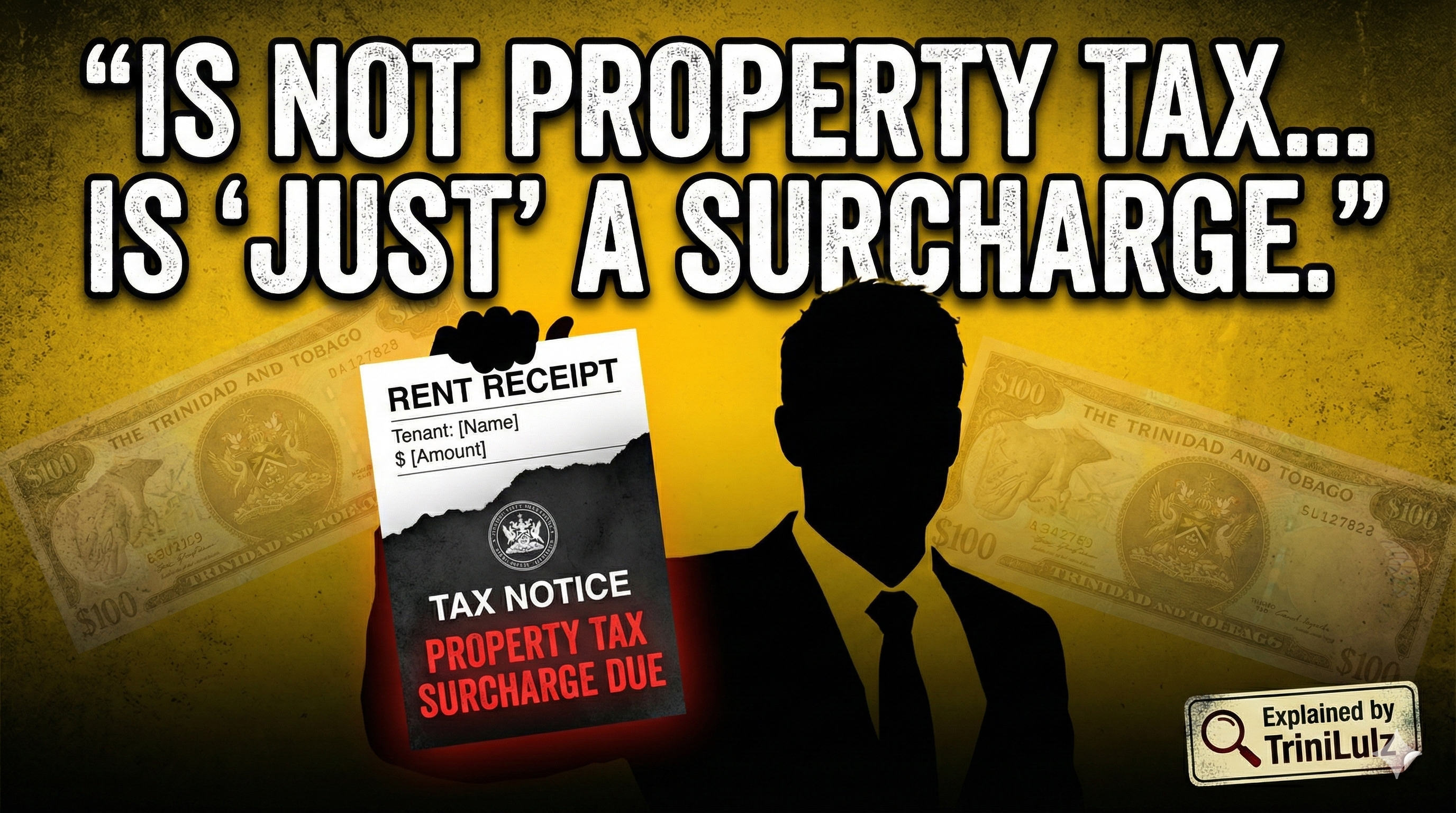
The official line from ministers is that the landlord surcharge is “not a property tax”. But for the tens of thousands of citizens who own a small apartment, a downstairs annex, or a one-bedroom rental to help cover their mortgage, the effect is basically identical… except the bill is bigger.
“Is not a property tax… it just works exactly like one and costs you more.”
A Quick Backstory: The Original Property Tax Bacchanal
To understand the current twist, you need the full timeline of the property tax drama:
2009: The Manning PNM government passes the Property Tax Act. Rates were based on Annual Rental Value (ARV): about 2% for residential, higher for commercial and industrial.
2010–2015: The UNC comes into office and immediately mothballs the property tax. Over the next five years, they describe it as:
• “wicked,”
• “oppressive,”
• “a poverty tax,”
• “a burden on single mothers,”
• and “a con job on the middle class.”
2016–2024: The Rowley PNM revives the property-valuation machinery. A long court battle follows. By 2024, the government signals a phased re-introduction.
March 28, 2025: On the campaign trail, Kamla tells the nation: “There will be NO property tax under a UNC government.”
April 2025: The UNC wins.
October 2025: The new government announces the landlord surcharge in the 2026 Budget. Read our full analysis here.
The Rebrand: Property Tax in Witness Protection
Unlike the PNM’s property tax, which applied to every homeowner regardless of whether they rented or not, the UNC’s surcharge targets only those earning rental income.
Sounds different, right? Not once you look at the real math.
Under the old property-tax structure, a homeowner with a modest apartment could expect a tax of around 2% of its Annual Rental Value.
Under the new landlord surcharge, that same landlord now pays 2.5%–3.5% of their gross rental income every single year. When former finance minister Colm Imbert says this surcharge could be two to five times higher, he isn’t exaggerating.
“The tax UNC fought for 15 years suddenly nice once they renamed it.”
And to deepen the plot: landlords usually pass new costs to tenants. Meaning renters—already facing rising food prices, higher utilities, and shrinking disposable income—are about to feel this squeeze too.
Timeline: How We Reached This Exact Moment
Here’s the full, no-chaser sequence of events that brought Trinidad and Tobago here:
2009: PNM Property Tax Act passed.
2010–2015: UNC shelves it while calling it draconian.
2016–2024: PNM moves to re-implement it amid public pushback.
2024: Residential property tax rate is lowered to 2%.
March 2025: Kamla promises “no property tax.”
April 2025: UNC wins.
October 2025: Landlord business surcharge announced.
December 2025: Finance Bill passed; surcharge becomes law.
January 2026: Citizens realise the “new tax” is basically property tax wearing sunglasses.
Just like that, the long-hated property tax has been reintroduced in the one way nobody expected: from the very party that led marches to stop it.
Why Any Country Needs a Property Tax (If Done Properly)
Here’s the part you rarely hear: property tax isn’t inherently evil.
Around the world, property taxes are a stable, predictable source of funding for things like:
• road maintenance
• drainage and flood protection
• schools
• garbage collection
• community spaces
• municipal services
Property taxes also let the State reclaim some of the value created when government projects improve an area: better roads, safer communities, more development.
Done carefully, property taxes can include protections like:
• exemptions for low-income homeowners
• deferred payments for retirees
• phased rollouts
• caps on annual increases
So the issue isn’t that “tax is bad” — the issue is when governments demonise a tax in Opposition, then implement the same thing in Government under a different name.
For a deeper explainer on global best practices, see the OECD’s international guidance on property taxation
https://www.oecd.org/tax/tax-policy/property-taxation.htm
The Small Landlord Problem: One Annex, One Tenant, One Surprise Bill
The people who will feel this new surcharge the most aren’t mega-landlords with 50 apartments in Westmoorings.
It’s:
• teachers renting a small annex,
• retirees who depend on $3,000 per month from a tenant,
• young couples using rental income to pay their mortgage.
Even worse, compliance costs and penalties add administrative pressure. Many small landlords will simply raise rent to compensate.
And the renters? Well… they already dealing with higher fuel, higher food prices, and new “stealth taxes” like the ones we exposed here:
Trinidad and Tobago might not have a “property tax” anymore — but plenty of citizens will now feel something that walks like one and bills like one.
Final Thoughts: Transparency Is the Real Issue
A country needs good taxation to function. That’s not the argument.
The real problem is political honesty.
For 15 years, the UNC declared property tax to be the bogeyman of economic oppression. Now they’ve introduced a narrower, sharper version targeting landlords — while insisting the public pretend it isn’t basically a modified property tax.
A nation can handle taxes. What it can’t handle is semantic gymnastics.
And as rents begin to rise in 2026, the real question becomes:
Will landlords absorb the cost… or will tenants feel the next wave of bacchanal?
This story is part of our wider Trinidad Politics Explained coverage. Explore the full hub for political analysis, key background, major controversies, and the latest updates.