Upkeep Public Spaces Programme: The CEPEP Replacement They Say Isn’t a CEPEP Replacement
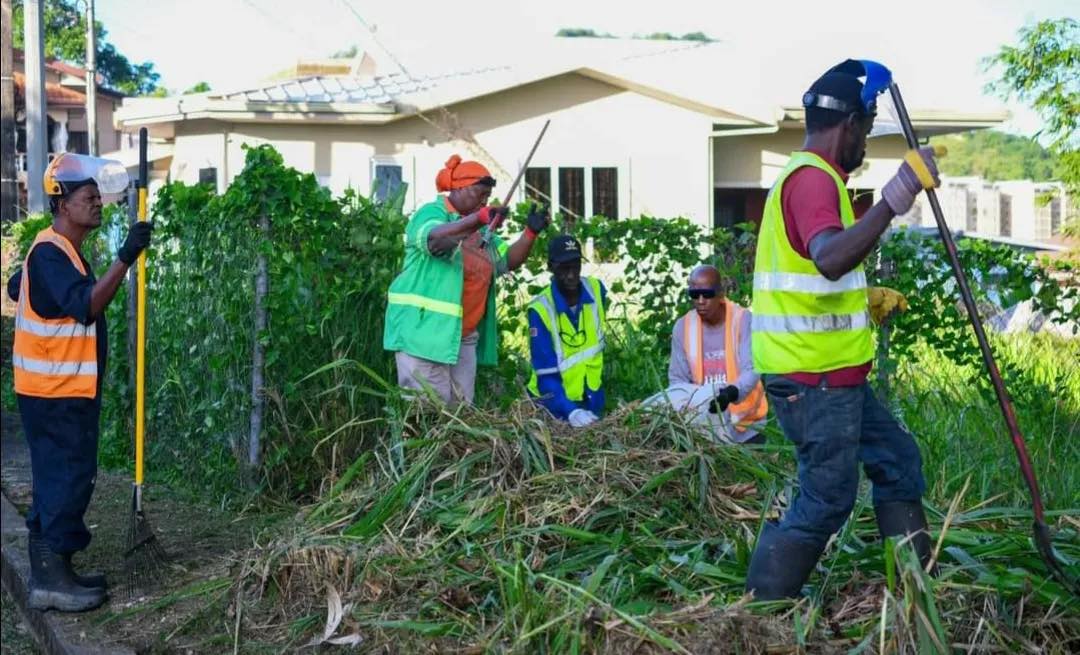
For months now, Trinidad and Tobago’s grass has been behaving like it missed the memo.
Roadside verges climbing waist-high. Drains disappearing under bush. Public spaces quietly reverting to “before and after” photos nobody asked for. And all of it happening after the shutdown of CEPEP, the very programme that for decades kept the country trimmed, swept, and at least visually functional.
Now the Government has announced the Upkeep of Public Spaces Programme, and officials are adamant about one thing: it is not a CEPEP replacement.
That insistence, more than anything else, is what has set tongues wagging.
When CEPEP Ended, the Work Didn’t
The shutdown of CEPEP in mid-2025 was not subtle. Hundreds of contractors were terminated. Thousands of workers were sent home. The programme was framed as bloated, politically compromised, and in need of a hard reset.
At the time, the public was told not to panic. Local government bodies, through regional corporations and municipal councils, would step in and ensure that routine maintenance of public spaces continued.
On paper, that sounded reasonable.
In practice, citizens quickly noticed something else entirely: the work slowed, then stalled, then vanished in many areas altogether. Roadsides went wild. Overgrowth crept into communities. Businesses quietly hired private cutters just to keep customers from walking through bush to reach their doors.
This wasn’t social-media exaggeration. It was visible, daily, and nationwide.
Enter the “Upkeep of Public Spaces Programme”
Against that backdrop, the Ministry of Rural Development and Local Government announced the Upkeep of Public Spaces Programme, described as a structured initiative to support maintenance across the country.
The Minister was clear: this was not a CEPEP replacement.
Instead, it was positioned as a cleaner, more accountable approach that would:
- Strengthen local government capacity
- Provide fair wages
- Remove political middlemen
- Avoid the problems long associated with CEPEP
All of that sounds commendable. Necessary, even.
But here’s where the public conversation shifted.
Why the CEPEP Replacement Debate Won’t Go Away
The issue is not the name. It is the function.
For the average citizen, CEPEP meant one simple thing: public spaces were cut, cleaned, and maintained. When CEPEP ended, that function weakened. Now, with the Upkeep of Public Spaces Programme, that same function is being reintroduced through a centrally announced mechanism.
That is why many people are calling it a CEPEP replacement, regardless of official denials.
Not because the structures are identical. Not because the politics are the same. But because the job is the same, the timing is telling, and the gap it fills is the exact gap CEPEP left behind.
If something walks like public-space maintenance, cuts like public-space maintenance, and arrives after public-space maintenance collapses, people are going to label it accordingly.
Local Government Was Supposed to Fill the Gap
One of the quiet tensions underneath this rollout is the earlier assurance that local government authorities would manage the transition after CEPEP’s closure.
That promise now sits awkwardly alongside the launch of a national upkeep programme.
If regional corporations had the manpower, funding, and operational capacity to fully absorb CEPEP’s responsibilities, there would be little need for a new framework at the national level. The existence of the Upkeep of Public Spaces Programme suggests that, at minimum, the gap proved harder to fill than initially projected.
That doesn’t imply failure. It does, however, explain why the CEPEP replacement label refuses to die.
Budget Talk vs Ground Reality
This entire debate also collides neatly with broader budget rhetoric about reform, efficiency, and ending wasteful programmes.
In the most recent national budget, the Government emphasised restructuring employment programmes, cutting abuse, and redirecting resources more effectively. Those themes were central to the fiscal messaging and political narrative.
That context matters.
If you want a deeper look at how those promises were framed, see our earlier breakdown here:
👉 https://www.trinilulz.com/tt-budget-2026-when-unc-wins-everybody-wins-gas-down-jobs-up-and-plenty-promises-inside/
The Upkeep of Public Spaces Programme now exists inside that wider promise ecosystem. The challenge is that citizens don’t experience budgets in spreadsheets. They experience them through flooded drains, mosquito outbreaks, and whether the road outside their house looks abandoned.
Call It Reform, But Don’t Be Shocked by the Comparison
The Government may genuinely believe this programme is fundamentally different from CEPEP. Structurally, it may well be. Administratively, it likely is.
But public perception is shaped by outcomes, not policy briefs.
If the end result is that public spaces are once again being cut, cleaned, and maintained through a state-coordinated programme, then comparisons to CEPEP are inevitable. That doesn’t make the comparison malicious. It makes it logical.
You can change the name. You can change the management. You can even change the philosophy.
What you cannot change is the memory of what CEPEP did — and the visibility of what disappeared when it ended.
That is why, no matter how many times officials insist otherwise, Trinidad and Tobago will keep asking the same question:
If this isn’t a CEPEP replacement, then why does it look so much like one?
This story is part of our wider Trinidad Politics Explained coverage. Explore the full hub for political analysis, key background, major controversies, and the latest updates.