NGC Gas Price Hike: Prices Going Up, Jobs on the Line, and Consumers Getting the Bill
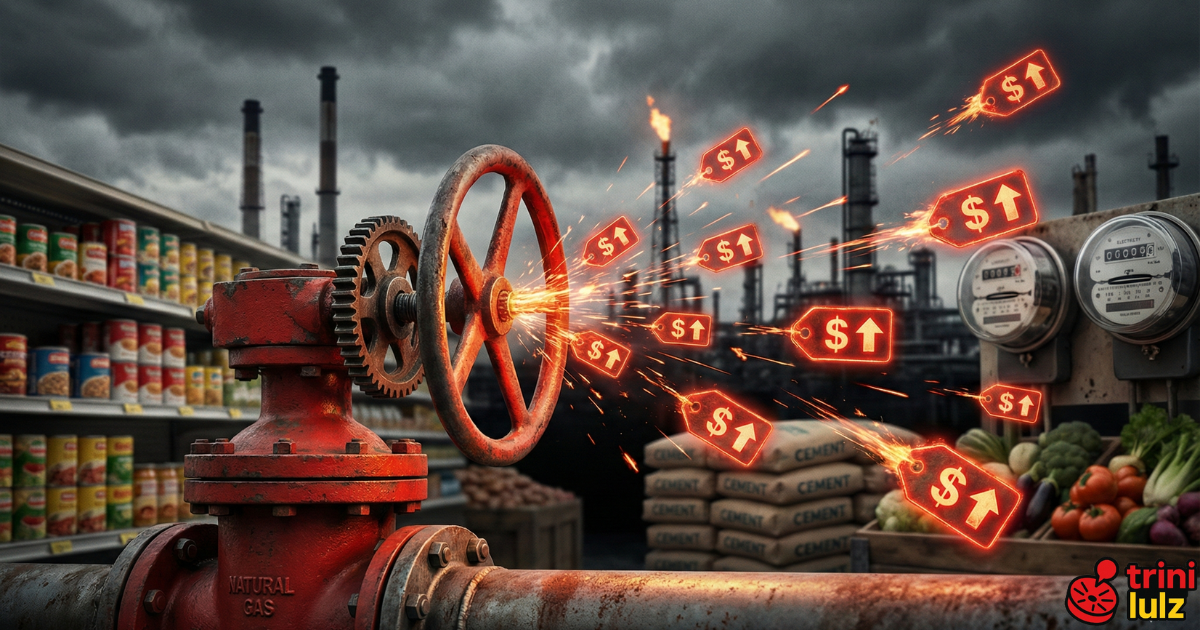
For years, Trinidad and Tobago sold itself one simple story: cheap, reliable natural gas made us a manufacturing powerhouse. Steel. Cement. Methanol. Fertiliser. If it needed heat or power, we had the gas to make it happen.
Now that story is wobbling.
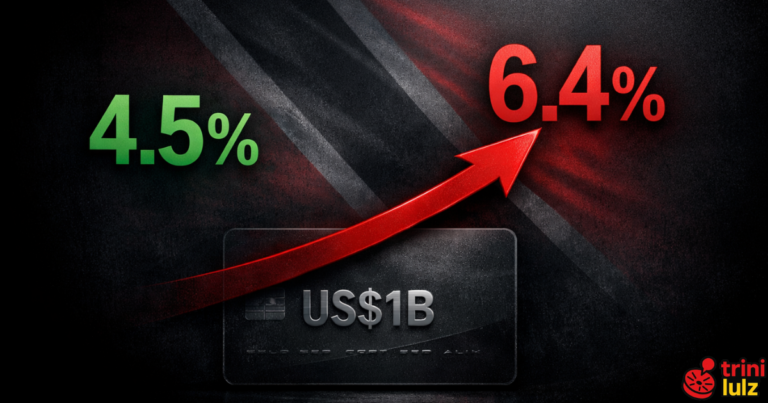
The recently announced NGC Gas Price Hike has sent shockwaves through manufacturers, economists, and quietly through boardrooms that would rather not be quoted. The numbers being discussed are not cosmetic tweaks. They are the kind of increases that force spreadsheets to ask uncomfortable questions about survival.
And while the debate has focused on “industry impact,” the real ending of this story is far less abstract. When gas prices rise in Trinidad and Tobago, consumers eventually get the bill.
When the Valve Turns, Everything Feels It
Natural gas is not just an export commodity. In Trinidad and Tobago, it is the invisible engine behind everyday life. It powers factories that produce building materials, food inputs, packaging, plastics, and chemicals used across the economy.
When the National Gas Company of Trinidad and Tobago signals a major price increase, manufacturers do not simply absorb it out of patriotism. Energy is often their single largest cost. A sharp increase hits margins immediately.
That pressure moves fast. Higher production costs become higher wholesale prices. Wholesale prices become higher retail prices. By the time it reaches the supermarket shelf or hardware store, nobody is talking about “mmbtu” anymore. They are asking why everything gone up again.
This is how the NGC Gas Price Hike leaves Point Lisas and quietly arrives in the kitchen.
Jobs First Feel the Heat
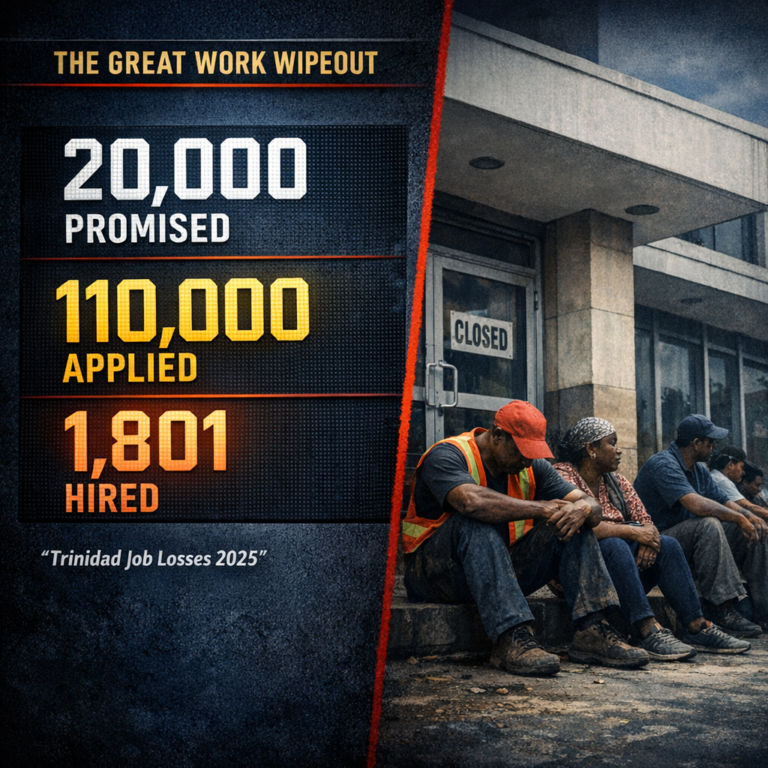
Manufacturers have been blunt behind closed doors. With gas prices jumping sharply, companies are being forced to consider scaling back operations, delaying maintenance, freezing hiring, or in some cases cutting shifts entirely.
At the Point Lisas Industrial Estate, energy costs are not a footnote. They determine whether plants run at full capacity or limp along at reduced output. Every reduction ripples outward: contractors, truck drivers, suppliers, and service workers all feel the squeeze.
This is not theoretical. Trinidad and Tobago has already lived through plant closures, mothballing, and layoffs tied to energy economics. A major gas price shock risks reopening scars many communities thought had healed.
QUOTABLE: “When gas prices jump suddenly, companies don’t negotiate with patriotism. They negotiate with calculators.”
The Myth of ‘Industry Only’ Fallout
One comforting fiction often floats into public debate: that gas price increases only affect big corporations and wealthy shareholders. Reality is less polite.
This pressure does not land in a vacuum. Local businesses were already facing rising operating expenses before the NGC Gas Price Hike entered the picture. From logistics and financing to regulatory friction and utilities, the cost of doing business in Trinidad and Tobago has been quietly climbing for years, turning survival into a daily balancing act.
Manufacturers pass costs forward because they have to. Imported goods suddenly look cheaper. Local producers lose market share. Foreign exchange drains faster. The economy leans harder on imports, and local jobs quietly disappear.
Consumers then face a double hit. Prices rise, while job security weakens. The NGC Gas Price Hike becomes a cost-of-living issue, even for households that have never seen a gas bill in their life.
Losing the Low-Cost Advantage
Trinidad and Tobago’s competitive edge has always been clear. We are not the biggest country. We are not the cheapest labour market. We do not have endless subsidies.
What we had was gas. And global research has consistently shown that countries built on energy-intensive manufacturing lose competitiveness rapidly when input prices rise faster than regional or international peers, especially when energy is their primary advantage.
That advantage attracted billions in investment and anchored entire industrial ecosystems. Undermine it too quickly and investors start rethinking long-term commitments. New projects stall. Expansion plans get “re-evaluated.” Competing jurisdictions start to look more attractive, especially when energy pricing is stable and predictable.
The damage here is reputational as much as financial. Once a country is seen as unpredictable on its core advantage, rebuilding trust takes years.
The Monopoly Question Nobody Likes
Another uncomfortable truth sits at the centre of this debate. The National Gas Company of Trinidad and Tobago operates as a monopoly supplier. Manufacturers cannot shop around. There is no alternative pipeline. No competitor offering a better rate.
That power comes with responsibility. Sudden, steep increases may balance short-term revenue lines, but they risk long-term economic contraction that ultimately hurts government finances too.
Even NGC’s own downstream ecosystem, including entities like Phoenix Park Gas Processors, is affected when upstream pricing changes cascade through the system.
Who Really Pays?
At the end of this chain sits the ordinary citizen. The person paying more for groceries. The contractor quoting higher building costs. The worker hoping their factory keeps operating at full capacity.
The NGC Gas Price Hike is not just an industrial policy decision. It is a social one. It tests whether Trinidad and Tobago can manage hard energy realities without sacrificing its people and its competitive future.
Because in this country, when gas prices rise, the bill rarely stops at Point Lisas. It always finds its way home.
This story is part of our wider Trinidad Politics Explained coverage. Explore the full hub for political analysis, key background, major controversies, and the latest updates.