JUST PASSING THROUGH? US Military Aircraft Transit Trinidad and Tobago – and Everybody Pretending It’s Normal
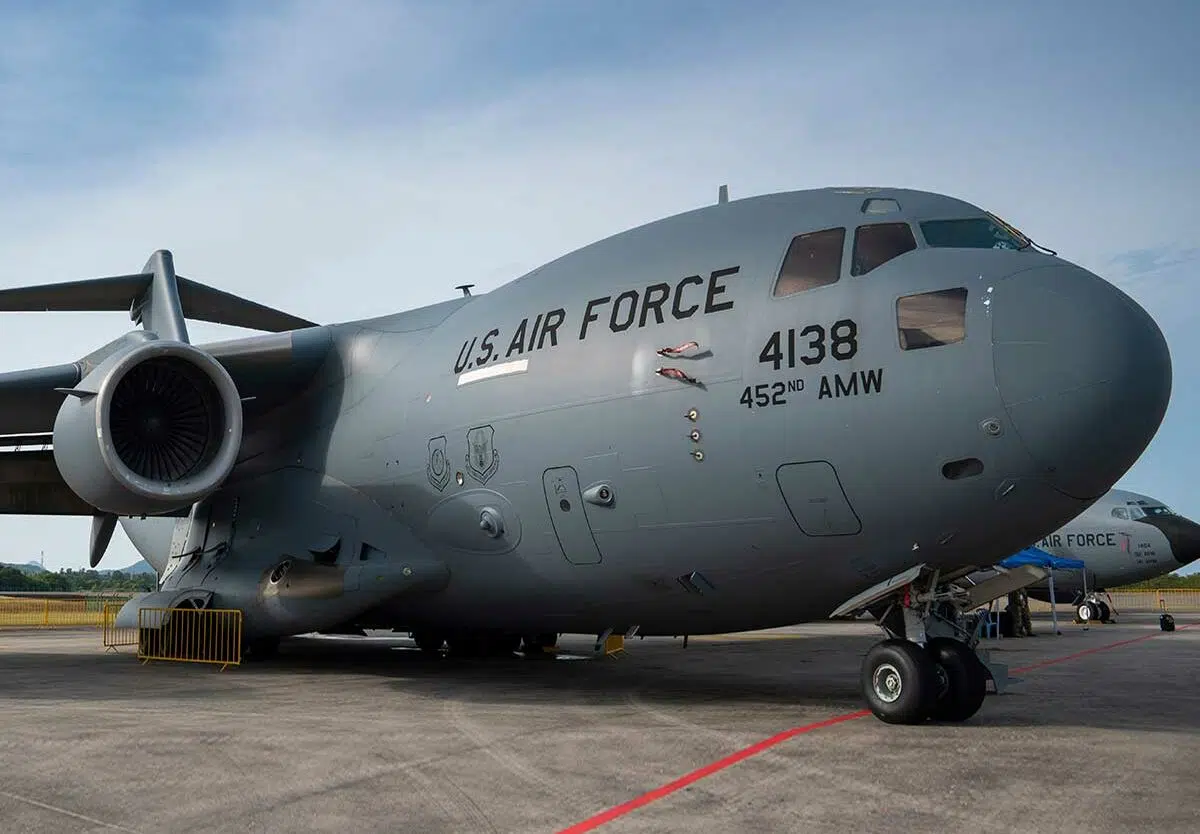
For the record, the government says nothing unusual is happening.
Yes, US military aircraft transit Trinidad and Tobago.
Yes, they are allowed to land at local airports.
Yes, it’s described as “routine,” “logistical,” and very much not a big deal.
And yet, somehow, this very normal, very routine arrangement has managed to set off whispers, WhatsApp forwards, blurry plane photos, and a level of public confusion that suggests one thing clearly: when information travels slowly, speculation travels first class.
This isn’t about panic. It’s about pattern.
Because when a small island state quietly becomes a regional pit stop for a superpower’s military aircraft, people are going to ask questions, especially in a Caribbean that has recently gone from “strategically irrelevant” to “geopolitically convenient.”
What “US Military Aircraft Transit” Actually Means
Let’s strip the drama out first.
When officials say US military aircraft transit Trinidad and Tobago, they are talking about permissions for aircraft to:
- Land
- Refuel
- Rotate crew
- Handle logistics or supplies
- Continue onward to other destinations
No official statement says combat missions are being launched from Trinidad and Tobago. No declaration of a foreign base has been made. No flags are being planted on the runway.
In diplomatic language, this is called overflight and landing clearance. In Caribbean language, this is called “just passing through.”
But here’s the thing history teaches very well: logistics is never neutral. Logistics is how power moves without making noise.
The Caribbean Is Quietly Being Rewired
This story doesn’t exist in isolation.
Across the region, the United States has been expanding access agreements, improving operational reach, and deepening security cooperation — particularly in the eastern Caribbean basin.
In the Dominican Republic, new arrangements openly allow expanded US military aviation access, including the use of restricted areas. Elsewhere, US Southern Command has ramped up maritime patrols, surveillance flights, and joint exercises tied to narcotics interdiction, regional security, and “strategic competition.”
Put simply: the Caribbean Sea is no longer just tourism water. It’s a transit corridor again.
And when corridors get busy, countries located in the middle become valuable, whether they asked to or not.
Why Trinidad and Tobago Feels Different This Time
Here’s where the discomfort creeps in.
Trinidad and Tobago is not unused to US cooperation. Security partnerships, training exercises, and joint operations have existed for decades.
What’s different now is the communication gap.
Recent episodes involving unexplained foreign military activity, radar installations, and shifting official explanations, particularly around Tobago, created an atmosphere where the public no longer automatically accepts “nothing to see here.”
So when citizens hear US military aircraft transit Trinidad and Tobago, the immediate reaction isn’t reassurance. It’s suspicion.
Not because people think warplanes are secretly launching attacks — but because nobody likes learning about major strategic decisions after the fact.
If it’s routine, communicate it routinely.
“Not a Base” Doesn’t Mean “Not Involved”
There’s a comforting phrase often repeated in situations like this:
“We are not a US military base.”
That may be true in the narrow legal sense. But geopolitics doesn’t operate on vibes — it operates on access.
A country that:
- Grants landing permissions
- Supports refuelling
- Facilitates logistics
- Sits near strategic maritime lanes
…is already part of the operational picture, whether it wants the label or not.
A transit today is still a footprint tomorrow.
Being a pit stop doesn’t mean you’re driving the car, but you’re definitely on the map.
The Real Risk Isn’t War — It’s Drift
This article is not an argument against cooperation. Small states survive by navigating power, not pretending it doesn’t exist.
The risk here is strategic drift — sliding into deeper involvement without public discussion, parliamentary clarity, or clear red lines.
Questions that deserve calm answers:
- Who authorises these approvals?
- How frequently are they granted?
- What disclosures are appropriate for public accountability?
- Where does transit end and operational support begin?
None of those questions weaken national security. They strengthen trust.
The TriniLulz Bottom Line
The issue is not that US military aircraft transit Trinidad and Tobago.
The issue is that it’s being framed as so normal that nobody should even ask.
In a region heating up again — economically, politically, and militarily — silence doesn’t reassure. It destabilises.
Trinidad and Tobago may not be a base.
But we are becoming a bookmark.
And bookmarks matter — because that’s where powerful actors know exactly where to return.