Middle East War, Caribbean Pain: Why a Conflict Thousands of Miles Away Could Break Island Budgets
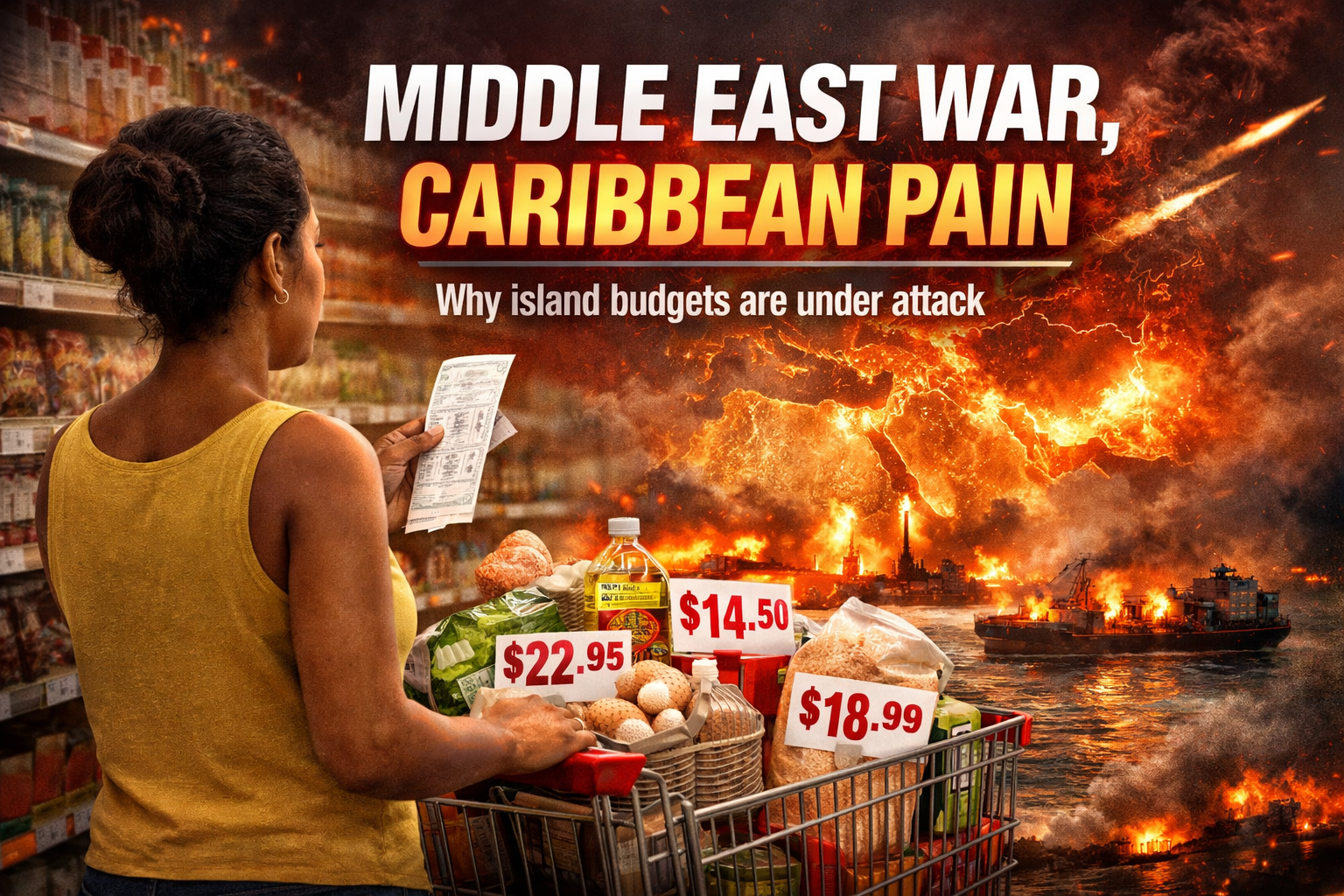
The phrase Middle East War Caribbean Pain might sound dramatic, but for the region’s consumers, small businesses, and governments, it is becoming a brutally practical reality. The IMF is now warning that the war is creating uneven economic damage across Latin America and the Caribbean, with tourism-dependent Caribbean economies likely to be among the hardest hit because of high debt, limited fiscal space, and heavy reliance on imported energy. At the same time, inflation is expected to rise across the board as fuel, transport, food, and other input costs climb.
This is the part many people miss. The Caribbean does not need to be anywhere near the bombs to feel the blast. Island economies are wired into global shipping lanes, global fuel markets, and global tourism demand. When oil jumps, when LNG supply gets hit, when war-risk and bunker surcharges creep into freight, and when airlines face higher jet fuel bills, the effect lands right here in the region: on supermarket shelves, utility costs, airfares, hotel margins, taxi fares, and household budgets. Your briefing captures that pressure clearly, especially the warning that imported inflation could trigger wider social strain in fragile economies with limited buffers.
“The war may be in the Middle East, but the invoice is arriving in the Caribbean.”
The Caribbean Is Not Watching This Crisis. It Is Paying for It.
The most dangerous mistake Caribbean governments can make right now is treating this as foreign drama that may or may not matter later. It already matters. IMF officials said on April 17 that tourism-dependent Caribbean economies are likely to be the hardest hit, and warned that the conflict carries “unambiguously negative economic impacts” for economic activity and the population. The reason is simple: these countries are major net energy importers, and many are still carrying debt scars and limited fiscal room from the pandemic years.
That means the region is facing a squeeze from both ends. On one side, the landed cost of imports rises because shipping becomes more expensive when fuel costs jump and carriers apply bunker surcharges. Tropical Shipping announced higher bunker surcharges effective April 12, 2026 across multiple Caribbean routes, explicitly citing volatility in global fuel costs. On the other side, tourism itself could take a hit if higher aviation fuel costs feed into airfare, making Caribbean travel less attractive or forcing families abroad to cut back.
The ugly truth is that most islands import too much of what they consume and produce too little of what they need. So when the shipping bill climbs, everything starts sweating.
Middle East War Caribbean Pain Means Imported Inflation With Island Accents
The technical term is “imported inflation.” Caribbean people know it by another name: everything suddenly getting more expensive at the same time.
The IMF says inflation will be higher for all countries in the region because the war is raising fuel, transport, food, and other input costs. That is especially dangerous in island economies where food imports, manufactured goods, building materials, fertilizer, spare parts, medicine, and fuel all move through long supply chains that can become more expensive almost overnight. Your briefing goes even further, highlighting how bunker surcharges operate like a regressive tax on consumers because freight costs are embedded in the landed cost of nearly every imported good.
This is where the story gets politically explosive. Governments know voters do not care about jargon like “global commodity volatility” or “supply-side shock.” Voters care that groceries cost more, transportation costs more, and wages are not keeping up. That is why some leaders in the region are trying to cushion the blow, even as the IMF warns against broad untargeted subsidies and instead recommends tightly focused support for vulnerable households, farmers, and businesses.
“Imported inflation is just a polite phrase for island people getting poorer without warning.”
Some Caribbean States May Gain. Most Caribbean People Still Lose.
There is one bitter twist in this story. Not every Caribbean country is exposed in the same way.
The IMF says oil-producing countries such as Guyana and Trinidad and Tobago can benefit in the short term from higher energy prices through stronger export earnings, better balance-of-payments support, and improved government finances. Reuters similarly reported that the Middle East war is likely to deepen the economic divide across the region, with oil exporters getting some near-term upside while tourism-heavy and energy-importing economies take the harder punch.
But that does not mean ordinary people in those exporting countries are magically safe. Higher global energy prices can still drive up food costs, domestic transport costs, imported consumer prices, and pressure for wage increases. In other words, a government might enjoy stronger revenues while families still feel poorer. That distinction matters. A treasury can look healthier on paper while the supermarket feels like a crime scene.
Your briefing captures that regional split well: Jamaica contracting while Guyana surges, tourism-reliant countries facing a heavier oil-import burden, and exporters seeing temporary windfalls that are still offset by higher agricultural and consumer input costs. That is not one Caribbean story. That is two very different Caribbeans moving in opposite directions under the same global shock.
The Bigger Threat Is What Comes After the First Price Spike
The first wave is fuel. The second wave is freight. The third wave is food, transport, tourism softness, and public frustration.
That is what makes this crisis so dangerous. It is not just about whether oil is expensive this week. It is about whether a long war or repeated disruptions turn temporary pain into structural weakness for the Caribbean. The IMF has stressed that much depends on how long the conflict and related disruptions last. The longer it drags on, the more vulnerable highly indebted island economies become, especially those still rebuilding fiscal strength after COVID-era shocks.
And if people start hearing that governments have no room to shield them, while prices continue climbing month after month, the economics quickly become political. Budget stress becomes social stress. Social stress becomes anger. Anger becomes instability.
That is why this story matters far beyond central bankers and finance ministers. It is about whether the Caribbean has finally learned the lesson every global shock keeps teaching us: if you import too much, depend too heavily on tourism, and leave your food, energy, and logistics security in other people’s hands, then somebody else’s war can still wreck your weekly budget.
“A distant war becomes a local crisis the moment it reaches the supermarket, the airport, and the electricity bill.”
Final Take
The Middle East war is not just reshaping geopolitics. It is exposing the Caribbean’s old vulnerabilities in brutal HD. High import dependence. Fragile fiscal space. Tourism exposure. Food insecurity. Energy insecurity. Weak buffers. Limited room for error.
So yes, the missiles may be thousands of miles away. But the pain? That part is arriving right on schedule.
This story is part of our wider Caribbean Geopolitics & Global Affairs coverage. Explore the full hub for regional security updates, diplomacy, migration, energy politics, and deeper analysis of how global power plays shape Caribbean realities.