Delcy Trinidad Snub: Is Trinidad and Tobago Paying the Price for Kamla’s Venezuela Firestorm?

Delcy Trinidad Snub Has One Big Question Hanging Over It
Delcy Trinidad Snub is now the Caribbean diplomatic drama nobody in Port of Spain can comfortably ignore.
Venezuela’s acting president, Delcy Rodríguez, has been moving through the Caribbean with the kind of visibility that says, “We are open for business, but maybe not with everybody.” First came Grenada. Then came Barbados. There were handshakes, official welcomes, talk of energy cooperation, food production, tourism, trade, and that sweet Caribbean political perfume called “bilateral relations.”
But Trinidad and Tobago? The neighbour closest to Venezuela? The country whose energy future is tied up in Venezuelan gas? The island that could practically smell the diplomatic cologne from the other side of the Gulf?
Skipped.
And in Caribbean politics, a skip is never just a skip. Sometimes it is a message wrapped in protocol, sealed with silence, and delivered without a press release.
So the uncomfortable question must be asked: is Trinidad and Tobago being punished for Kamla Persad-Bissessar’s Venezuela firestorm?
Barbados Gets the Handshake, Trinidad Gets the Side-Eye
Let us start with the optics, because in diplomacy, optics does wear jacket and tie.
Rodríguez’s Barbados visit was not some quick airport wave and a fruit basket. Associated Press reported that she met Prime Minister Mia Mottley and invited Barbados to invest in Venezuela’s oil and gas exploration, with discussions also covering energy security, trade, tourism, and food production.
Now pause there.
Barbados, a country with serious energy needs but not exactly the Caribbean’s traditional hydrocarbon heavyweight, is getting invited to talk oil and gas with Venezuela.
Meanwhile Trinidad and Tobago, the region’s energy giant, the country that has been chasing Venezuelan gas through projects like Dragon, appears to be outside watching through the diplomatic jalousie.
That is not just awkward. That is political comedy with steelpan in the background.
Because if Venezuela is going around the Caribbean talking energy, and Trinidad and Tobago is not at the table, somebody either forgot the guest list or deliberately left one chair empty.
TriniLulz Share Quote:
“In Caribbean diplomacy, a snub does not always come with a press release. Sometimes it arrives quietly, while everybody else gets the handshake, the photo-op, and the energy pitch.”
Delcy Trinidad Snub and the Kamla Factor
Of course, this did not fall from the sky like mango in rainy season.
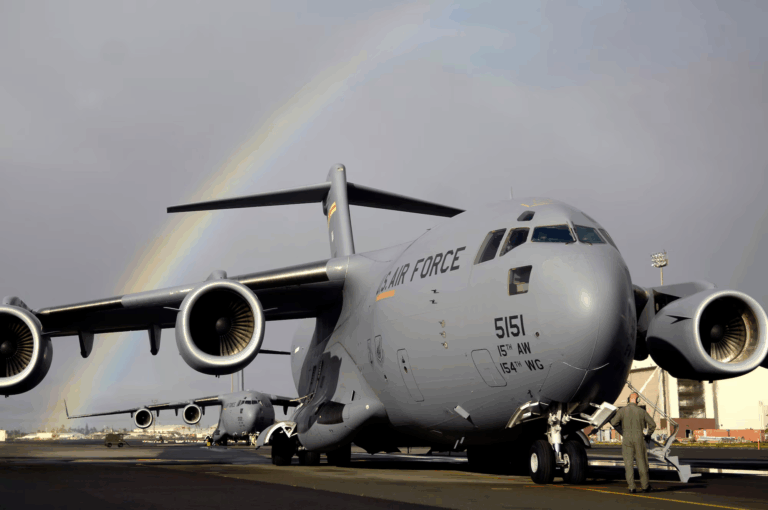
Kamla Persad-Bissessar has taken one of the hardest public lines in CARICOM on Venezuela, U.S. military activity in the Caribbean, and alleged drug trafficking networks. Guardian reporting from 2025 recorded her saying she welcomed U.S. cooperation if it helped address criminality, trafficking, narco-trafficking, and human trafficking affecting Trinidad and Tobago.
After a U.S. strike on an alleged Venezuelan drug vessel, AP reported that Persad-Bissessar strongly backed the action and said traffickers should be killed “violently.” That position placed her sharply apart from more cautious voices in the region, including concerns raised by Barbados’ foreign minister about unilateral U.S. actions.
Then came the political history around Delcy herself.
Former prime minister Dr Keith Rowley recently accused Kamla’s side of previously calling for sanctions against those who dealt with sanctioned “narco trafficker” Delcy Rodríguez. That phrase is now politically explosive because the same Delcy Rodríguez is no longer merely a Venezuelan vice president in the background. She is now the acting president of Venezuela, moving around CARICOM like somebody holding the regional guest list.
So when Delcy visits Grenada, then Barbados, and Trinidad and Tobago is left out, people will naturally connect the dots.
They may not be official dots.
They may not be confirmed dots.
But Lord, they dotting.
Punishment, Coincidence, or Diplomatic Freeze-Out?
To be clear, there is no public document saying Venezuela has punished Trinidad and Tobago by excluding it from Delcy Rodríguez’s Caribbean stops.
But politics is not only what is written on paper. Sometimes the real message is in who gets the meeting and who gets the “we’ll call you.”
Caribbean Life reported that Rodríguez was not expected to visit either Guyana or Trinidad and Tobago, noting that both had publicly aligned behind U.S. military action against Venezuela and anti-narcotics operations near Venezuela and Trinidad.
That makes the pattern harder to dismiss.
Guyana and Venezuela have the Essequibo dispute boiling in the background. Trinidad and Tobago has the Kamla-Venezuela-U.S. alignment issue. Both countries are strategically important. Both have tension with Caracas. Both appear to be off Delcy’s friendship tour.
That may be coincidence. But if it is coincidence, it is wearing a suspiciously well-tailored suit.
The Energy Irony Is Painful
Here is where the story cuts deepest for Trinidad and Tobago.
This is not just about diplomatic pride. It is about gas, energy security, foreign policy, and money.
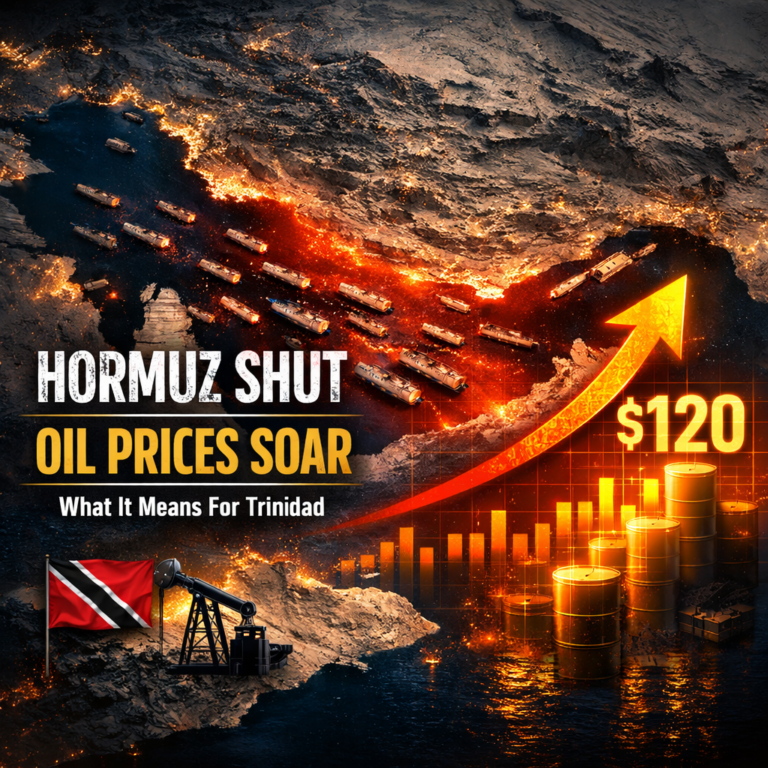
Trinidad and Tobago has spent years trying to unlock Venezuelan gas for its downstream sector. The Dragon gas field has been central to that conversation, with the Financial Times reporting in 2025 that the United States had authorised Trinidad and Tobago to resume negotiations with Venezuela over Dragon, a field estimated at about four trillion cubic feet of gas.
So imagine the irony.
T&T needs Venezuelan energy cooperation. Venezuela is touring CARICOM talking energy cooperation. Barbados gets the invitation to invest. Grenada gets early attention. Trinidad and Tobago gets the diplomatic equivalent of blue ticks and no reply.
That is why Delcy Trinidad Snub matters.
Because this is not just “who get visit and who didn’t.” This is about whether the country’s foreign policy posture is now making energy diplomacy harder at the worst possible time.
TriniLulz Share Quote:
“Trinidad and Tobago may have the pipelines, the plants, and the proximity. But right now, Barbados appears to have the warmer handshake.”
Kamla Says No Worries, But Should the Country Be Worried?
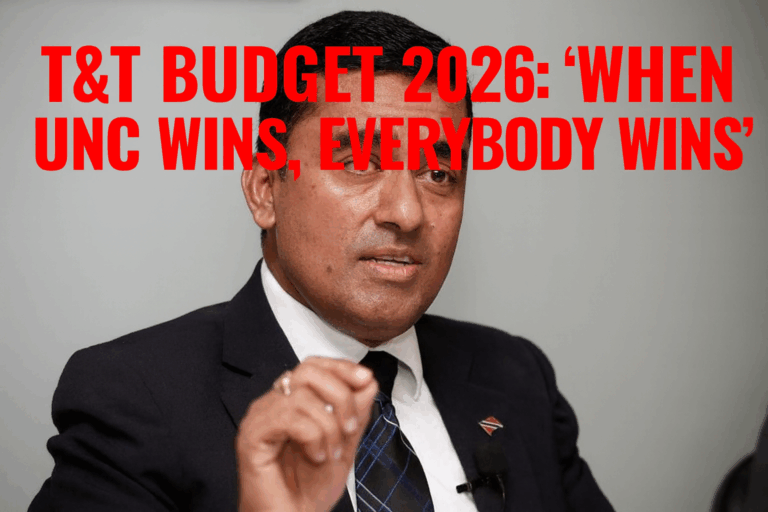
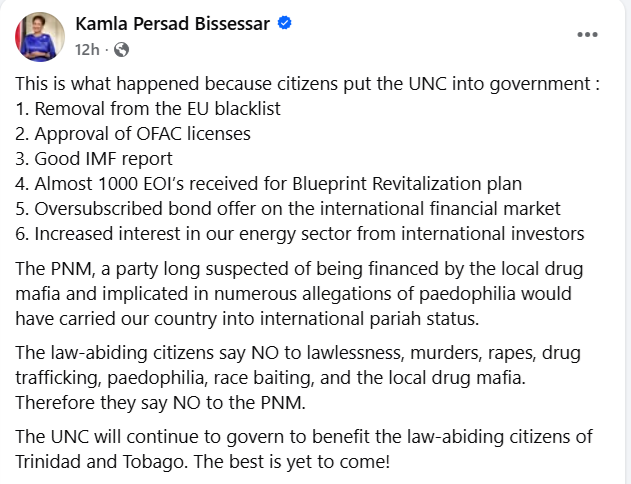
Prime Minister Persad-Bissessar has reportedly brushed off concerns that Trinidad and Tobago is being sidelined, with local reporting indicating she said she had “no concerns” about the issue and that talks with Venezuela were still taking place.
Fair enough. No prime minister wants to look rattled because another Caribbean leader got the first dance.
But the question is not whether Kamla is personally worried. The question is whether Trinidad and Tobago should be strategically worried.
Because foreign policy is not a Facebook comment war. You cannot just type “who vex lost” and call that a diplomatic strategy.
T&T has to balance several things at once: crime, border security, relations with the United States, CARICOM unity, energy survival, Venezuela’s sensitivities, and the reality that Caracas is not some faraway capital. It is right next door.
When you live seven miles from a neighbour, you can quarrel, yes. But sooner or later, somebody still has to discuss the fence.
The Essequibo Brooch Shows This Tour Is Not Innocent
And if anyone thinks Delcy Rodríguez’s Caribbean charm offensive is just smiles and mango juice, Guyana would like a word.
During recent visits, Rodríguez wore a pin showing the Essequibo region as part of Venezuela, triggering a complaint from Guyana’s President Irfaan Ali and a CARICOM response reaffirming support for Guyana’s sovereignty and the peaceful resolution of the dispute before the International Court of Justice.
That small pin caused a big regional stir because in diplomacy, symbols matter.
A brooch can be a message.
A map can be a warning.
A missing visit can be a snub.
So when Delcy moves through the region, she is not just making courtesy calls. Venezuela is projecting influence, testing friendships, rewarding warmth, and possibly freezing out those it sees as hostile.
If Trinidad and Tobago is not on the itinerary, the silence is loud enough to wake up the whole Gulf of Paria.
Did Kamla Choose Principle or Trade Away Influence?
Supporters of Kamla Persad-Bissessar will argue that she did what a leader must do: stand firmly against narco-trafficking, violent criminal networks, illegal guns, and threats to national security. To them, her backing of U.S. action was not recklessness. It was courage.
And they have a point. Trinidad and Tobago has suffered deeply from crime, guns, drugs, and gang violence. Any prime minister would be under pressure to act tough.
But critics will argue that toughness without diplomatic balance can become expensive.
They will say Kamla’s language was too hot, too public, too aligned with Washington, and too dismissive of the reality that Trinidad and Tobago must still live next door to Venezuela after the applause dies down.
That is the real debate.
Not whether Trinidad and Tobago should fight crime. Of course it should.
The question is whether the country can fight crime, protect sovereignty, support security cooperation, and still avoid turning its closest neighbour into a diplomatic enemy.
Because if Delcy Trinidad Snub is a warning sign, then T&T may now be learning an old Caribbean lesson: when big countries fight, small islands must know how to dance without getting their toes crushed.
The Real Danger Is Not Being Left Out Once
One missed visit may not destroy Trinidad and Tobago’s relationship with Venezuela.
But repeated exclusion? Chilly signals? Energy conversations happening around us instead of with us? That is where the danger begins.
T&T cannot afford to become the Caribbean country that is geographically closest to Venezuela but diplomatically furthest away from the room.
Especially when the economy needs gas.
Especially when the region is already tense.
Especially when CARICOM is trying to manage the Essequibo dispute, U.S. military pressure, and Venezuela’s political reset all at the same time.
The real issue is not whether Delcy Rodríguez likes Kamla Persad-Bissessar.
The issue is whether Trinidad and Tobago’s national interest is being protected with enough skill, enough maturity, and enough strategic calm.
Because foreign policy is not only about sounding strong. It is about making sure the country still has options after the speech is over.
Final Word: If This Is Not Punishment, It Is a Good Imitation
So is Trinidad and Tobago being punished?
Officially, nobody has proven that.
But politically, the optics are brutal.
Delcy Rodríguez is touring the Caribbean. Grenada got a visit. Barbados got energy talk. Guyana is angry over Essequibo symbolism. Trinidad and Tobago, Venezuela’s nearest neighbour and a country with major energy interests, appears to be standing outside the photo frame.
Maybe it is coincidence.
Maybe the visit will come later.
Maybe quiet diplomacy is happening behind the scenes.
But if this is not punishment, it is doing a very convincing impersonation.
And that is why Delcy Trinidad Snub will not go away easily.
Because in the Caribbean, people understand one thing very well: when everybody else getting invited to the lime and your name missing from the list, you are allowed to ask who you offended.
Read the AP report on Delcy’s Barbados visit here.
This story is part of our wider Caribbean Geopolitics & Global Affairs coverage. Explore the full hub for regional security updates, diplomacy, migration, energy politics, and deeper analysis of how global power plays shape Caribbean realities.