
TRINIDAD DATA CENTRE COMING TO DEBE? THE GOOD, THE BAD AND THE UGLY OF TRINIDAD’S 450-MEGAWATT GAMBLE
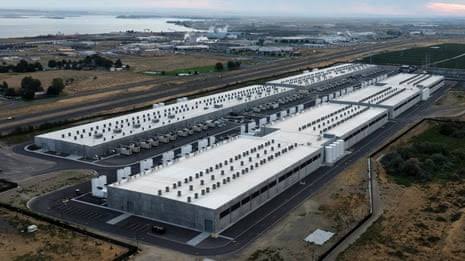
Trinidad and Tobago may be preparing to make one of the biggest industrial bets in its modern history.
The proposed Trinidad Data Centre projects could attract billions of US dollars, create construction and technology jobs, strengthen the country’s digital infrastructure and position Debe as part of an emerging Caribbean artificial-intelligence hub.
They could also require electricity capacity equivalent to almost one-third of Trinidad and Tobago’s record national peak demand—before accounting for any future expansion.
That is before questions about water, natural gas, tax concessions, environmental impact, data privacy and the number of permanent jobs have been fully answered.
The Government says the projects remain at the memorandum-of-understanding stage and will undergo technical, environmental and regulatory assessments before construction is approved. That distinction matters: Trinidad and Tobago has not yet signed an irreversible agreement to build the facilities.
This is therefore the moment to examine the opportunity without either blindly rejecting it or approving it because the letters “AI” have been attached.
Here is the good, the bad and the potentially very ugly.
AI does not run on magic. It runs on megawatts.
The 60-second explanation
The Government has signed three memoranda of understanding with US organisations.
Two relate to data centres:
- Ernst & Young LLP intends to work with third-party developers on a proposed 300-megawatt data centre.
- Hummingbird AI Holdings LLC has proposed a 150-megawatt AI infrastructure and data-centre facility, with the possibility of eventually expanding that project to 500 megawatts.
- The Hummingbird facility is targeting initial commercial operations in the first quarter of 2028, subject to due diligence and the project advancing.
Together, the two proposals would begin with a potential capacity of 450 megawatts. If the Hummingbird project eventually expands to 500 MW, their combined potential capacity would rise to 800 megawatts.
The third MOU concerns the proposed recommissioning of the Point Lisas iron and steel plant by Pinnacle Steel and Vanadium Corporation.
The Government says the three initiatives combined could attract more than US$5 billion in investment and create more than 5,000 skilled and semi-skilled jobs. No public breakdown has yet shown how much of that investment or employment belongs specifically to each data centre, how many positions would be temporary construction jobs or how many would remain after the facilities open.
That is the first number Trinidad must demand:
How many of the promised 5,000 jobs are actually data-centre jobs?
What exactly is an AI data centre?
A data centre is an industrial facility filled with computer servers, networking equipment, storage systems and cooling machinery.
The servers process and store everything from websites and banking transactions to cloud applications, streaming services and artificial-intelligence models.
An AI data centre is generally more demanding than a conventional corporate server room. Training and operating advanced AI models can require thousands of specialised processors working simultaneously. These processors generate significant heat and must be kept within carefully controlled temperatures.
That means the facility requires much more than a building containing computers. It may need:
- Dedicated electrical substations and transmission lines.
- Multiple fibre-optic connections.
- Cooling towers, chillers, pumps or liquid-cooling systems.
- Water storage or treatment infrastructure.
- Batteries and uninterruptible power systems.
- Backup generators or turbines.
- Heavy security and fire-suppression systems.
- Continuous monitoring and maintenance.
These are industrial facilities, even when their finished product is digital.
How big is 450 megawatts?
The term “450 megawatts” does not necessarily mean the two facilities would consume exactly 450 MW every minute. It describes their proposed electrical capacity, and actual consumption would depend on construction phases, customer demand, equipment utilisation and cooling efficiency.
But the figure provides a useful indication of scale.
T&TEC reported a record national electricity demand of 1,456.2 MW in May 2024. It said approximately 2,037 MW of generating capacity was installed at the time, while warning that higher electricity demand also increased natural-gas consumption.
Measured against that record peak:
- The initial 450 MW proposal equals approximately 31% of peak national demand.
- A possible 800 MW buildout equals approximately 55% of that peak.
- The initial 450 MW equals about 22% of the installed generating capacity reported in 2024.
- The potential 800 MW equals about 39% of that reported capacity.
Those comparisons do not prove that the grid can—or cannot—support the projects. Installed capacity is not the same thing as constantly available power, and additional generation could be constructed.
They do demonstrate why this cannot be treated like an ordinary commercial development.
At a continuous full draw, 450 MW would amount to approximately 3.94 terawatt-hours of electricity per year. At 800 MW, the figure would be approximately 7.01 terawatt-hours.
Before any approval is granted, the country needs a detailed, independently reviewed power study showing the expected hourly load, construction phases, generation source, gas requirement, transmission upgrades and contingency arrangements.
THE GOOD
A possible new export industry
For decades, Trinidad and Tobago has struggled with the same economic question: what comes after—or alongside—oil, natural gas, ammonia, methanol and LNG?
A large Trinidad Data Centre industry could create a new category of export earnings. Instead of exporting only physical energy products, the country could use its energy, location and telecommunications infrastructure to export computing capacity, cloud services and AI processing.
That could attract international technology companies, financial institutions, research organisations and Caribbean governments seeking regional hosting and disaster-recovery services.
The global demand is real. The International Energy Agency expects worldwide data-centre electricity consumption to roughly double by 2030, reaching about 945 terawatt-hours. AI-focused facilities are expected to be among the strongest drivers of that growth.
Trinidad therefore has an opportunity to enter a rapidly expanding industry rather than waiting until regional competitors establish an insurmountable lead.
Construction could create substantial employment
Projects of this scale would require engineers, electricians, welders, equipment operators, network specialists, construction workers, security personnel and project managers.
Virginia, home to the world’s largest concentration of data centres, estimates that its industry supports about 74,000 jobs and contributes US$9.1 billion to the state’s annual economy.
However, Virginia’s official review also found that most of those benefits arise during construction. A typical 250,000-square-foot facility may employ approximately 1,500 people at the height of construction but only around 50 full-time workers once operational.
That does not mean the employment benefit is insignificant. A multi-year construction programme could sustain thousands of skilled tradespeople and supporting businesses.
It does mean Trinidad should stop treating the word “jobs” as one undivided number.
The agreements should separately identify:
- Construction jobs.
- Permanent operational jobs.
- Contracted maintenance and security jobs.
- Positions requiring imported specialists.
- Jobs reserved or targeted for Trinidad and Tobago nationals.
- Training required before recruitment begins.
Better digital infrastructure for the Caribbean
A major data-centre ecosystem could improve Trinidad and Tobago’s international fibre connectivity, cloud availability, cybersecurity capability and disaster-recovery capacity.
Caribbean companies often depend on infrastructure located in North America or Europe. More regional capacity could reduce delays when accessing services, provide additional redundancy during international cable disruptions and allow some sensitive information to remain closer to the institutions and citizens who own it.
Banks, insurers, universities, hospitals, government agencies, animation studios and technology start-ups could benefit from high-performance computing located within the region.
But proximity alone does not guarantee access. Trinidad must negotiate affordable local and regional use of the infrastructure rather than simply hosting a fortified server compound serving foreign clients.
New training and career pathways
A properly negotiated development could create new pathways in:
- Data-centre engineering.
- Electrical and mechanical systems.
- Cybersecurity.
- Cloud computing.
- Network management.
- AI operations.
- Cooling technology.
- Renewable-energy integration.
- Digital regulation and privacy.
The Government could require partnerships with UWI, UTT, COSTAATT, MIC Institute of Technology and vocational institutions years before the first facility opens.
Training should not begin after imported specialists arrive. It should be a contractual condition attached to land, infrastructure and tax concessions.
A national scholarship and apprenticeship programme could ensure that Trinidadians move beyond guarding and cleaning the facilities to designing, maintaining and managing them.
Infrastructure could benefit surrounding communities
The projects could finance new substations, roads, drainage, fibre networks, water-treatment systems and renewable-energy installations.
Debe residents have expressed cautious interest in the possibility of employment and development, while also demanding explanations about water, electricity, flooding and how the community would benefit.
A serious community-benefit agreement could require the developers to fund:
- Drainage and flood-mitigation works.
- Reliable water infrastructure.
- Road improvements.
- Technical scholarships for residents.
- Local-business procurement.
- Community internet access.
- Emergency electricity or water support.
- Annual environmental monitoring.
The facilities should not become islands of perfect infrastructure surrounded by communities still waiting on basic services.
THE BAD
The electricity demand could be extraordinary
Data centres require reliable electricity every second of every day.
A supermarket can close during an outage. A data centre hosting financial transactions, cloud services or AI systems cannot simply switch off without consequences.
Electricity demand is already becoming the defining global issue surrounding the sector. The US Department of Energy estimated that data centres consumed approximately 4.4% of American electricity in 2023 and could consume between 6.7% and 12% by 2028.
Ireland offers an even more relevant warning for a relatively small national grid. Its data centres consumed 23% of all metered electricity in 2025, up from 5% a decade earlier. Their consumption increased by 10% in one year, compared with 2% growth among all other users.
Trinidad and Tobago may have generating capacity, industrial experience and access to natural gas. But the correct question is not merely whether electricity can be produced.
The country must ask:
- How much new generation will be required?
- Which power plants will provide it?
- How much additional natural gas will be consumed?
- What price will the developers pay for gas and electricity?
- Who will finance transmission lines and substations?
- Will ordinary customers bear any portion of those costs?
- What happens if the project’s demand exceeds forecasts?
- What happens if Trinidad experiences another gas shortage?
Virginia’s official review warned that sudden demand from very large data-cententre customers can require new generation and transmission infrastructure whose costs may partly reach other electricity consumers unless tariffs and contracts are carefully structured.
The safest approach would require the developers to pay the full cost of dedicated infrastructure and commit to minimum payments so the country is not left with stranded assets if the facilities close or fail to reach projected demand.
More electricity means more pressure on natural gas
Most of Trinidad and Tobago’s electricity is generated using natural gas.
A major AI industry powered predominantly by the existing grid would therefore remain connected to the country’s declining or constrained gas supply. T&TEC itself has previously warned that rising electricity demand increases natural-gas consumption.
That creates an economic trade-off.
Gas supplied to a data centre cannot simultaneously be used for LNG, ammonia, methanol, electricity for another industrial customer or future downstream manufacturing.
The comparison should not be based only on the revenue earned from electricity sales. Trinidad must examine the opportunity cost of the gas.
A full economic assessment should compare the public return from using gas for AI computing against alternative uses, including taxes, foreign exchange, employment and downstream value.
The servers do not drink water—the cooling systems do
Public concern has focused heavily on water, and understandably so.
The Government says the proposed facilities would be located in the Debe Special Economic Zone. Public Utilities Minister Barry Padarath has outlined a short-term plan involving man-made ponds, followed by possible desalination plants in Moruga Tableland and Mayaro. He has said residential and commercial WASA customers will not be affected.
That assurance must eventually be supported by engineering studies.
Data-centre water use varies greatly depending on the design. Some facilities use evaporative cooling, which can consume significant amounts of water. Others use closed-loop liquid cooling or air-based systems that reduce direct water consumption but may require more electricity.
There is also indirect water use. Even a facility that draws little water at its gates may depend on power plants that consume water during electricity generation.
A major US government study estimated that American data centres directly consumed approximately 66 billion litres of water in 2023, with hyperscale and shared facilities accounting for most of the total. It also found a much larger indirect water footprint associated with electricity production.
Those figures should not be copied and applied directly to Debe. Different climates, technologies and operating loads produce different results.
They demonstrate why the public needs to see the proposed cooling system—not simply hear that sufficient water will be found.
Desalination solves one problem by creating others
Desalination may protect potable water supplies, but it is not free water.
It requires energy, intake infrastructure, coastal pipelines, chemical treatment and ongoing maintenance. It also produces concentrated brine that must be safely discharged.
World Bank research has identified desalination brine as a potential hazard to marine environments when improperly managed.
The public therefore needs answers to several additional questions:
- Who will build and own the desalination plants?
- Who will pay their operating costs?
- What powers them?
- Where will seawater be taken in?
- Where will brine be discharged?
- What environmental monitoring will occur?
- Will communities receive any of the water produced?
- What happens if the plants are delayed or unavailable?
“Desalination” cannot become a magic word used to end the water debate.
Noise can become a quality-of-life issue
Data centres are not silent.
Cooling fans, chillers, transformers and backup generators can create a constant low-frequency hum. Virginia’s official review found that the sound was generally not loud enough to damage hearing, but some nearby residents reported effects on their wellbeing. The problem was most serious where facilities were built close to residential areas.
Noise studies must therefore measure more than maximum decibels during the daytime. They should assess low-frequency sound, nighttime conditions, cumulative noise from multiple buildings and the impact on homes, schools and wildlife.
Adequate setbacks, sound barriers and enforceable operating limits should be designed before construction—not negotiated after residents begin complaining.
Flooding, land use and drainage cannot be afterthoughts
Debe and surrounding southern communities are familiar with flooding concerns.
A large industrial development can replace absorbent land with roofs, roads, concrete yards and equipment platforms. Without adequate drainage and retention systems, stormwater can be pushed into surrounding communities.
Residents have already identified flooding as one of the issues requiring explanation.
The environmental assessment must therefore examine the full development, not each building in isolation. Multiple facilities, substations, roads, desalination pipelines and supporting industries could create a cumulative impact far larger than a single project application suggests.
THE UGLY
“More than 5,000 jobs” may become a misleading headline
The 5,000-job figure is attached to all three proposed initiatives combined: the two data centres and the steel plant.
It has not been publicly divided into:
- Data-centre construction jobs.
- Steel-plant jobs.
- Permanent positions.
- Temporary positions.
- Direct employment.
- Indirect employment.
That distinction is crucial because international experience shows that data centres can create enormous construction activity while maintaining comparatively small permanent workforces.
Trinidadians should not discover after construction that “thousands of jobs” meant several busy years followed by a few hundred long-term positions.
Every government statement should clearly separate the projects and employment categories.
Public subsidies could exceed the public return
The proposed location is a special economic zone.
Trinidad and Tobago’s SEZ programme offers qualifying enterprises a 15% corporation-tax rate, a 150% initial capital allowance, property-tax and stamp-duty exemptions, VAT zero-rating and import-duty relief on approved equipment.
Those incentives may be justified if they produce sufficient investment, employment, foreign exchange and technology transfer.
But a billion-dollar investment figure is not the same as a billion-dollar national benefit. Most of the money may be spent on imported servers, processors, cooling systems and construction equipment.
The Government should publish a full fiscal-impact analysis showing:
Public land + tax concessions + subsidised gas + electricity infrastructure + water infrastructure + environmental cost
versus:
Taxes + salaries + local procurement + foreign exchange + training + community investment retained in Trinidad and Tobago.
Without that calculation, the country cannot know whether it is attracting an industry or underwriting one.
The contracts could socialise the risk and privatise the reward
The ugliest possible version of this project would give private developers discounted land, gas, electricity, water and tax concessions while placing infrastructure and environmental risks on the public.
If the AI market changes, a major customer withdraws or the developer becomes insolvent, Trinidad could be left with oversized transmission infrastructure, unused industrial buildings and costs that were expected to be recovered over decades.
The contracts should therefore contain:
- Minimum electricity-purchase commitments.
- Security deposits and performance bonds.
- Decommissioning funds.
- Environmental restoration requirements.
- Restrictions on transferring concessions.
- Transparent beneficial-ownership information.
- Penalties for missed employment and investment targets.
- Clawback provisions for tax incentives.
“Potential investment” must not be treated as money already secured.
Who are all the parties?
The official announcement identifies Hummingbird AI Holdings as the company connected to the proposed 150 MW facility. It also states that EY intends to partner with unnamed third parties on the 300 MW development.
Separately, one Guardian report connected the 150 MW proposal to Prometheus Hyperscale, while other official and media accounts named Hummingbird. The relationship between those companies—if one exists—has not been clearly explained in the public announcements reviewed by TriniLulz.
That may have a simple explanation. But projects involving national infrastructure require more than company names in press releases.
The country should know:
- The developers and ultimate beneficial owners.
- The financiers.
- The intended operators.
- The expected customers.
- The experience of each company.
- Any parent, partner or affiliated companies.
- Whether the MOUs contain exclusivity or government guarantees.
Transparency protects both the public and legitimate investors.
Trinidad’s privacy framework may not be ready
Hosting data locally can support data sovereignty, but the physical location of a server does not automatically protect the information stored inside it.
Questions of ownership, legal jurisdiction, foreign-government access, cybersecurity, encryption and customer contracts are equally important.
As of the latest public UWI legal summary, Trinidad and Tobago’s Data Protection Act remained only partially proclaimed in February 2025, with significant provisions relating to obligations and enforcement still not fully operational.
Before marketing Trinidad as a regional data capital, the country should have:
- A fully operational modern privacy law.
- An adequately funded and independent regulator.
- Mandatory breach-notification rules.
- Cybersecurity and resilience standards.
- Clear rules for government and foreign access.
- Data-location and cross-border transfer requirements.
- Independent audits for critical systems.
- Penalties meaningful enough to deter billion-dollar companies.
A data-centre strategy without a modern data-governance framework would build the vault before deciding who is allowed to hold the key.
Backup power can become a pollution loophole
Data centres typically maintain batteries and engines capable of keeping systems online if grid power fails.
Depending on the design, those engines may burn diesel or natural gas. Although described as emergency equipment, large collections of generators may also undergo regular testing and could operate during periods of grid constraint.
The US Environmental Protection Agency treats combustion turbines and stationary engines used for primary or backup data-centre power as regulated air-emission sources.
Trinidad’s approvals should specify:
- The number and capacity of generators or turbines.
- The fuel used.
- Maximum operating hours.
- Emission-control technology.
- Noise restrictions.
- Public reporting of testing and actual operation.
- Independent air-quality monitoring.
Emergency power must not quietly become an unregulated private power station.
Community consultation cannot begin after the deal is done
Debe residents have expressed a mixture of hope and uncertainty. Some see jobs and development. Others say the announcement appeared without adequate explanation and want to know who will benefit.
A petition calling for approval to be suspended until environmental, water and infrastructure studies are published attracted more than 3,200 verified signatures in less than a day.
The Government has correctly said that an MOU is not final approval.
That means public consultation should begin now—while the project can still be redesigned—not after contractual and political commitments make meaningful changes difficult.
Consultation must include Debe, Penal, surrounding communities, environmental groups, engineers, universities, unions, business organisations and the fishing communities that could be affected by desalination infrastructure.
WHAT THE REST OF THE WORLD CAN TEACH TRINIDAD
Ireland: A small grid can change quickly
Ireland’s experience shows how rapidly data-centre demand can transform a national electricity system.
Data centres went from consuming 5% of metered electricity in 2015 to 23% in 2025.
The lesson is not that Trinidad should reject data centres. It is that limits, pricing rules, generation plans and renewable-energy requirements must be established before demand becomes too large to manage politically or technically.
Virginia: The benefits are real—but so are the trade-offs
Virginia demonstrates the strongest economic argument for the industry.
Data centres have supported billions of dollars in economic activity and generated substantial tax revenue. Yet the state’s own review found that construction produced most of the employment and economic benefits, while electricity infrastructure and community noise became growing concerns.
The lesson for Trinidad is to capture construction value locally while ensuring the long-term tax and employment benefits justify any continuing concessions.
Oregon: Water secrecy destroys trust
Oregon established a Data Center Advisory Committee as communities and policymakers debated water use, electricity demand, tax incentives and public disclosure.
Materials prepared for the committee recommended mandatory reporting of expected water use, energy consumption and environmental performance, particularly in communities with limited infrastructure.
The lesson is simple: water consumption should never be treated as a trade secret when communities depend on the same resource.
Singapore: Growth can be selective
Singapore has not treated data-centre development as an uncontrolled race.
Its Green Data Centre Roadmap aims to release additional capacity while requiring greater efficiency and encouraging green-energy deployment. The country is using controlled allocations rather than assuming every proposed megawatt must be approved.
Trinidad can adopt the same principle.
The choice is not limited to “approve everything” or “ban everything.” Facilities can be phased, measured and required to meet increasingly strict standards before receiving additional capacity.
Cities worldwide are demanding a new bargain
In June 2026, 41 mayors representing more than 90 million people supported a global pact calling for data-centre growth that does not strain water supplies, electricity grids, household energy costs or surrounding communities.
Trinidad is therefore not uniquely fearful or resistant to technology.
Communities around the world are asking the same basic question:
Who receives the digital benefits, and who pays the physical cost?
15 QUESTIONS TRINIDAD MUST ANSWER BEFORE THE FIRST SERVER IS SWITCHED ON
- What are the exact locations, acreages and construction phases of the proposed facilities?
- Who are the developers, financiers, operators, customers and ultimate beneficial owners?
- Which third-party developers will partner with EY on the 300 MW project?
- What is the relationship, if any, between Hummingbird AI Holdings and Prometheus Hyperscale?
- What will each facility’s average and maximum electricity demand be during every phase?
- How much new generation, transmission and substation capacity will be required?
- How much natural gas will be consumed, and at what price will it be supplied?
- Will the developers pay the full cost of electricity and water infrastructure?
- What cooling technology will be used, and how much water will it consume daily and annually?
- Who will build, own and operate any desalination plants, and where will the brine be discharged?
- What do the environmental, drainage, flood, noise and cumulative-impact studies show?
- How many jobs are construction jobs, permanent jobs, imported positions and positions reserved for nationals?
- What local-procurement, apprenticeship and technology-transfer commitments will be legally enforceable?
- What is the total value of land, tax, gas, electricity and other concessions?
- What penalties, performance bonds and clawback provisions apply if promises are not delivered?
THE TRINILULZ VERDICT
The proposed Trinidad Data Centre developments could be transformational.
Trinidad and Tobago already understands large industrial infrastructure. It possesses natural gas, electricity generation, an educated English-speaking population, fibre connections and a location capable of serving the Caribbean and parts of the Americas.
A carefully negotiated project could produce investment, construction employment, technology training, foreign exchange and a new export industry.
But the technology does not make the deal automatically good.
A badly structured agreement could consume subsidised gas and electricity, receive major tax concessions, create fewer permanent jobs than expected and leave communities carrying water, noise, flooding and environmental risks.
The difference between those outcomes will not be determined by the speed of the processors.
It will be determined by the quality of the contracts.
Trinidad and Tobago should not fear the future. But it should not give away the future because an industrial project has placed “AI” in its name.
This is not the moment for a blind no.
It is certainly not the moment for a blank cheque.
Show Trinidad the owners. Show Trinidad the studies. Show Trinidad the jobs. Show Trinidad the water plan. Show Trinidad the power bill.
Then the country can decide whether this is a genuine digital revolution—or another generous national resource deal wrapped in futuristic language.