Trinidad & Tobago Inflation: From TT$50 KFC to TT$150 — 30 Years of Prices Eating Your Paycheque
Introduction
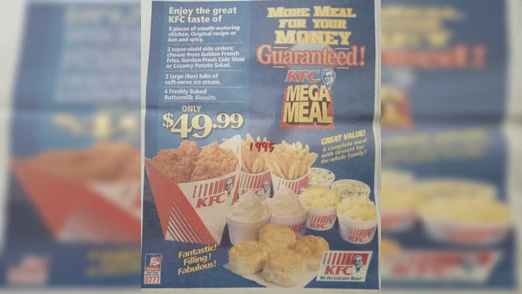
Trinidad & Tobago inflation doesn’t feel like a spreadsheet, it tastes like your Friday evening KFC bill. In 1995, an 8-piece special ran about TT$50. In 2025? Around TT$150. That 3× jump is a neat window into how everyday prices, and not just the official Consumer Price Index (CPI), chip away at spending power.
The Official Curve: Inflation’s Rollercoaster Since 1995
Looking at the long-run data for Trinidad & Tobago, we see head-line inflation moving in waves: mid-single digits in the late 1990s, a peak around ~12% in 2008, ~10.5% in 2010, and then a long slide toward very low levels (~0.5%) in recent years. These are annual averages across all goods/services.
Even though headline inflation may seem tame now, it masks large variation beneath the surface, and what customers actually buy often rises faster.
Why Food Feels Pricier Than “Inflation”
When you go out for dinner, your brain isn’t processing “headline CPI.” It’s whacking you with “how much is this meal now?” The category “Hotels, Cafés & Restaurants” and “Food” in the local CPI show sharper increases than the average basket because of factors like imported ingredients, wage/chef costs, energy, and menu-cost jumps. That helps explain why your TT$150 KFC doesn’t feel like an exception, it is the exception to how most people remember prices.
Housing: Prices, Payments, and the Monthly Reality
Even if your groceries and meals only rise by a bit, housing often moves differently. In Trinidad & Tobago, mortgage rates for new 15-year loans recently sit around ~6.0-6.3%. If house prices go up while interest rates also pop a bit, then monthly payments climb significantly faster than headline inflation suggests.
If your income isn’t rising to match, you end up paying more just to stand still: fewer funds left for snacks, outings, savings.
The KFC Index: A Trini Micro-Measure
Think of the TT$50 → TT$150 KFC example as a micro-index of spending power. Doing the math, that’s about a 3.7% annualised increase over 30 years.
(150 ÷ 50)^(1÷30) − 1 ≈ 3.7%
This is above many years of our official headline CPI—but entirely plausible because restaurants tend to price in service costs, imported input rises, and menu leaps.
It shows that—even with “low” inflation—if your income grows slower than ~3.7% annually, every meal gets relatively more expensive. Over time, that’s fewer meals out, smaller savings, more stress about monthly budgets.
How Inflation Dents Your Wallet (and Your Fun)
- Compounding effect: A ~3–4% annual rise halves your purchasing power in roughly 18–24 years.
- Selective pain: You may pay less attention to “average inflation,” but you feel single categories: food, housing, transport. When they rise faster, they hit harder.
- Affordability squeeze: Even if CPI says “only” +2% this year, your rent or mortgage payment might go up +6% or more—because it depends on other variables.
- Behavioural-pricing rigidity: Once a restaurant menu jumps, it rarely goes back. So you learn to expect higher price tags, which affects how you budget and spend.
- Wages vs prices mismatch: If your salary rises by 2% but your cost for the “KFC box” rises by 4%, you’re losing ground—even though officially, inflation “only” rose 2%.
How to Keep Some Control
- Track your actual basket: What you buy matters. Monitor your monthly outlays for food, utilities, transport—not just what “inflation” says.
- Understand unit price: Especially useful when brands increase sizes, reduce quantities, or raise prices—compare the “per kg” or “per box” number.
- Review housing/loan commitments: If you’re entering the market or renewing a mortgage, small rate or price changes matter.
- Sneak in inflation-beating strategies: If possible, tie your income (or at least your budget) to outcomes that grow at or above inflation (side gigs, skills that are in demand, USD-linked income).
- Mind the long term: Even when CPI falls, you may have “lost” purchasing power already—so act early.
Final Thoughts
That TT$50 dinner from 1995 turned into TT$150 in 2025—and the takeaway isn’t just “wow things cost more.” It’s that prices rise, incomes don’t always, and that discrepancy is what hurts your wallet.
Central Bank of Trinidad and Tobago — “Inflation” explainer page and data dashboard.