Monroe Doctrine 2.0: Dragon Gas, Puppet Regimes & the New Caribbean Obedience Test
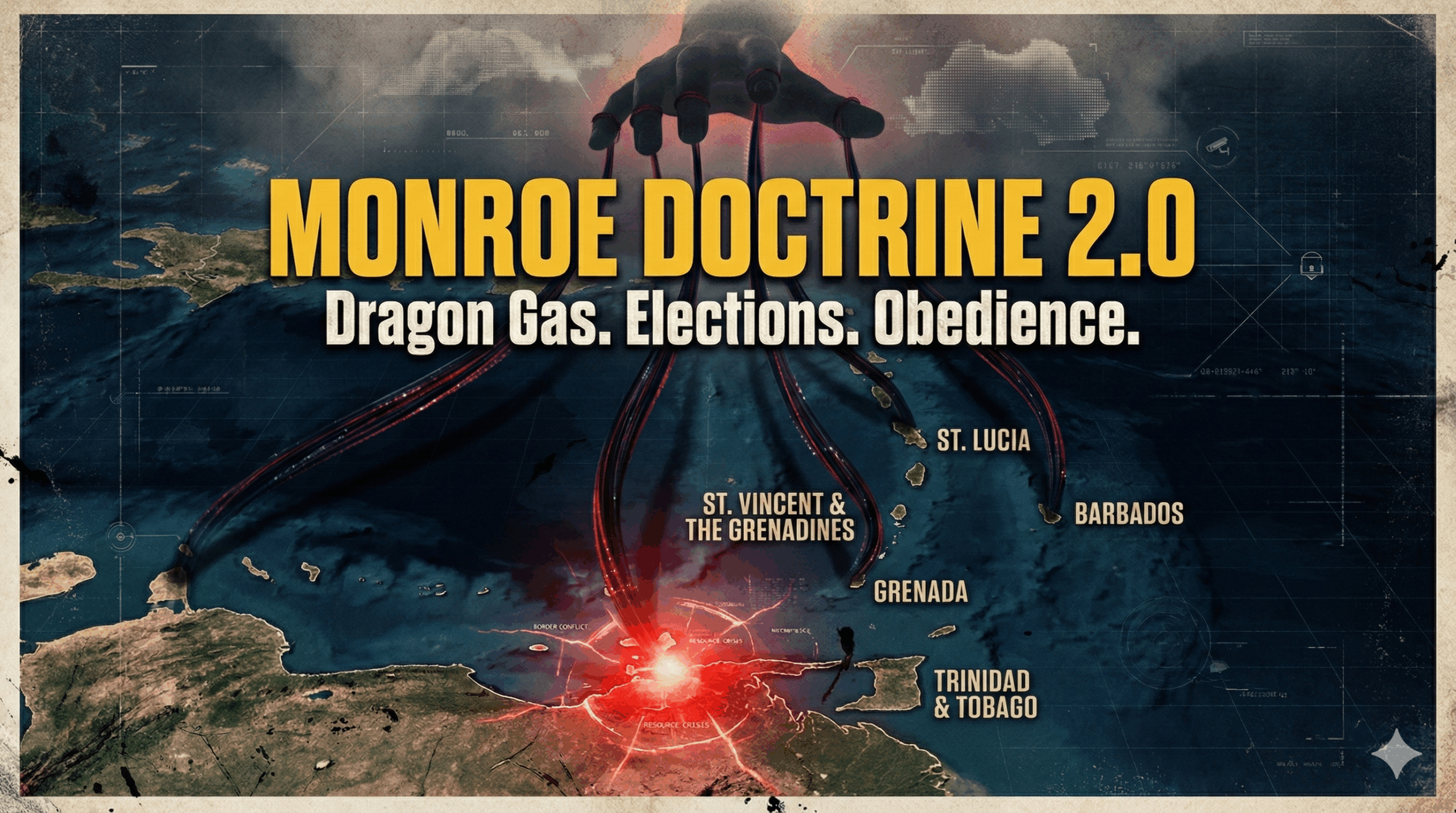
The Caribbean always had plenty storms, but lately the clouds overhead feel… different. Warships in our waters. Missiles flying near fishermen. Dragon Gas deals pulling a Houdini. Three elections lining up like planets in retrograde.
People saying is coincidence — but when you put it all together, a pattern appears.
A pattern with a name: Monroe Doctrine 2.0
For those who forget: the Monroe Doctrine started as America’s warning to Europe — “Stay out of the Western Hemisphere.” Two centuries later, it’s looking more like, “This hemisphere is mine, behave or else.” And now, in 2025–2026, the Caribbean finding out what “or else” looks like.
Monroe Doctrine 2.0 and the Return of Big-Stick Diplomacy
The original Monroe Doctrine was simple: No more European colonising in the Americas. But across the 20th century, it evolved into a licence for US intervention anywhere from Cuba to Grenada. Now the script get a reboot.
Under Trump — with Marco Rubio acting like a self-appointed hemispheric sheriff — the doctrine re-emerged loud and proud. And this time, it focusing less on Europe and more on any Caribbean leader who decides they don’t want to play along.
“Monroe Doctrine 2 isn’t about keeping Europe out.
It’s about keeping the Caribbean in line.”
The timing is too sharp to ignore:
- Venezuela pressure reaching boiling point
- Gas projects squeezed and unsqueezed
- Elections in Guyaana, Trinidad and Tobago, St. Vincent, St. Lucia, Barbados all happening in the same geopolitical pressure cooker
Nobody saying the CIA pulling levers behind a curtain — but the hemisphere moving like somebody flipping switches.
Dragon Gas & the Sweet Hand of Washington
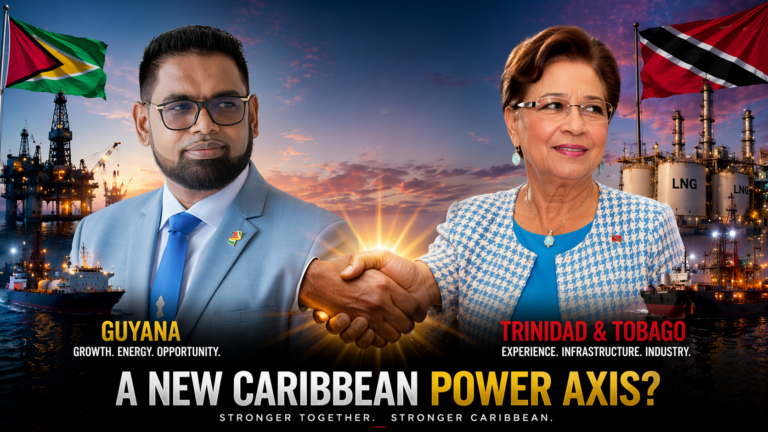
If you want to understand Monroe Doctrine 2.0, follow the gas. Or more specifically: Dragon Gas, the offshore project between Trinidad & Tobago and Venezuela.
Watch the timeline:
A licence appears.
Then America tighten sanctions again.
Then the licence “on hold.”
Then magically revived.
Then paused.
Then revived — right before (and right after) key political moments.
Business people calling it “risk management.” Politicians calling it “miscommunication.” But ordinary Caribbean people calling it what it looks like: leverage.
Dragon Gas became the geopolitical equivalent of a dangling car key in front of a baby. Depending on who Washington favour, the key shakes faster or slower.
External Link (Al Jazeera):
For a global overview of US–Venezuela tensions:
https://www.aljazeera.com/news/2024/2/5/us-venezuela-sanctions-explained
The Hard-Ears Leaders: Ralph & Mia vs Monroe Doctrine 2
Two Caribbean Prime Ministers stand out as the “problem children” in this new imperial report card.
Ralph Gonsalves — SVG’s Eternal Rebel
Ralph does not bend. He does not bow. He does not soften.
He criticised US military buildup around Venezuela.
He defended regional sovereignty.
He talked to Cuba openly and unapologetically.
And right on SVG election time? Suddenly you hearing corruption rumours, “house count” bacchanal, and coordinated smear attempts — some of them strangely amplified from Trinidad circles. Coincidence? Monroe Doctrine 2.0 saying otherwise.
Mia Mottley — Barbados’ Calm, Dangerous Voice
Mia isn’t anti-American — she just allergic to nonsense.
She told Washington straight:
“I’ll lose the US visa before I abandon Cuban doctors.”
She branded the Caribbean a “Zone of Peace.”
She speak truth to power with a calm that does offend tyrants more than shouting ever could.
Mark it well: when Barbados election season reach, watch how many people suddenly “discover” that Mia own 17 fishing boats and she moving bricks to Miami. Old playbook. New actors.
“When you tell a superpower to behave itself,
suddenly you become a threat.”
Puppet Regimes: Old Logic, New Tools
The US doesn’t need to invade countries anymore — not when they have sanctions, aid, visas, PR machines, and “friendly” media templates ready to deploy.
Grenada saw intervention with boots in 1983.
Haiti saw decades of “managed democracy.”
The Dominican Republic, Panama, Guatemala — the list long.
Monroe Doctrine 2 swaps the military for soft pressure:
- Visa threats
- Sanctions
- Oil licences
- Quiet warnings
- Public “concerns about corruption”
- Conveniently timed allegations and leaks
Not proof of puppeteering — but definitely strings in the room.
How to Spot a Monroe Doctrine 2.0 Puppet Government
Welcome to the comedy section, but — as always in the Caribbean — the joke cutting close to bone.
- Gas licence suddenly approved two weeks after elections.
- Critics labelled “narco-sympathisers” out of nowhere.
- Mysterious PR campaigns appear calling outspoken leaders “dangerous.”
- US Embassy releases more press statements than your Ministry of Communications.
If you see three out of five, congratulations: your government might be writing CSEC History revision for Monroe Doctrine 2.0.
Why Caribbean Citizens Should Pay Attention
Elections aren’t reality TV. They decide:
- Who controls gas and oil revenues
- Whether food prices rise or fall
- Whether war on our doorstep becomes real
- Whether our sovereignty stays intact or becomes optional
This isn’t about being anti-American. The Caribbean has long, deep ties with the US — trade, culture, family, tourism.
The real issue is power — and whether the region drifting back into a world where one superpower decides who leading us, what policies we allowed, and which deals we can sign.
We are already seeing the effects:
Stalled projects. Threatened leaders. Election turbulence.
The handwriting bold: Monroe Doctrine 2.0 is here and it dictating who must behave.
The Caribbean deserves sovereignty, not supervision.
Respect, not manipulation.
Partnership, not puppetry.
And the people watching. Because in this hemisphere, history does repeat — but this time, we plan to catch it in HD.
This story is part of our wider Caribbean Geopolitics & Global Affairs coverage. Explore the full hub for regional security updates, diplomacy, migration, energy politics, and deeper analysis of how global power plays shape Caribbean realities.