Yung Bredda MOBO Nomination: The Only Non-Jamaican Name in the Room
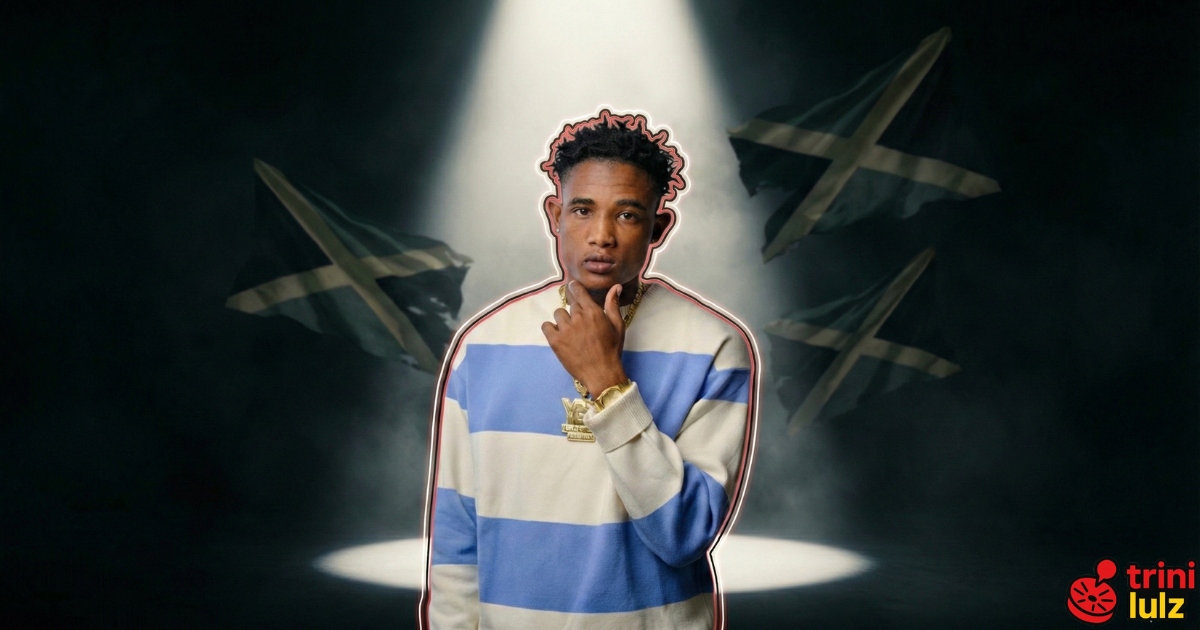
When the nominations dropped for Best Caribbean Music Act at the MOBO Awards, one detail jumped off the page like a red flag in a blue sea.
Yung Bredda. One name. One flag. One island.
Surrounding him? A full roll call of Jamaican heavyweights. No Barbados. No Saint Lucia. No Grenada. No Antigua. Just one Trinidadian artist standing in a category long dominated by dancehall and reggae royalty.
This is not just a nomination. This is a cultural moment.
And the question writes itself: How did a Soca artist from Trinidad end up being the only non-Jamaican name in the room?
One Nomination, Five Jamaicans, and a Quiet Shift in the Culture
For years, the MOBO Awards have functioned as a kind of global barometer for Black music in the diaspora. When Caribbean categories appear, Jamaica usually fills the frame, and not without reason. Dancehall has built an export machine. Reggae carries institutional weight. The UK diaspora has deep Jamaican roots.
So when Yung Bredda lands a nomination alongside artists like Vybz Kartel, Masicka, Shenseea, Lila Iké, and Ayetian, it forces a double take. According to the official MOBO Awards 2026 nominations list, his name stands out as the only non-Jamaican entry in the Best Caribbean Music Act category, a fact quietly buried in plain sight on the awards’ own website:
This is not a “Soca category.”
This is not a “special recognition.”
This is not a footnote nomination tucked away for diversity optics.
This is Best Caribbean Music Act. Period.
“One Trini in a category full of Jamaica is not an invitation. It’s an interruption.”
Who Is Yung Bredda, Really?
To understand why this matters, you have to understand the artist beyond the headlines.
Yung Bredda’s rise was not polished or pre-packaged. It was raw, local, digitally driven, and unapologetically Trinidadian. His music lives in the messy overlap between street energy, humour, bravado, and the kind of melodic instinct that travels even when the accent is thick.
He didn’t dilute Soca to fit a foreign market. He didn’t chase crossover by sanding down the edges. If anything, his sound doubled down on personality, cadence, and attitude. That matters, because global audiences today respond less to genre labels and more to authenticity they can feel, even if they don’t fully understand it.
Somewhere between TikTok virality, diaspora playlists, and the UK Caribbean circuit, Yung Bredda slipped past the gatekeepers.
Not loudly. Not ceremonially. Just effectively.
Is This a Win for Soca or a Win for One Man?
This is where the debate gets spicy.
On one hand, this nomination cracks a door that has been shut for decades. Soca artists have toured globally, packed carnivals across continents, and fueled entire diaspora economies, yet rarely appear in global award conversations unless the category is tailor-made.
On the other hand, one nomination does not equal industry transformation.
“This could be Soca’s breakthrough moment, or just proof that Yung Bredda is an outlier.”
The uncomfortable truth is that Trinidad and Tobago still lacks a unified export strategy for music. Jamaica built infrastructure. Soca built seasons. That difference matters when awards season comes around.
Still, the symbolism is powerful. You cannot ignore the image of one Trinidadian artist standing alone in a lineup that usually leaves no space for anyone else.
Why This Nomination Is Bigger Than the Trophy
Even if Yung Bredda does not win, the signal has already been sent. This nomination does not exist in isolation. It follows a growing pattern of Trinidad and Tobago artists brushing up against global recognition, including Kes quietly generating Grammy conversations with “Cocoa Tea,” a moment TriniLulz previously explored in depth.
UK-based institutions noticed. Diaspora tastemakers paid attention. Algorithms did their quiet arithmetic and decided his name belonged in that list. That alone reshapes future conversations.
It also puts pressure on Trinidad’s music ecosystem to ask harder questions. Who are we pushing? How are we packaging our artists? Why does global recognition always feel accidental instead of engineered?
Because moments like this don’t come often.
And when they do, they should not pass unnoticed.
“History doesn’t always announce itself. Sometimes it just shows up on a nominee list.”
Final Thought
Yung Bredda’s MOBO nomination is not about validation. It’s about visibility.
One Trini name in a room full of Jamaica does not diminish Jamaica’s dominance. It simply proves that dominance is no longer uncontested by default.
Whether this becomes the start of a wider Soca awakening or remains a singular achievement depends on what Trinidad does after the applause fades.
For now, the facts are simple.
Yung Bredda is nominated.
He is the only non-Jamaican in the category.
And the room has officially noticed Trinidad.