RIGHT TO KNOW, OR RIGHT TO SHUSH? The US Troops in Trinidad and Tobago and the Minister Who Challenged the Public
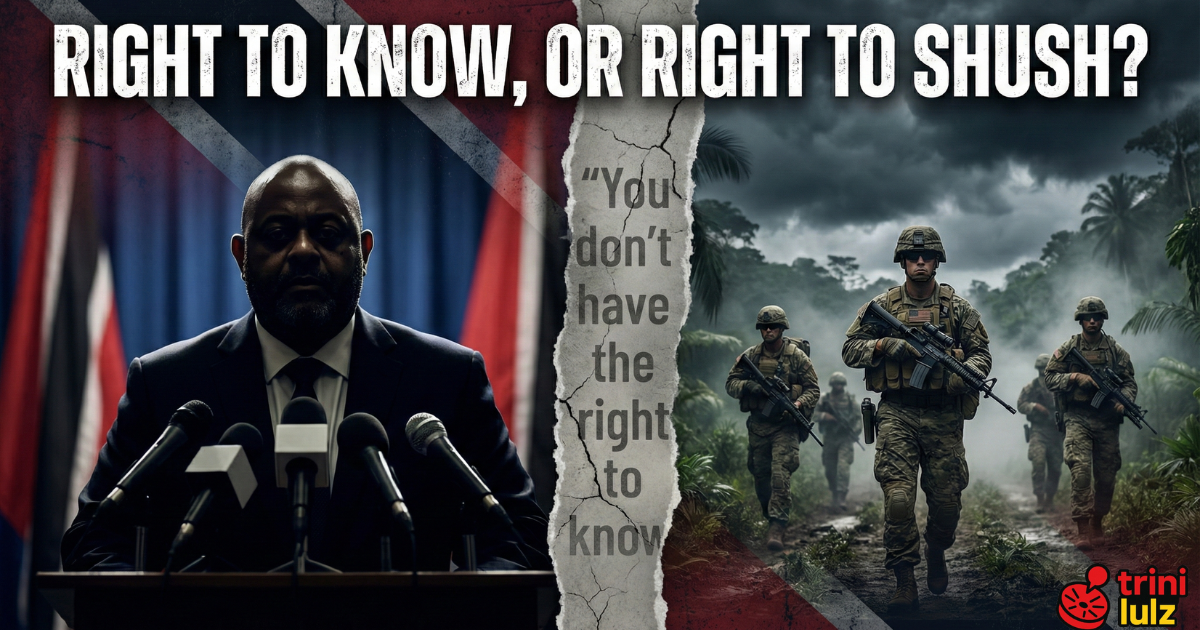
When citizens ask about US Troops in Trinidad and Tobago, is that patriotism… or impertinence?
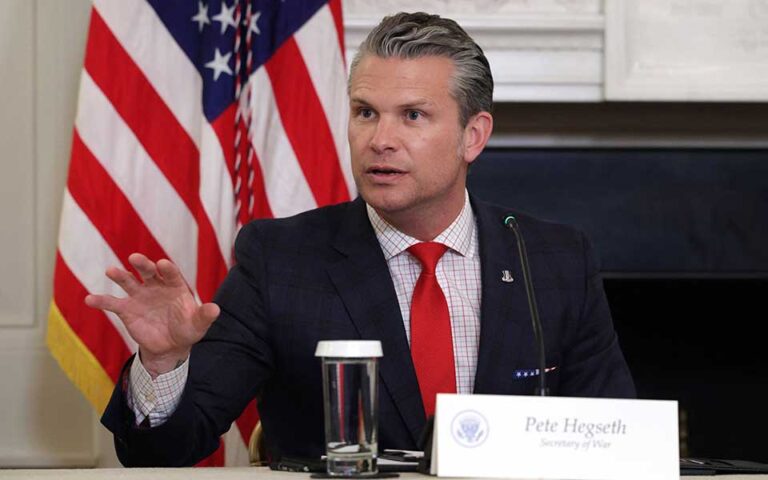
That question moved from social media speculation to centre stage after confirmed U.S. military activity in Tobago, shifting government explanations, and a tense post-Cabinet exchange where Defence Minister Wayne Sturge challenged whether the public even has a “right to know.”
This is no longer just a radar story. It is a transparency story.
And transparency is the oxygen of democracy.
The Tobago Morning That Sparked It All
On 26 November 2025, early-morning military aircraft activity at ANR Robinson International Airport ignited public curiosity. Reporting by Trinidad and Tobago Newsday confirmed that a U.S. military aircraft refuelled in Tobago and departed around 5:53 a.m., while Tobago Chief Secretary Farley Augustine said he learned of the situation through online circulation and was investigating.
That detail matters.
When a foreign military aircraft refuels on national soil and a regional authority says it was not consulted, the public naturally asks questions.
Soon after, Prime Minister Kamla Persad-Bissessar acknowledged that U.S. Marines were present in Tobago in connection with radar and surveillance improvements aimed at combating narcotics trafficking.
The story had shifted.
And shifts in official narratives tend to breed suspicion faster than clarity.
“National security is not secrecy by default. It is secrecy with explanation.”
The Radar, The Marines, and the Messaging
Subsequent reporting by the Trinidad and Tobago Guardian confirmed that a U.S.-supplied radar system remains active in Tobago and that American military personnel were involved in its installation or operation.
At face value, this is not extraordinary. Countries cooperate on security initiatives all the time. The Caribbean sits on a known trafficking corridor. Enhanced radar capability is not inherently controversial.
What became controversial was tone.
When asked whether citizens had a right to know whether U.S. troops are present in Trinidad and Tobago, Minister Sturge reportedly resisted confirming details and invoked Standing Order 27(1)(g), citing “public interest” as grounds for withholding information.
Operational details? Understandably sensitive.
Basic confirmation of foreign military presence? That is where the debate sharpened.
“You don’t have to publish troop coordinates to publish accountability.”
US Troops in Trinidad and Tobago: What Is the Real Issue?
The keyword here is not “troops.”
It is trust.
According to Reuters, Trinidad and Tobago also approved transit for U.S. military aircraft through its airports for logistical movements amid broader regional tensions. That places the radar episode within a wider geopolitical frame.
Cooperation with the United States is not unprecedented. Nor is it illegal. Nor is it automatically sinister.
But democratic legitimacy requires three things:
- Clear authorization.
- Defined scope.
- Transparent oversight.
Citizens are not asking for classified operational manuals. They are asking:
- Who approved this?
- What is the duration?
- What oversight exists?
- Was Tobago properly consulted?
- Is Parliament informed?
Those are governance questions. Not espionage requests.
Standing Order 27(1)(g): Shield or Smoke?
Standing Order 27(1)(g) allows matters to be withheld in the public interest. That clause exists for good reason. Governments cannot telegraph every security move in real time.
But when a legal shield becomes the headline, something has gone sideways.
Transparency is not the enemy of security. In fact, it strengthens it. Citizens who trust their government are less likely to assume worst-case scenarios.
When responses feel dismissive, suspicion fills the vacuum.
And suspicion is far more destabilizing than disclosure.
“If the public cannot ask, and the government will not answer, democracy starts liming on the curb.”
Sovereignty Is Not a Party Position
The presence of US Troops in Trinidad and Tobago is not automatically a violation of sovereignty. International agreements, bilateral cooperation, and security partnerships are part of modern statecraft.
But sovereignty is also psychological. It is the sense that decisions are made transparently, constitutionally, and with accountability.
If Tobago’s leadership was not consulted, that signals communication breakdown.
If explanations evolved under pressure, that signals messaging instability.
If citizens are told they may not even ask, that signals something deeper.
This is not about anti-Americanism. It is not about paranoia. It is not about political tribalism.
It is about whether the people of Trinidad and Tobago are partners in governance or passive observers.
The Trini Right-to-Know Test
Let us simplify this into three civic questions:
- Can the government confirm whether foreign troops are currently present without revealing sensitive tactical details?
- Is there a clear legal framework governing their presence?
- What is the timeline and review mechanism for this arrangement?
If those questions can be answered calmly and clearly, the controversy dissolves.
If they cannot, the controversy grows.
Governments answer to the people. Not the other way around.
Transparency in matters of sovereignty is not optional. It is the cost of legitimacy.
And in a democracy, asking questions is not subversion. It is citizenship.
This story is part of our wider Trinidad Politics Explained coverage. Explore the full hub for political analysis, key background, major controversies, and the latest updates.