14 to 17: Why the UNC’s New Borough Plan Looks Like Election Engineering
Three new boroughs, a politically connected review process and stronger party control: why Trinidad's municipal redesign deserves more scrutiny than new signs.
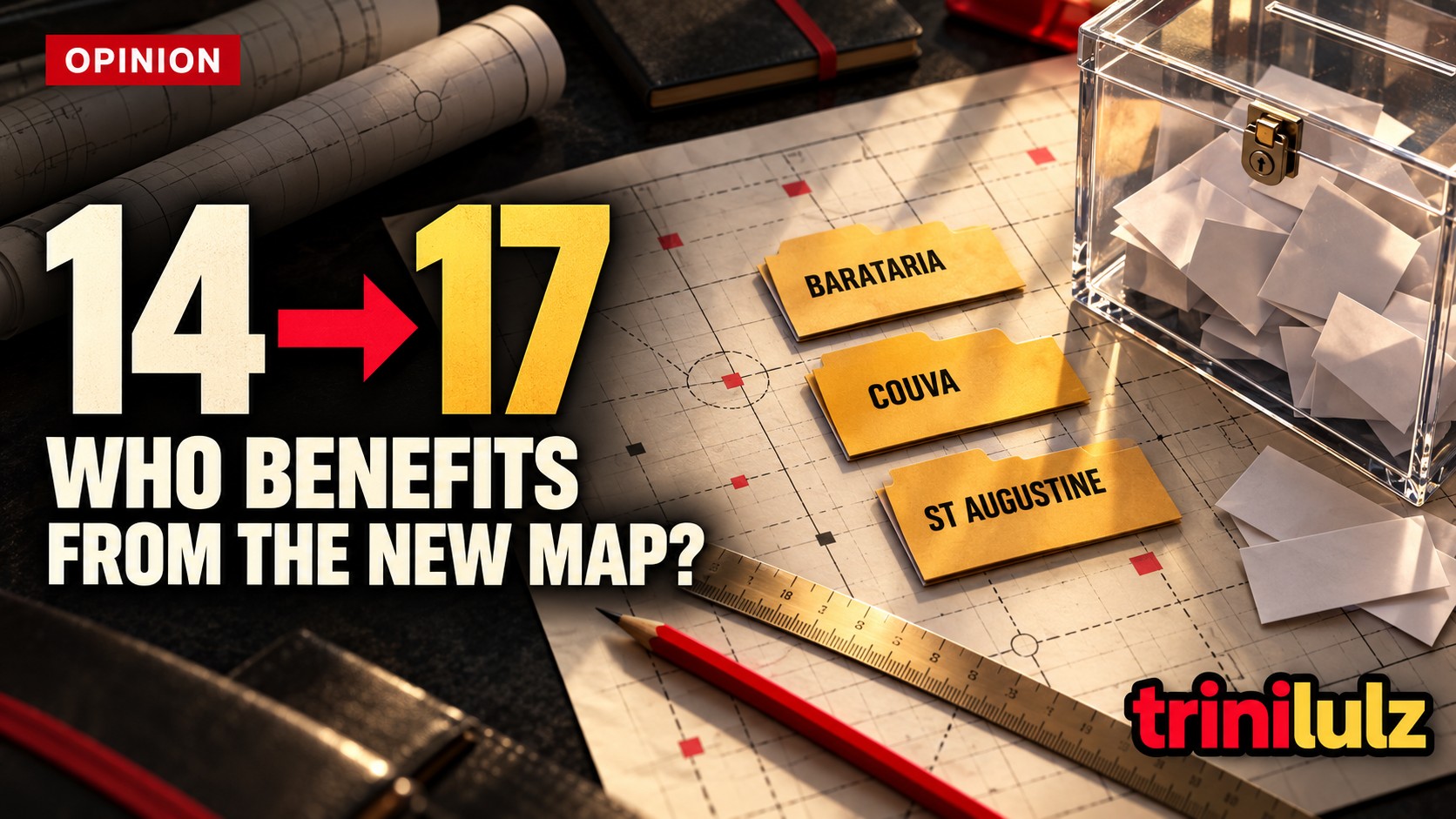
A new borough sign cannot clear a drain. But a new borough boundary can change which party gets to run the council.
That is why the Municipal Corporations Amendment Bill 2026 deserves more scrutiny than a celebration of new names. Moving Trinidad from 14 municipal corporations to 17 changes the political units through which residents are represented. It also comes with proposed changes to alderman lists, leadership votes and the power of parties to remove representatives.
My view is that this package bears the hallmarks of election engineering: a government redesigning the playing field while people associated with its electoral machinery have helped review that field. That is a serious reason for public suspicion. It is not proof of a secret agreement to rig an election, and the evidence should not be stretched into one.
The useful question is sharper: why should citizens accept these particular boundaries and political rules without a transparent demonstration that the public benefit outweighs the partisan advantage?
What the Municipal Corporations Amendment Bill 2026 changes
The proposed additional boroughs are Barataria, Couva and St Augustine. Couva would be separated from Couva/Tabaquite/Talparo, with the remainder becoming Tabaquite/Talparo. St Augustine would be carved from Tunapuna/Piarco, with the remaining region becoming Tunapuna. Barataria would be separated from San Juan/Laventille.
Chaguanas would become a city, while Sangre Grande would move from regional corporation to borough status. Those two status changes do not create two further corporations. The increase from 14 to 17 comes from the three additional councils.
The bill also adjusts other municipal boundaries. This is a wider redesign of representation and administration, rather than simply putting borough signs in three communities.
| Proposed new borough | Councillor districts specified | Aldermen |
|---|---|---|
| Barataria | 5 | 4 |
| Couva | 6 | 4 |
| St Augustine | 6 | 4 |
Three additional councils mean twelve additional alderman positions. The seventeen districts listed for the new boroughs should not be confused with seventeen additional councillors across Trinidad: districts in the remaining regions must also be worked out.
These are proposals. Commencement would require a presidential proclamation, and the bill provides for an EBC report within ninety days after proclamation. Announcement, passage and implementation are different stages.
Who helped review the boundaries?
The reported membership of the Committee for Review of Municipal Boundaries in Trinidad is central to the controversy.
Guardian’s February 2026 reporting names chair Stara Ramlogan and members Feroz Khan, Sabrina Mowlah Baksh, Christlyn Moore, Dr Assad Mohammed, Dr Allen Sammy, Vijay Gosyne, Cornelius Price, Lennox Sankersingh, Peter Kanhai and Denish Sankersingh.
Khan was identified in 2025 reporting as the UNC’s national campaign manager. Kanhai was identified as its general secretary. Gosyne was identified as its data coordinator in reporting on the party’s April 2025 delegation to the EBC. These are documented electoral connections, rather than party affiliations inferred from somebody’s surname or neighbourhood.
Local Government Minister Khadijah Ameen has defended Ramlogan as an unaffiliated technocrat with decades of professional experience. Her argument, set out in the report on the committee and its chair, deserves to be read alongside the membership.
An unaffiliated chair can contribute valuable expertise. That does not eliminate the need to explain safeguards around members with electoral responsibilities. Nor does the presence of those members justify describing everyone on the committee as a UNC operative.
The obvious concern is an institutional conflict of interests. A campaign manager’s job is to help a party win. A boundary review should be justified by residents’ needs. When those interests meet in the same process, declarations, decision records and independent scrutiny become essential.
How the same voters can produce a different political scoreboard
Election engineering does not require a single fraudulent ballot. Changing the units in which votes are counted can change how political success is measured.
Consider a hypothetical territory controlled by one party. Divide it into two councils in which that party retains majorities, and it can move from one controlled corporation to two without winning a single new supporter. Alternatively, separate a party’s supportive pocket from a larger council where it is in the minority. The pocket might become a council that party controls, while the other party continues to control the remainder.
These examples explain a mechanism. They do not predict the results in the proposed boroughs.
The 2023 baseline makes the question legitimate. The UNC won all fifteen councillor districts in Couva/Tabaquite/Talparo. Tunapuna/Piarco returned eleven PNM and five UNC councillors. San Juan/Laventille returned twelve PNM and two UNC councillors. Readers can examine the underlying contest in the EBC’s report on the 2023 local government elections.
There is also a fact that disrupts a convenient slogan: the existing Barataria electoral district elected PNM candidate Kimberly Rae-Ann Small in 2023. That district is not identical to the proposed five-district borough. Calling all three new boroughs guaranteed UNC wins would be careless.
A parliamentary constituency’s name or general-election result is no substitute for examining the municipal electorate. Until the proposed boundaries are compared with polling divisions and past voting patterns, a confident new corporation tally would be speculation.
But the absence of a reliable forecast does not make the redesign politically neutral. It makes the case for publishing that comparison stronger.
The EBC does not make every part of the redesign neutral
A distinction matters here. Parliament determines the municipal framework through legislation. The EBC has a separate role in defining electoral districts within that framework.
Guardian reported in February that the EBC was not participating in the government-led municipal boundary exercise. Its independence was part of the explanation for staying outside the committee. That response was not a declaration that municipal restructuring is automatically illegal.
Equally, saying that the EBC will do its work does not answer every concern. An independent commission drawing internal districts must still work within the outer municipal boundaries and statutory arrangements it has been given.
The Government therefore needs to defend the framework itself: why these territories belong together, why these councils should be separated, and why the proposed representation is appropriate. Invoking the EBC cannot replace those answers.
The bill changes more than the map
The strongest reason to question the Government’s service-delivery explanation is that the bill also rewrites political control inside councils.
Party leadership gets wider control over alderman lists
Clauses 4 and 6 would widen parties’ ability to add, remove, substitute or reorder names on alderman lists, including after appointments. Revised lists would govern subsequent selections under the proposed arrangements.
That is not the same as automatically ejecting a sitting alderman whenever a list changes. The vacancy provisions are separate. Still, it increases the importance of party leadership’s choices in filling these unelected council positions.
Independent candidates face a narrower alderman route
Clause 5 changes the relevant definition of political party so that it would no longer include an independent candidate for these alderman provisions.
It does not prohibit independent candidates from contesting councillor seats. The concern is their treatment in alderman allocation. A reform advertised as fairer representation should explain why that route is being narrowed.
Tied leadership votes get a new rule
Clause 8 deals with specified council ties by reference to the party’s aggregate valid votes in the municipality, including treating the largest plurality as the relevant majority when no party has more than half.
There is a defensible democratic argument for using municipal popular support to resolve a deadlock. The rule can favour the PNM or another party as well as the UNC. It should nevertheless be debated on its own merits, with worked examples, rather than carried along as if it were a technical drainage improvement.
Party expulsion could cost a representative the seat
Clause 9 proposes vacancy procedures where a party councillor or alderman resigns from, or is expelled by, the party. It includes notification and a council process, with a seven-day mechanism for declaring the vacancy.
For an elected councillor, this raises a direct question: how much power should a private party organisation have to end the mandate residents gave at the ballot box?
Party loyalty matters to a party. Representation matters to the public. An expulsion may reflect misconduct, a policy disagreement or an internal struggle; those situations are not interchangeable. A mechanism that gives party discipline consequences for public office deserves close scrutiny.
These provisions apply across parties. Their effect is to strengthen party organisations generally. That makes them a wider democratic concern, not simply another exchange of UNC and PNM accusations.
The Government has a real argument. It still needs evidence.
Prime Minister Kamla Persad-Bissessar says the changes address outdated boundaries, unequal service burdens and poor delivery. Her stated objectives include more effective staffing and supervision, fairer resources and shifting activity away from Port of Spain.
Those are legitimate goals. Nobody waiting through another wet season for a blocked watercourse to be cleared needs a lecture about preserving an administrative arrangement simply because it is old.
Large regions and smaller municipalities can face very different workloads. A closer council could improve access. Separating functions could help management. New urban centres could attract investment.
But these are possibilities, not outcomes already delivered. A new corporation needs funding, staff, equipment, premises and a workable transfer of responsibilities. Dividing an under-resourced organisation can also produce two under-resourced organisations with additional overheads.
The bill includes continuity provisions for matters such as assets, liabilities, legal proceedings and employees. That is useful. It does not, by itself, tell a resident when a repair will happen or how the new council’s operating budget will be funded.
And if stronger party control is essential to better services, the Government should demonstrate the connection. More authority for party executives is not an obvious remedy for a missing garbage truck.
Show the public why these lines were chosen
Opposition Leader Penelope Beckles has accused the Government of trying to “steal an election”. That is her political allegation. The case for scrutiny should rest on the bill and the process, rather than treating an opposition accusation as proof.
The public should be able to see the committee’s full report, the criteria used to choose the new municipalities, the alternatives considered and the reasons those alternatives were rejected. Members’ declared interests, safeguards and any recusals should be available too.
A clear before-and-after map should identify affected communities. Electorate comparisons should explain representation, while service-load comparisons should explain administration. Consultation responses, startup costs and the recurring funding plan should accompany the exercise.
This research did not locate the full committee report or a completed polling-division analysis of the new arrangement. That is a limit of the material available for this article, not proof that no report or consultation exists. It remains a reason to ask for accessible publication.
The same scrutiny should apply whichever party forms the Government. A party cannot become the impartial judge of its own electoral advantage by announcing that its intentions are good.
Better services must be the measure of success
The reform should be tested against things people can actually experience: shorter application turnaround, published drainage-maintenance schedules, reliable collection, completed road repairs and accessible complaint handling.
Publish the baseline. Set targets. Show the budgets. Report the results. If the new arrangement is better, those measures should make the case more convincingly than any slogan.
For Trinidadians abroad who still support relatives at home, the consequence is practical too. Another borough name matters less than whether the street floods, the pavement is usable or a family business can get its application processed.
My concern remains that the Government has bundled a plausible need for local government reform with choices that could improve its political position and tighten party control. That combination looks like election engineering and deserves to be challenged before it becomes the system everybody must live with.
Give residents the evidence for the new map before asking them to applaud it. A borough should serve the people inside its boundaries. It should not become another trophy on a party’s election-night scoreboard.
Reporting note: This opinion examines the supplied bill and public reporting checked through 7 October 2026. The committee roster follows Guardian’s published list, including its spelling of members’ names. The party roles cited were documented in 2025. Electoral effects discussed are analytical possibilities, not a forecast of future results. The feature image is an editorial illustration.
This story is part of our wider Trinidad Politics Explained coverage. Explore the full hub for political analysis, key background, major controversies, and the latest updates.