US Radar in Tobago: Security Upgrade or Caribbean Big Brother?
The quiet arrival of the US radar in Tobago
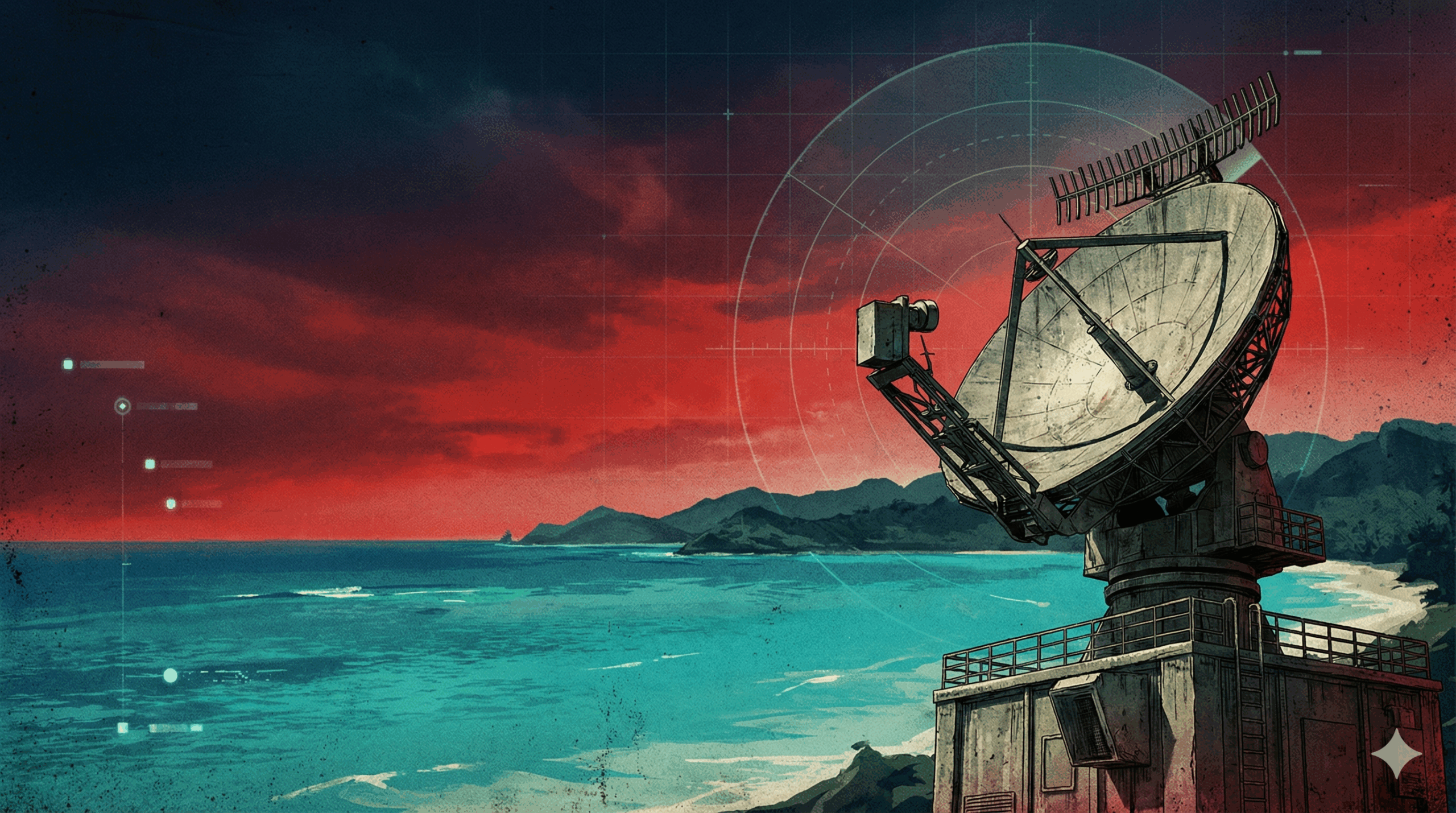
Early morning flights landing at ANR Robinson Airport now have a new neighbour on the tarmac: an advanced US radar in Tobago quietly being set up by American military personnel. One week it was a rumour. Next week it was a headline. Eventually, the Prime Minister confirmed it outright: US Marines are on the ground assisting with radar, runway and road upgrades.
For Tobagonians, the question became simple: since when the world’s most powerful military installing high-end surveillance equipment on our lil’ paradise island, and why we only hearing about it now?
“Tobago wake up with a whole US military radar by the airport. Nobody sure if to feel safer… or scanned.”
While the government insists this is a security partnership to fight drug trafficking and bolster intelligence, residents are asking deeper questions about sovereignty, transparency and who exactly benefits from this watchful new eye in the sky.
What we actually know so far
The timeline is a little wild.
First, government officials denied that US Marines were in T&T.
Then, within 24 hours, the tune changed to: “Yes, they are here, working on radar installation and infrastructure upgrades.”
The Tobago House of Assembly said they were “seeking clarity”, because they learned key details at the same time as the public.
That’s not exactly the communication style you want when foreign military equipment appears on a small island famous for beaches, weddings and goat racing.
Regionally, the United States has been rolling out similar systems across the Caribbean to monitor airspace, drug routes and maritime movements. External reporting echoes this trend, highlighting a broader American push to strengthen security cooperation throughout the region.
This isn’t a Tobago-only story. This is a Caribbean chessboard shifting under our feet.
So what kind of radar is this, really?
What the US radar in Tobago can actually do
Media reports identify the system as a G/ATOR (Ground/Air Task-Oriented Radar) used by the United States Marine Corps. That isn’t a casual weather gadget. It’s a cutting-edge, multi-mission radar capable of:
Tracking low-flying aircraft
Detecting drones
Monitoring airspace deep into surrounding regions
Supporting battlefield awareness
This is the type of equipment normally placed in conflict zones or strategic chokepoints. Seeing it on a Caribbean island naturally raises eyebrows.
“This not the lil’ radar you check before hanging clothes on the line. This is Pentagon-level surveillance.”
And that invites the real question: is Tobago now a node in someone else’s geopolitical network?
The official explanation vs what the street hearing
Officially, the US radar in Tobago is meant to strengthen:
Border protection
Anti-narcotics operations
Regional intelligence sharing
Early-warning capabilities
All noble goals. But the public is hearing a different tune:
“So is Tobago part of the US vs Venezuela standoff?”
“Who have access to the data? TT alone… or TT and uncle Sam?”
“What else can that radar pick up besides drug planes?”
“We gone from liming by Store Bay to living in a Tom Clancy novel.”
In a country where communication gaps easily turn into conspiracy theories, the silence around key details isn’t helping.
The real issue: Who controls the off-switch?
The unanswered questions are the ones driving the bacchanal:
Who truly owns the radar hardware?
Does the US have full-time remote access to its data?
Can it be repurposed for intelligence outside our borders?
Does the THA have authority, or is this strictly a central government agreement?
How long will US personnel remain in Tobago?
This is why Tobagonians want clarity. Foreign military technology isn’t a lil’ side project… it’s a national conversation.
Tobago’s new role on the map
Zoom out and you see how Tobago suddenly sits at the intersection of:
Drug-trafficking air routes
US monitoring interests
Venezuela’s geopolitical tension
Caribbean maritime patrol networks
American efforts to expand regional surveillance
That tiny dot on the map? It just became valuable real estate in the game of hemispheric security.
And none of this means Tobago is “in danger.” But it definitely means Tobago is on the radar in more ways than one.
What Tobago people deserve right now
No hysteria. No paranoia. Just transparency.
Tobago deserves:
A public briefing outlining what the radar does and doesn’t do
Confirmation of data ownership and access
Explanation of how long foreign personnel will remain on the island
THA involvement in all future decisions
Reassurance that this partnership benefits our citizens first
“If a foreign power installing sky-cameras over we head, the least we deserve is a clear explanation.”
Because Tobago is not a prop. Tobago is not a pawn. And Tobago is definitely not a background extra in somebody else’s military documentary.