Irfaan Ali: The Caribbean’s New Power Broker or Guyana’s Best Salesman Yet?
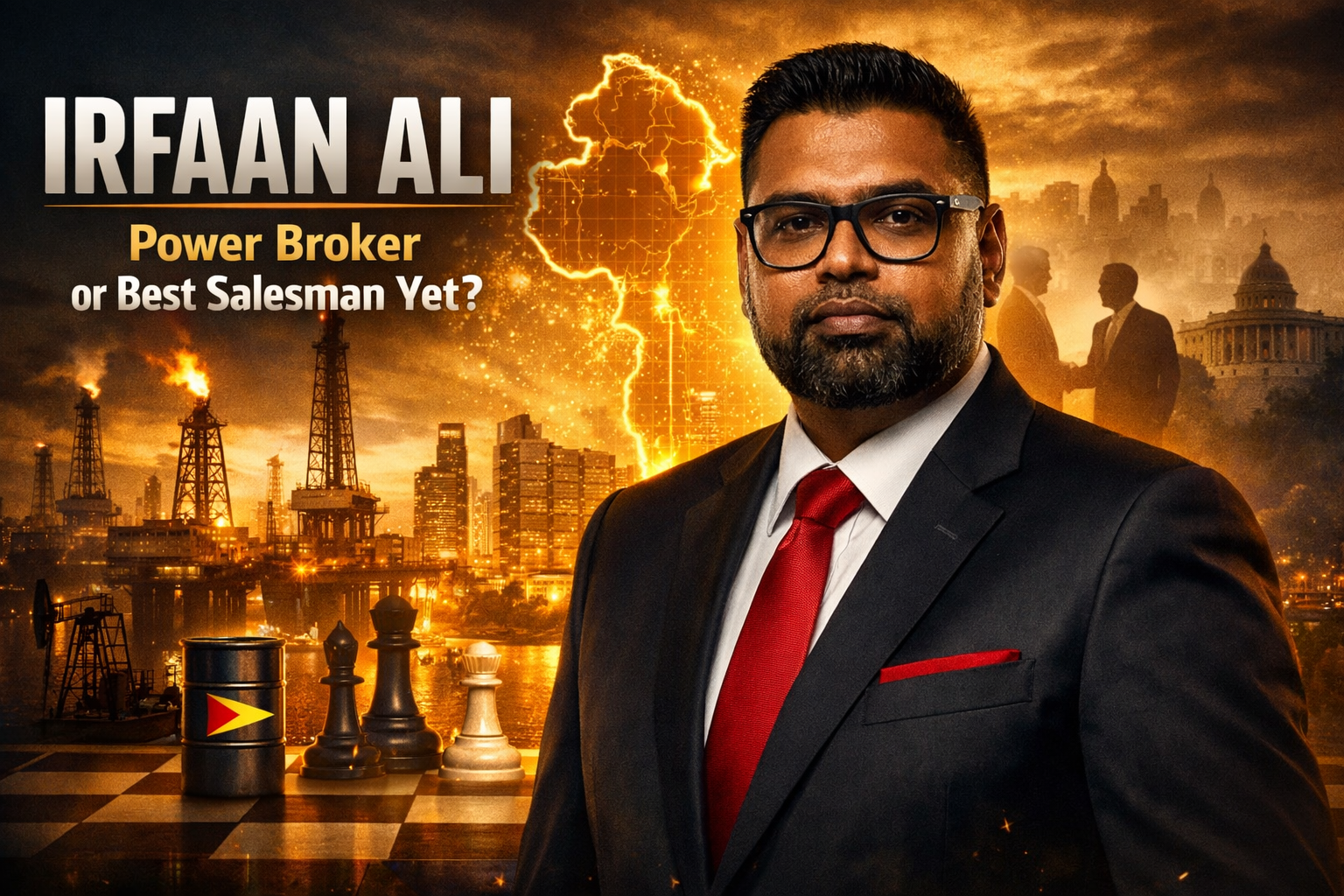
When people across the Caribbean hear the name Irfaan Ali, they do not hear “small country politics” anymore. They hear oil. They hear Guyana. They hear border tension with Venezuela. They hear food security, climate diplomacy, massive infrastructure plans and a leader who seems determined to put Georgetown at the centre of every important regional conversation. That is what makes Irfaan Ali such a fascinating political figure. He has managed to sell Guyana not as the quiet neighbour on the mainland, but as the Caribbean’s newest power player. The question is whether he is genuinely reshaping the region or simply marketing that transformation better than anyone else. His rise, after being sworn in as Guyana’s ninth executive president on August 2, 2020, has been both rapid and hard to ignore.
Irfaan Ali and the rise of the new Guyana
Irfaan Ali’s story fits perfectly into the kind of political mythmaking Caribbean leaders love. Born in Leonora on April 25, 1980, and rising from the ranks of the PPP/C, he has built a public image around energy, relentlessness and delivery. His official biography presents him as deeply credentialed and policy-driven, while his presidency has been wrapped in the language of transformation, modernization and opportunity.
And to be fair, the numbers are not small. Guyana’s own 2023 Voluntary National Review says public debt as a share of GDP fell from 47.4 percent in 2020 to 24.6 percent in 2022. The same report says the administration allocated about 20,240 house lots between 2020 and 2022, with 83 percent going to low- and middle-income earners. Access to potable water in hinterland regions reportedly climbed from 33.8 percent in 2019 to 75 percent by the end of 2022. The economy also grew at an average of 41.9 percent from 2020 to 2022, driven mainly by oil and gas.
That is the foundation of Ali’s political brand. He is not trying to look like a caretaker. He is trying to look like the man who caught Guyana at the precise moment oil money arrived and decided to build an entirely new national identity around it.
“Irfaan Ali is not selling a government. He is selling a new Guyana.”
The salesman pitch is working, but not everybody is buying
This is where the story gets spicy.
For supporters, Irfaan Ali is the face of a fast-moving Guyana finally cashing in on its potential. For critics, he is the polished frontman of a presidency that talks development at top speed while unanswered questions trail behind it like loose galvanize in a high wind. He has strong development metrics on one side, and long-running controversies over qualifications, transparency and past legal allegations on the other.
Among the most politically damaging issues has been the long-running dispute over his academic record. There is the “Irfraud” controversy, public court action seeking transparency on his credentials, and claims tied to institutions and academic timelines that critics argue were inconsistent. There are also reports from 2020 that Ali faced 19 fraud charges. Ali himself dismissed the attacks as “organised slander” and “mischievous information” aimed at undermining him politically.
That unresolved tension matters because Ali’s presidency is built so heavily on trust in delivery. When a leader asks a population to believe in a “dream,” critics will naturally ask what else they are being asked to overlook.
How Irfaan Ali became bigger than Guyana
What truly separates Irfaan Ali from many Caribbean leaders is that he has not remained trapped in the usual small-state script. He has moved aggressively into regional and global leadership spaces. CARICOM identifies him as the lead head of government with responsibility for agriculture and food security, and in February 2025 he said the region had seen about a 24 percent increase in food production from 2022 to late 2024 under the food-security push first branded as “25 by 2025,” later extended to 2030.
That matters because it gives Ali something many leaders lack: a portfolio bigger than domestic politics. He is not only speaking about Guyana’s roads, water and housing. He is trying to sound like the man with answers for CARICOM’s food bill, for climate finance, for forest monetisation and for the future of regional resilience. He has been positioned internationally through climate and forest leadership, while Guyana’s Low Carbon Development Strategy has become central to how the country sells itself abroad.
This is why Ali now feels less like a standard head of government and more like a regional brand. Mia Mottley may still own the Caribbean’s moral microphone on climate and international finance, but Ali increasingly looks like the region’s dealmaker in a hard-hat and polished shoes.
“Ali is turning Guyana from a country people ignored into a country powerful people must now call.”
The Trump alignment is not about vibes. It is about power
Now for the part that will light up the comments section.
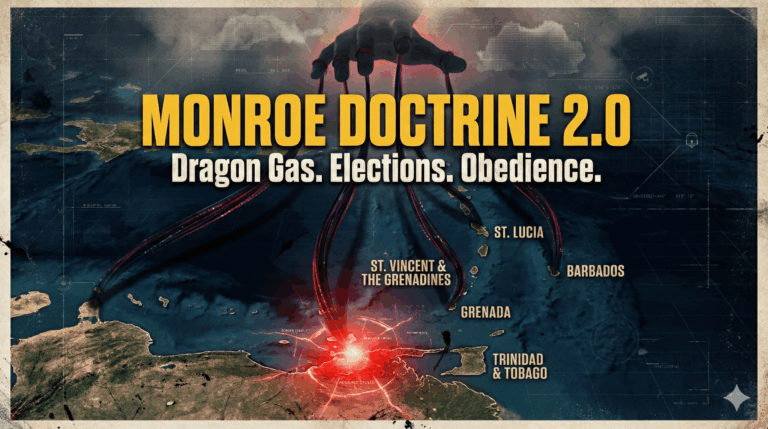
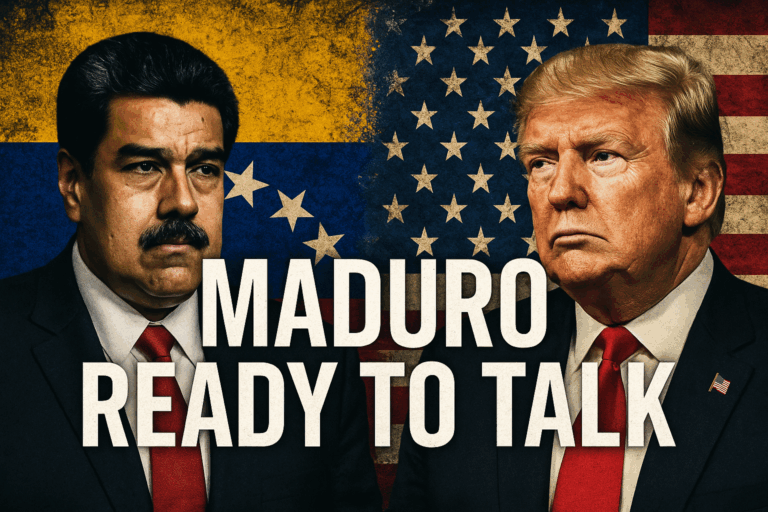
Irfaan Ali’s apparent alignment with Donald Trump is not best understood as culture-war romance. It looks much more like realpolitik. Guyana has an oil boom. Guyana has Exxon. Guyana has a dangerous territorial dispute with Venezuela over the Esequibo. And Guyana needs powerful friends. In March 2025, U.S. Secretary of State Marco Rubio stood in Georgetown and warned that any attack on Guyana or ExxonMobil would be “a very bad day” for Venezuela. Reuters also reported that Washington had offered military support to Guyana amid the dispute.
Then in March 2026, Ali joined Trump at the “Shield of the Americas” Summit in Florida. Guyana’s Department of Public Information said Ali was among 12 regional leaders there and joined a proclamation focused on dismantling cartels and foreign terrorist organisations in the hemisphere. Americas Quarterly also described Ali as an ally of the Trump administration in its January 2026 country snapshot.
That does not mean Ali is becoming a Caribbean MAGA mascot. It means he is behaving like a leader who knows geography, oil and security have pushed Guyana into a new class of strategic importance. If Washington wants firm allies in the hemisphere, Guyana is now too important to ignore. And if Ali sees Trump as useful to Guyana’s sovereignty, energy security and global leverage, he will take that handshake with both hands.
In simple Trini terms: this is not lime. This is business.
So is he a power broker or just a brilliant salesman?
The uncomfortable answer is that he may be both.
Irfaan Ali has genuine achievements he can point to. He also has a flair for packaging those achievements into a national story of movement, confidence and destiny. He understands modern politics well enough to know that perception is not a side dish. Perception is the meal. He has sold Guyana as rising, relevant and ready. And so far, the sales pitch has landed with investors, regional partners and powerful players abroad.
But that same presidency remains shadowed by the kind of questions that do not disappear just because GDP is soaring. Development can impress people. It cannot automatically erase doubts about transparency, accountability or political concentration of power. That is why Irfaan Ali remains such a compelling figure. He is not just building roads, house lots and diplomatic partnerships. He is building a narrative about himself and about Guyana’s future. The real test is whether the substance will always keep up with the salesmanship.
For now, the verdict is this: Irfaan Ali has become one of the most influential political figures in the Caribbean, and his closeness to Trump-era U.S. power looks less like ideology and more like strategic calculation. Whether history remembers him as Guyana’s great moderniser or its smoothest political marketer will depend on whether the dream he keeps selling can survive scrutiny as well as applause.
For more rich lists, business power stories, elite profiles, and regional influence analysis, visit our Caribbean Power, Wealth & Influence hub.