US Venezuela Operations Go Next Level: When Covert Wars Start Cancelling Flights
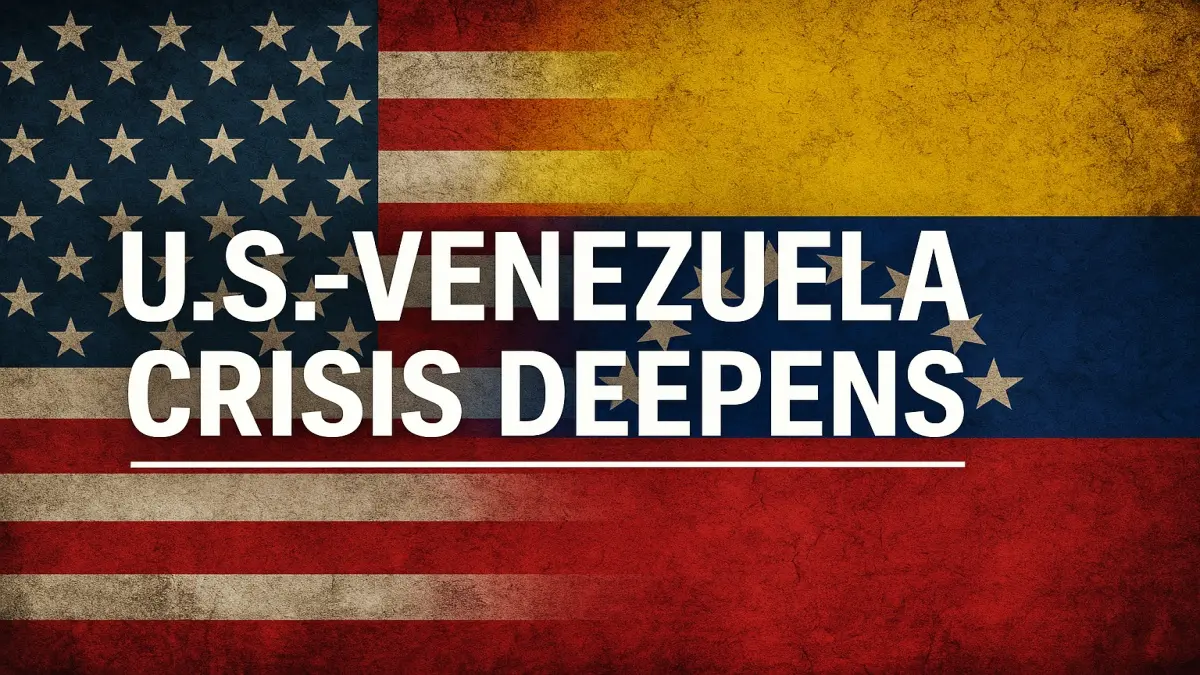
The departures board at the airport flickers like a bad omen. A traveller walks up to the check-in counter for a Caracas flight, only to see one word stamped across the screen: CANCELLED. No storm. No mechanical issue. No crew shortage. The reason hiding behind the silence is far stranger — US Venezuela Operations have now escalated to the point where a shadow war is literally disrupting civilian air travel.
For years, Washington’s moves against Venezuela felt distant. Military briefings. Sanctions. Press conferences. But the new phase of operations is different. It is no longer a behind-the-scenes geopolitical chess match. This time, the spillover is tangible enough to hit travellers, airlines, crew, airport staff and anybody who has ever bought a ticket across the southern air corridor.
And the question looming over the region is a simple one:
If covert wars are now cancelling flights, what happens next?
The New Phase of US Venezuela Operations
Washington’s language sounds clinical — “expanded operations,” “new phase,” “enhanced interdictions.” Yet behind those sterile phrases is a significant escalation.
The US has shifted from patrolling waters to openly signalling covert actions, targeted strikes, and a far wider operational remit. Naval assets and fighter aircraft have surged into the southern arc. Intelligence wings are more active. Political messaging is sharper. And the rhetoric around “restoring democracy” has begun to sound more like a prelude than a warning.
This is not the first time the world has heard whispers of shadowy activity.
In fact, the United States already admitted giving the CIA the green light for operations in Venezuela. You can read the full breakdown of that revelation here on TriniLulz:
Trump Says CIA Get Green Light for Venezuela.
But today’s escalation has crossed into a new frontier: the civilian sphere.
“For the first time, US Venezuela Operations are no longer just a political theory or a military rumour — they are now interrupting commercial flights and the safety of regional airspace.”
When a Covert War Starts Cancelling Flights
This is the part nobody expected.
After the FAA issued a warning about a “potentially hazardous situation” over Venezuelan airspace because of military activity and GPS interference, airlines began to run — fast.
Iberia. TAP. Avianca. LATAM. GOL.
Even Caribbean Airlines quietly suspended its operations into Caracas.
The advisory did not mince words. Heightened military presence. Risk of misidentification. Disturbed navigation signals. Routes that suddenly look like something out of a Cold War documentary.
When aviation regulators use language like that, airlines don’t debate — they cancel.
And for passengers across the region, this is how a far-away conflict finally walked through the sliding glass doors of their airport.
Why the Airspace Matters More Than People Think
Air travel is the first domino.
When airlines pull out, insurers raise premiums. When insurers get nervous, shipping lanes tighten. When military movements intensify, GPS jamming spreads. And when jamming spreads, commercial pilots start requesting reroutes around entire blocks of sky.
These disruptions ripple outward.
Flights get longer. Tickets get pricier.
Supply routes stiffen. Cargo delays grow.
Tourism projections wobble.
But the most human story sits closer to home — migrants, traders, families and everyday travellers who rely on crossing that airspace as casually as taking a maxi taxi.
For them, the message is clear:
This is no longer a political dispute. It is now a practical risk.
“The danger zone isn’t a map on CNN. It is the empty check-in counter where a flight to Venezuela used to be.”
A Region Caught Between Silence and Shock
Governments across the hemisphere are playing it safe — or playing dead.
European voices have expressed concern about legality.
Latin American leaders have raised eyebrows.
But across the islands, the statements remain cautious, soft, or simply absent.
It is a peculiar quiet.
Especially when the events unfolding could reshape maritime security, aviation safety, tourism flows and regional stability.
The skies next door are shifting, yet too many leaders seem convinced that the turbulence won’t reach them.
History suggests otherwise.
What Happens Now?
The unavoidable truth is that US Venezuela Operations are no longer an abstract diplomatic manoeuvre. They are an everyday interference now — a risk that shows up in airport terminals, in maritime charts, in air-traffic alerts and in the uneasy silence of foreign ministries.
Airlines won’t return until the risk drops.
The military buildup won’t shrink overnight.
And the covert phase — the one Washington refuses to discuss openly — has already begun.
The escalation is real.
The cancellations are real.
And the regional uncertainty is settling in like fog.
A final image lingers: the departures board again, flickering under fluorescent light.
Caracas: Cancelled.
Caracas: Cancelled.
Caracas: Cancelled.
Not because of weather.
Not because of maintenance.
But because two nations are quietly drifting toward a confrontation with consequences far beyond their borders.
The war may be covert.
But the fallout is now visible — and impossible to ignore.
This story is part of our wider Caribbean Geopolitics & Global Affairs coverage. Explore the full hub for regional security updates, diplomacy, migration, energy politics, and deeper analysis of how global power plays shape Caribbean realities.