Mia Mottley Forbes List 2025 Surprise: What Her Global Power Says About Caribbean Leadership
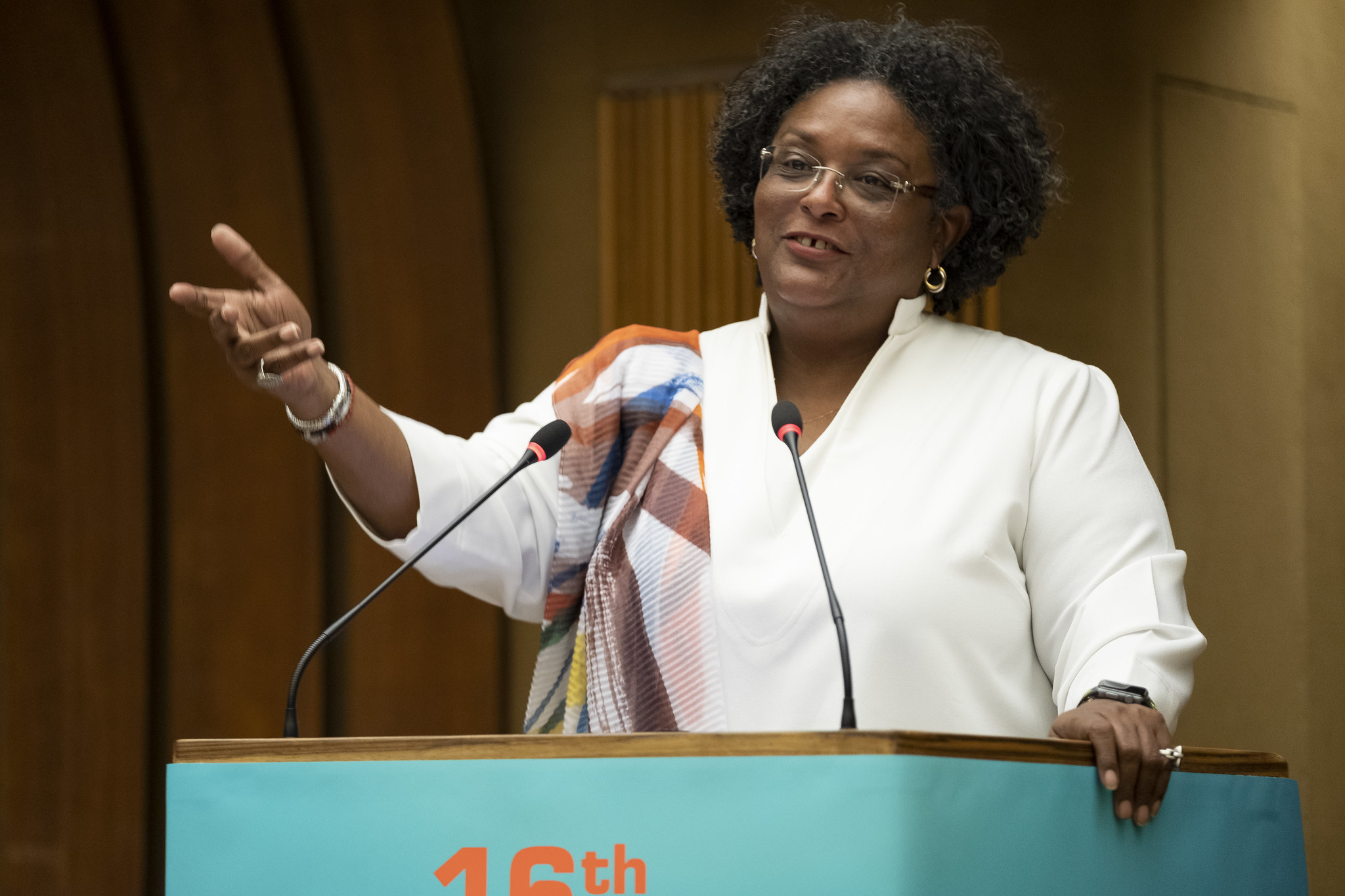
When Mia Mottley Forbes suddenly started trending in Caribbean political chatter this week, plenty people had the same reaction: “Wait… she on what list?”
Not a popularity poll. Not a vibes ranking. The Barbados Prime Minister has been ranked #99 on Forbes’ 2025 World’s Most Powerful Women list, placing her among heads of state, billionaires, and global power brokers who shape agendas far beyond their borders.
For a region that often underestimates its own reach, this was not just a personal milestone. It was a moment that forced the Caribbean to look in the mirror.
What the Forbes list actually measures
Forbes’ annual World’s Most Powerful Women list is not about speeches, slogans, or domestic applause. It measures influence: the ability to shape policy, mobilize international attention, and move conversations in rooms where decisions affect millions of lives. Political leaders dominate the list precisely because power, in this sense, is about leverage, not likes.
That context matters. Mia Mottley did not land on the list because Barbados is big, rich, or militarily strong. She landed there because she has become a recognisable global voice, especially in international forums where small states are usually background noise.
Barbados is 166 square miles. Forbes power does not care about geography.
Why Mia Mottley fits the Forbes definition of power
This Mia Mottley Forbes ranking reflects something deeper than a headline moment. Over the last few years, she has consistently positioned herself as a spokesperson for small and vulnerable states on the global stage, particularly in discussions around climate finance, development debt, and international reform.
Forbes does not rank effort. It ranks outcomes. Influence is visible when world leaders listen, when global media quotes you, and when your ideas circulate beyond your own borders. That is the lane Mia Mottley has been operating in, whether Caribbean voters noticed or not.
Importantly, this is not about perfection or universal approval. Powerful figures are rarely uncontroversial. What matters is reach.
Power is not who claps for you at home. It is who listens to you abroad.
The uncomfortable comparison for Caribbean leadership
Mottley’s inclusion also highlights an uncomfortable truth for the region. The Caribbean has no shortage of intelligent leaders, eloquent speakers, or seasoned politicians. What it lacks is consistent global positioning.
Some leaders flirt with international relevance during crises. Others appear briefly on the world stage and retreat back into domestic political trench warfare. Very few sustain a global narrative.
This contrast becomes clearer when placed beside other Caribbean leaders who have begun attracting international recognition. Guyana’s President Irfaan Ali, for example, was recently featured on TIME’s 100 Next list, a reminder that global visibility is not accidental but cultivated over time. That development was explored in depth in our earlier piece on Irfaan Ali’s TIME recognition, which examined how international platforms are increasingly paying attention to the region when leaders engage strategically rather than episodically.
(Read: https://www.trinilulz.com/irfaan-ali-makes-time-100-next-list/)
Small islands, big voices, limited follow-through
The irony is hard to ignore. Caribbean leaders frequently speak about sovereignty, dignity, and regional strength, yet the region often struggles to present a unified or sustained presence internationally. Individual stars emerge. Collective momentum rarely follows.
Mia Mottley Forbes ranking exposes that gap. It shows what is possible when a Caribbean leader treats international engagement not as a side quest, but as a central pillar of governance.
The Caribbean does not lack talent. It lacks scale, coordination, and long-term global strategy.
What this moment really represents
This is not about crowning a hero or handing out regional trophies. It is about recognising that global power today is not reserved for superpowers alone. Influence now flows through ideas, credibility, and persistence.
Forbes’ own overview of the 2025 list makes that clear, noting that modern power increasingly comes from agenda-setting and coalition-building rather than raw economic or military dominance. In that context, a Caribbean prime minister appearing on the list is not an anomaly. It is a signal.
(See Forbes’ official World’s Most Powerful Women list for 2025.)
The question is whether the region treats this as an isolated achievement or a case study.
The bigger Caribbean question
If one Caribbean leader can carve out global influence in an unforgiving international system, what stops others from doing the same? Is it vision, political will, regional fragmentation, or a comfort with staying small?
Mia Mottley Forbes list presence odoes not answer those questions. It simply removes the excuse that it cannot be done.
For more rich lists, business power stories, elite profiles, and regional influence analysis, visit our Caribbean Power, Wealth & Influence hub.