Mia Mottley’s 30–0 Trilogy: How Barbados Elections Turned into a One-Woman Era
Something unusual keeps happening in Barbados Elections.
It is not a close race.
It is not a coalition.
It is not a comeback story.
It is a clean sweep. Again.
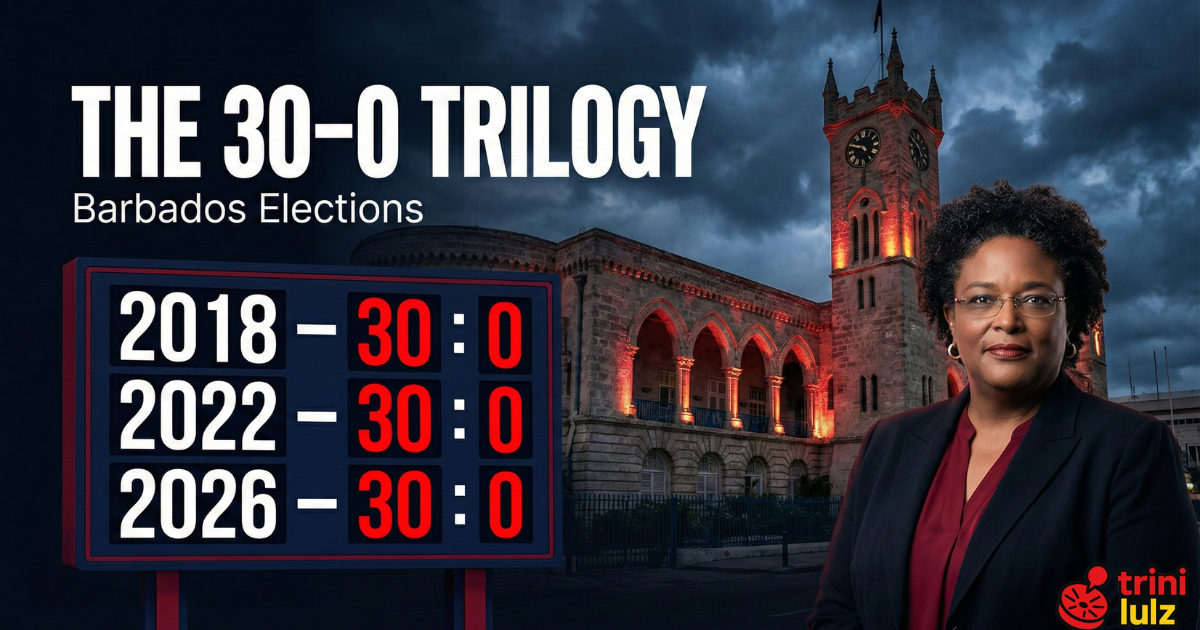
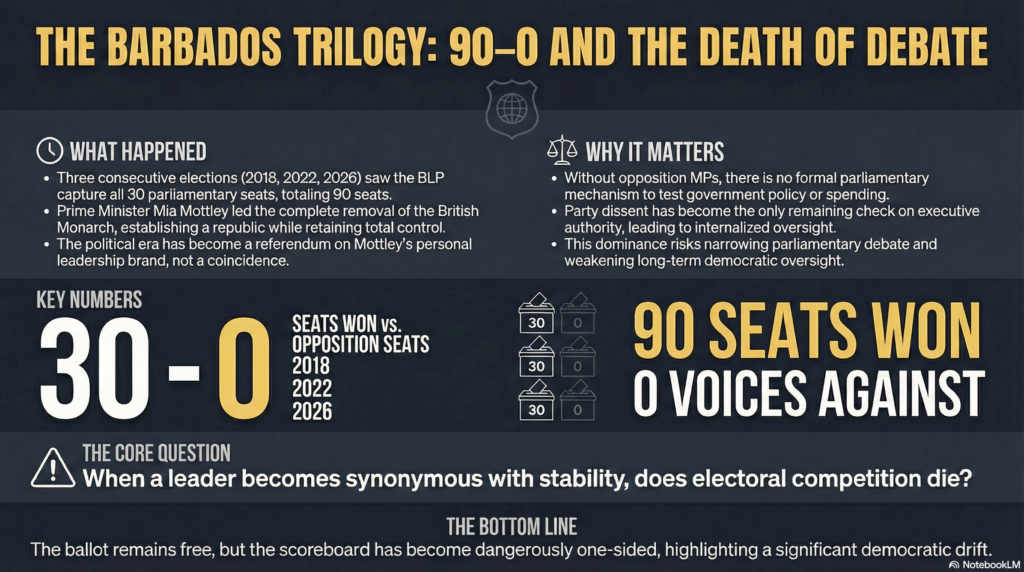
In 2018, 2022, and now 2026, Mia Mottley and the Barbados Labour Party did what almost no modern democracy sees three times in a row: win all 30 seats in Parliament.
Three elections.
Thirty seats each time.
Zero seats for the opposition.
That is not just a victory. That is a political era.
So how did Barbados Elections become the story of one dominant figure? And what does it mean for the island’s democracy going forward?
The First Shock: 2018 and the Political Earthquake
To understand the trilogy, you have to go back to 2018.
At the time, Barbados was reeling from economic stress. Debt levels were high. Growth was stagnant. Public frustration simmered. The governing Democratic Labour Party paid the price.
The result was historic. The BLP captured all 30 parliamentary seats. It was the first time since independence that one party completely wiped out the other in a general election.
That was not normal Caribbean political turnover. That was a reset.
Mottley, already a veteran politician who entered Parliament in 1994 and had held major ministerial portfolios, became Prime Minister with overwhelming authority. Soon after, her administration entered a reform program supported by the International Monetary Fund to stabilize public finances and restructure debt.
The narrative formed quickly: tough medicine now, stability later.
And many Barbadians bought in.
“2018 was not just a change of government. It was a mandate to fix the system.”
The Sequel Nobody Expected: 2022
By 2022, the economic program was underway. Barbados had also made a historic constitutional shift, becoming a republic in 2021 and removing the British monarch as head of state.
That transition alone cemented Mottley’s place in history.
But elections are not history exams. They are verdicts.
When early elections were called in 2022, turnout dipped. Political fatigue was visible. Yet the result was almost surreal: another 30–0 clean sweep.
Two consecutive elections without a single opposition MP.
That is where analysts began to ask deeper questions about Barbados Elections. Was this pure popularity? Was the opposition too fragmented? Or had the electorate decided stability mattered more than partisan balance?
In parliamentary systems, opposition is not optional decoration. It is the friction that tests policy, questions spending, and sharpens legislation.
Barbados had just voted for smooth sailing instead.
The Trilogy: 2026 and the Entrenchment of an Era
Fast forward to 2026. The political landscape had shifted again. New opposition leadership emerged. Campaign rhetoric intensified. Critics argued that no democracy should function without parliamentary counterweight.
And yet, the result did not change.
Another sweep.
According to reporting by Reuters, the BLP secured all 30 seats once more, granting Mottley a third consecutive term with total parliamentary dominance.
Three elections.
Three clean sweeps.
No official opposition seats.
At this point, the pattern becomes the story.
Barbados Elections have turned into something closer to a referendum on a single leader’s stewardship than a traditional two-party contest.
“When voters keep delivering 30–0 results, it stops being coincidence. It becomes a political brand.”
The Rise of Mia Mottley: Built for the Long Game
Mottley did not arrive suddenly in 2018. Her career has been methodical.
She entered politics young, rose through cabinet positions, survived internal party struggles, and spent years in opposition sharpening her parliamentary style. She cultivated a reputation for fluency in policy and global diplomacy, particularly on climate advocacy for small island states.
That matters.
In small states, leadership often feels personal. Citizens see their prime minister not just as administrator but as representative on the global stage. Mottley leaned into that role.
Her tenure has been defined by:
- Debt restructuring and fiscal reform.
- International climate leadership.
- The republic transition.
- Post-pandemic economic stabilization.
Whether one agrees with every policy choice, the consistency of message has been clear: competence, stability, international relevance.
And voters have rewarded that narrative repeatedly.
Dominance or Democracy Drift?
Now comes the uncomfortable part.
A democracy is not measured only by who wins. It is measured by how power is balanced.
Three consecutive 30–0 outcomes raise structural questions. Without opposition MPs, parliamentary debate narrows. Oversight weakens. Internal party dissent becomes the only meaningful check on executive power.
This does not automatically mean democratic decline. Voters are free to choose overwhelming majorities.
But it does create a paradox: when a leader becomes synonymous with national stability, electoral competition can shrink.
Barbados Elections are still free. They are still contested. But the scoreboard has been remarkably one-sided.
That is the tension inside the trilogy.
What Happens After the Era?
Political eras always end. The only question is how.
Will the opposition reorganize and present a credible alternative? Will voter fatigue eventually rebalance Parliament? Or will the BLP’s internal succession plan define the next chapter?
For now, the facts stand.
Three elections.
Thirty seats each time.
One leader defining a decade.
Barbados Elections have not stopped being democratic. But they have undeniably become a case study in political dominance rarely seen in modern parliamentary systems.
And in the Caribbean, that makes Barbados one of the most fascinating political laboratories in the region.
For comparison on regional political shifts and economic strategy, read our analysis of Guyana’s oil-driven transformation here.
For additional details on the 2026 Barbados Elections see Reuters coverage
For more rich lists, business power stories, elite profiles, and regional influence analysis, visit our Caribbean Power, Wealth & Influence hub.